• 文献检索
  • 文档翻译
  • 深度研究
  • 学术资讯
  • Suppr Zotero 插件Zotero 插件
  • 邀请有礼
  • 套餐&价格
  • 历史记录
应用&插件
Suppr Zotero 插件Zotero 插件浏览器插件Mac 客户端Windows 客户端微信小程序
定价
高级版会员购买积分包购买API积分包
服务
文献检索文档翻译深度研究API 文档MCP 服务
关于我们
关于 Suppr公司介绍联系我们用户协议隐私条款
关注我们

Suppr 超能文献

核心技术专利:CN118964589B侵权必究
粤ICP备2023148730 号-1Suppr @ 2026

文献检索

告别复杂PubMed语法,用中文像聊天一样搜索,搜遍4000万医学文献。AI智能推荐,让科研检索更轻松。

立即免费搜索

文件翻译

保留排版,准确专业,支持PDF/Word/PPT等文件格式,支持 12+语言互译。

免费翻译文档

深度研究

AI帮你快速写综述,25分钟生成高质量综述,智能提取关键信息,辅助科研写作。

立即免费体验

利用人诱导多能干细胞衍生的间充质样细胞(HIDEMs)联合微肌营养不良蛋白()表达的体外基因治疗作为杜氏肌营养不良症(DMD)实验治疗的新策略。

In Vitro Gene Therapy Using Human iPS-Derived Mesoangioblast-Like Cells (HIDEMs) Combined with Microdystrophin () Expression as the New Strategy for Duchenne Muscular Dystrophy (DMD) Experimental Treatment.

机构信息

Institute of Human Genetics Polish Academy of Sciences, 60-479 Poznan, Poland.

出版信息

Int J Mol Sci. 2024 Nov 5;25(22):11869. doi: 10.3390/ijms252211869.

DOI:10.3390/ijms252211869
PMID:39595938
原文链接:https://pmc.ncbi.nlm.nih.gov/articles/PMC11593506/
Abstract

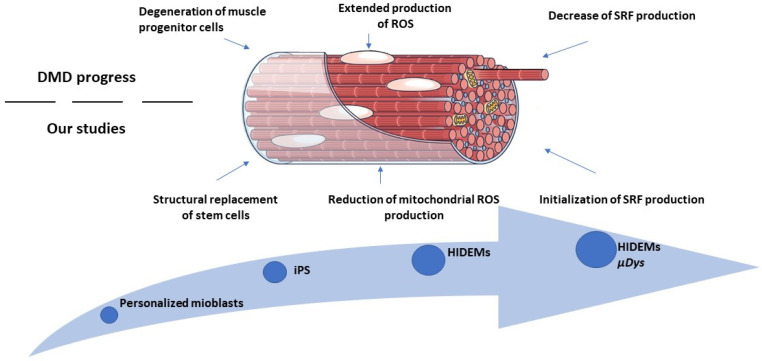
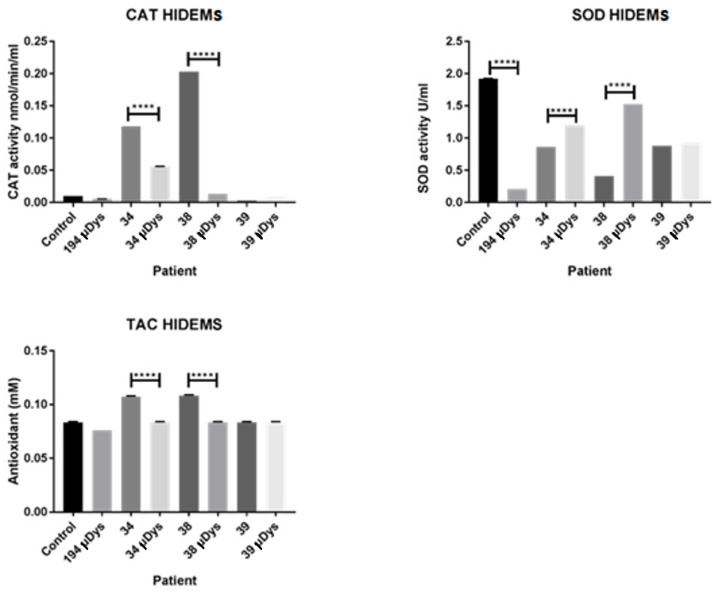
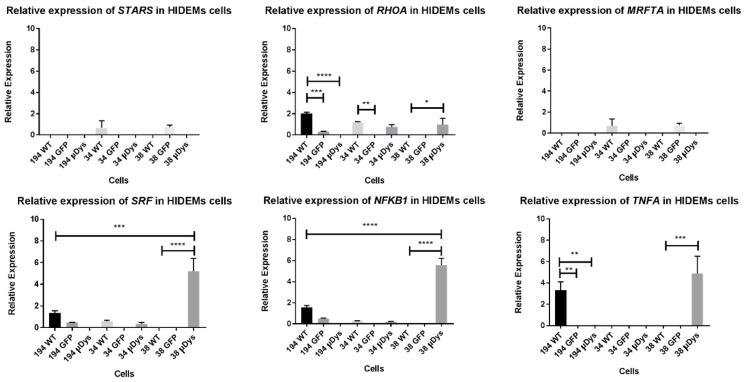
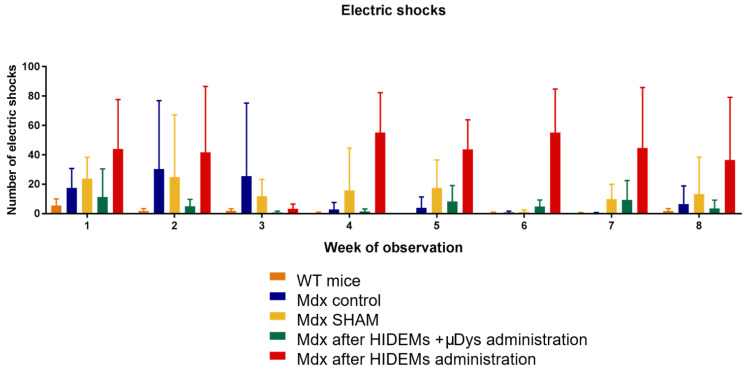
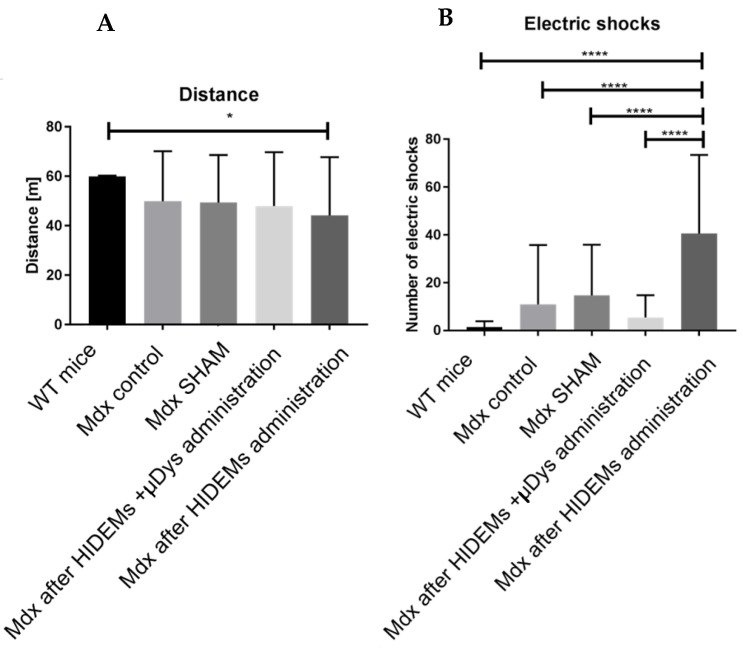
Duchenne Muscular Dystrophy (DMD) is a genetic disorder characterized by disruptions in the dystrophin gene. This study aims to investigate potential a therapeutic approach using genetically modified human iPS-derived mesoangioblast-like cells (HIDEMs) in mouse model. This study utilizes patient-specific myoblasts reprogrammed to human induced pluripotent stem cells (iPSCs) and then differentiated into HIDEMs. Lentiviral vectors carrying microdystrophin sequences have been employed to deliver the genetic construct to express a shortened, functional dystrophin protein in HIDEMs. The study indicated significant changes within redox potential between healthy and pathological HIDEM cells derived from DMD patients studied by catalase and superoxide dismutase activities. Microdystrophin expressing HIDEMs also improved expression of genes involved in STARS (striated muscle activator of Rho signaling) pathway albeit in selective DMD patients (with mild phenotype). Although in vivo observations did not bring progress in the mobility of mice with HIDEMs, microdystrophin interventions this may argue against "treadmill test" as suitable for assessment of mice recovery. Low-level signaling of the Rho pathway and inflammation-related factors in DMD myogenic cells can also contribute to the lack of success in a functional study. Overall, this research contributes to the understanding of DMD pathogenesis and provides insights into potential novel therapeutic strategy, highlighting the importance of personalized gene therapy.

摘要

杜氏肌营养不良症(DMD)是一种由抗肌萎缩蛋白基因突变引起的遗传性疾病。本研究旨在利用基因修饰的人诱导多能干细胞(iPSC)衍生的间充质样细胞(HIDEM),在小鼠模型中探讨潜在的治疗方法。本研究利用患者特异性成肌细胞重编程为人类诱导多能干细胞(iPSCs),然后分化为 HIDEM。携带微肌萎缩蛋白序列的慢病毒载体被用于将遗传构建体递送至 HIDEM 中表达缩短的、有功能的肌萎缩蛋白。研究表明,通过过氧化氢酶和超氧化物歧化酶活性研究,来自 DMD 患者的健康和病理 HIDEM 细胞之间的氧化还原电位发生了显著变化。表达微肌萎缩蛋白的 HIDEM 也改善了 STARS(Rho 信号通路的横纹肌激活剂)途径相关基因的表达,尽管在选择性 DMD 患者(轻度表型)中。尽管体内观察并没有使携带 HIDEM 的小鼠的移动能力取得进展,但微肌萎缩蛋白干预可能反对“跑步机测试”作为评估小鼠恢复的合适方法。DMD 肌源性细胞中 Rho 通路和炎症相关因子的低水平信号也可能导致功能研究的失败。总的来说,这项研究有助于理解 DMD 的发病机制,并提供了潜在新的治疗策略的见解,强调了个性化基因治疗的重要性。
https://cdn.ncbi.nlm.nih.gov/pmc/blobs/3693/11593506/c784b5d185af/ijms-25-11869-g015.jpg
https://cdn.ncbi.nlm.nih.gov/pmc/blobs/3693/11593506/d6412a4f28f2/ijms-25-11869-g001.jpg
https://cdn.ncbi.nlm.nih.gov/pmc/blobs/3693/11593506/3d5d08a62b3a/ijms-25-11869-g002a.jpg
https://cdn.ncbi.nlm.nih.gov/pmc/blobs/3693/11593506/e68e1665dd64/ijms-25-11869-g003.jpg
https://cdn.ncbi.nlm.nih.gov/pmc/blobs/3693/11593506/401f3beb04b0/ijms-25-11869-g004.jpg
https://cdn.ncbi.nlm.nih.gov/pmc/blobs/3693/11593506/f99ddca806a0/ijms-25-11869-g005a.jpg
https://cdn.ncbi.nlm.nih.gov/pmc/blobs/3693/11593506/f7866fa04751/ijms-25-11869-g006a.jpg
https://cdn.ncbi.nlm.nih.gov/pmc/blobs/3693/11593506/de80d018d8bd/ijms-25-11869-g007.jpg
https://cdn.ncbi.nlm.nih.gov/pmc/blobs/3693/11593506/2248aeb8317a/ijms-25-11869-g008.jpg
https://cdn.ncbi.nlm.nih.gov/pmc/blobs/3693/11593506/8c4ce4489fe1/ijms-25-11869-g009.jpg
https://cdn.ncbi.nlm.nih.gov/pmc/blobs/3693/11593506/9c38db31270f/ijms-25-11869-g010.jpg
https://cdn.ncbi.nlm.nih.gov/pmc/blobs/3693/11593506/7273061130d1/ijms-25-11869-g011.jpg
https://cdn.ncbi.nlm.nih.gov/pmc/blobs/3693/11593506/017246ddeb2c/ijms-25-11869-g012.jpg
https://cdn.ncbi.nlm.nih.gov/pmc/blobs/3693/11593506/12284d470233/ijms-25-11869-g013.jpg
https://cdn.ncbi.nlm.nih.gov/pmc/blobs/3693/11593506/c61c160eef17/ijms-25-11869-g014.jpg
https://cdn.ncbi.nlm.nih.gov/pmc/blobs/3693/11593506/c784b5d185af/ijms-25-11869-g015.jpg
https://cdn.ncbi.nlm.nih.gov/pmc/blobs/3693/11593506/d6412a4f28f2/ijms-25-11869-g001.jpg
https://cdn.ncbi.nlm.nih.gov/pmc/blobs/3693/11593506/3d5d08a62b3a/ijms-25-11869-g002a.jpg
https://cdn.ncbi.nlm.nih.gov/pmc/blobs/3693/11593506/e68e1665dd64/ijms-25-11869-g003.jpg
https://cdn.ncbi.nlm.nih.gov/pmc/blobs/3693/11593506/401f3beb04b0/ijms-25-11869-g004.jpg
https://cdn.ncbi.nlm.nih.gov/pmc/blobs/3693/11593506/f99ddca806a0/ijms-25-11869-g005a.jpg
https://cdn.ncbi.nlm.nih.gov/pmc/blobs/3693/11593506/f7866fa04751/ijms-25-11869-g006a.jpg
https://cdn.ncbi.nlm.nih.gov/pmc/blobs/3693/11593506/de80d018d8bd/ijms-25-11869-g007.jpg
https://cdn.ncbi.nlm.nih.gov/pmc/blobs/3693/11593506/2248aeb8317a/ijms-25-11869-g008.jpg
https://cdn.ncbi.nlm.nih.gov/pmc/blobs/3693/11593506/8c4ce4489fe1/ijms-25-11869-g009.jpg
https://cdn.ncbi.nlm.nih.gov/pmc/blobs/3693/11593506/9c38db31270f/ijms-25-11869-g010.jpg
https://cdn.ncbi.nlm.nih.gov/pmc/blobs/3693/11593506/7273061130d1/ijms-25-11869-g011.jpg
https://cdn.ncbi.nlm.nih.gov/pmc/blobs/3693/11593506/017246ddeb2c/ijms-25-11869-g012.jpg
https://cdn.ncbi.nlm.nih.gov/pmc/blobs/3693/11593506/12284d470233/ijms-25-11869-g013.jpg
https://cdn.ncbi.nlm.nih.gov/pmc/blobs/3693/11593506/c61c160eef17/ijms-25-11869-g014.jpg
https://cdn.ncbi.nlm.nih.gov/pmc/blobs/3693/11593506/c784b5d185af/ijms-25-11869-g015.jpg

相似文献

1
In Vitro Gene Therapy Using Human iPS-Derived Mesoangioblast-Like Cells (HIDEMs) Combined with Microdystrophin () Expression as the New Strategy for Duchenne Muscular Dystrophy (DMD) Experimental Treatment.利用人诱导多能干细胞衍生的间充质样细胞(HIDEMs)联合微肌营养不良蛋白()表达的体外基因治疗作为杜氏肌营养不良症(DMD)实验治疗的新策略。
Int J Mol Sci. 2024 Nov 5;25(22):11869. doi: 10.3390/ijms252211869.
2
In vitro assay for the efficacy assessment of AAV vectors expressing microdystrophin.体外评估表达微肌营养不良蛋白的 AAV 载体的功效的检测方法。
Exp Cell Res. 2020 Jul 15;392(2):112033. doi: 10.1016/j.yexcr.2020.112033. Epub 2020 Apr 29.
3
Transplantation of Dystrophin Expressing Chimeric Human Cells of Myoblast/Mesenchymal Stem Cell Origin Improves Function in Duchenne Muscular Dystrophy Model.肌母细胞/间充质干细胞来源的表达抗肌萎缩蛋白嵌合人细胞移植可改善杜氏肌营养不良症模型的功能。
Stem Cells Dev. 2021 Feb;30(4):190-202. doi: 10.1089/scd.2020.0161. Epub 2021 Jan 22.
4
Potential limitations of microdystrophin gene therapy for Duchenne muscular dystrophy.微肌营养不良蛋白基因治疗杜氏肌营养不良症的潜在局限性。
JCI Insight. 2024 May 7;9(11):e165869. doi: 10.1172/jci.insight.165869.
5
Long-Term Protective Effect of Human Dystrophin Expressing Chimeric (DEC) Cell Therapy on Amelioration of Function of Cardiac, Respiratory and Skeletal Muscles in Duchenne Muscular Dystrophy.人源抗肌萎缩蛋白嵌合(DEC)细胞治疗对杜氏肌营养不良症心脏、呼吸和骨骼肌功能改善的长期保护作用。
Stem Cell Rev Rep. 2022 Dec;18(8):2872-2892. doi: 10.1007/s12015-022-10384-2. Epub 2022 May 19.
6
AAV vector-mediated microdystrophin expression in a relatively small percentage of mdx myofibers improved the mdx phenotype.腺相关病毒载体介导的微肌营养不良蛋白在相对小比例的mdx肌纤维中表达改善了mdx表型。
Mol Ther. 2004 Nov;10(5):821-8. doi: 10.1016/j.ymthe.2004.07.025.
7
Enhancing AAV-microdystrophin gene therapy after repeat dosing by blocking phagocytosis.通过阻断吞噬作用增强重复给药后的腺相关病毒微肌营养不良蛋白基因治疗。
Front Immunol. 2025 Mar 3;16:1527840. doi: 10.3389/fimmu.2025.1527840. eCollection 2025.
8
High mobility group box 1 (HMGB1) is a potential disease biomarker in cell and mouse models of Duchenne muscular dystrophy.高迁移率族蛋白 B1(HMGB1)是杜氏肌营养不良症的细胞和小鼠模型中的一种潜在疾病生物标志物。
Biol Open. 2024 Sep 15;13(9). doi: 10.1242/bio.060542. Epub 2024 Sep 5.
9
Long-term functional adeno-associated virus-microdystrophin expression in the dystrophic CXMDj dog.Dystrophic CXMDj 犬中长期表达功能性腺相关病毒-微小肌营养不良蛋白。
J Gene Med. 2011 Sep;13(9):497-506. doi: 10.1002/jgm.1602.
10
[Construction of recombinant adenovirus including microdystrophin and expression in the mesenchymal cells of mdx mice].[包含微肌营养不良蛋白的重组腺病毒构建及其在mdx小鼠间充质细胞中的表达]
Sheng Wu Gong Cheng Xue Bao. 2007 Jan;23(1):27-32. doi: 10.1016/s1872-2075(07)60003-x.