Department of Nephrology, Dialysis, and Internal Diseases, University Clinical Centre, Medical University of Warsaw, 02-097 Warsaw, Poland.
Doctoral School of Medical University of Warsaw, Medical University of Warsaw, 02-091 Warsaw, Poland.
Int J Mol Sci. 2024 Nov 10;25(22):12072. doi: 10.3390/ijms252212072.
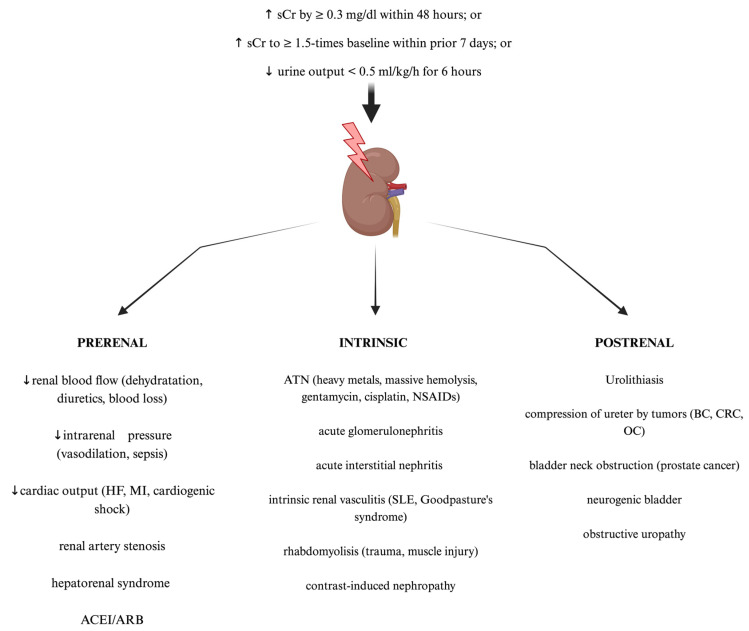
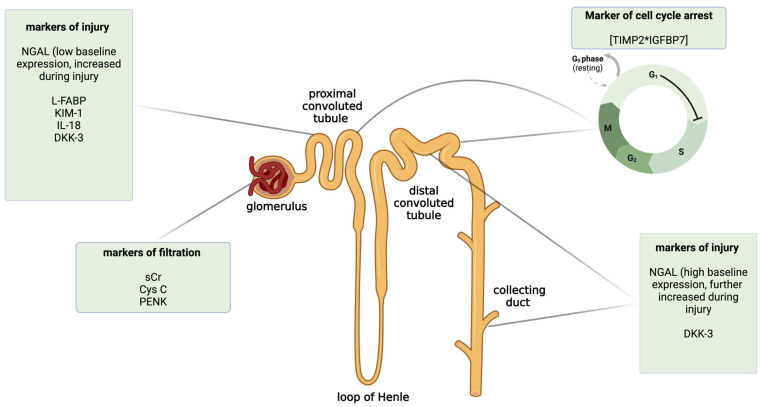
Acute kidney injury (AKI) constitutes a common complication associated with liver or kidney transplantation, which may significantly impact the graft condition and perioperative mortality. Current AKI diagnostic criteria based on serum creatinine (sCr) and urine output alterations are widely utilized in routine clinical practice. However, the diagnostic value of sCr may be limited by various confounding factors, including age, sex, reduced or increased muscle mass, and pre-existing chronic kidney disease (CKD). Furthermore, sCr is rather a late indicator of AKI, as its concentration tends to increase only when the severity of the injury is enough to decrease the estimated glomerular filtration rate (eGFR). Recent expertise highlights the need for novel biomarkers in post-transplantation AKI diagnosis, prediction of event-associated mortality, or evaluation of indications for renal replacement treatment (RRT). Over the last decade, the diagnostic performance of various AKI biomarkers has been assessed, among which some showed the potential to outperform sCr in AKI diagnosis. Identifying susceptible individuals, early diagnosis, and prompt intervention are crucial for successful transplantation, undisturbed graft function in long-term follow-up, and decreased mortality. However, the research on AKI biomarkers in transplantation still needs to be explored. The field lacks consistent results, rigorous study designs, and external validation. Considering the rapidly growing prevalence of CKD and cirrhosis that are associated with the transplantation at their end-stage, as well as the existing knowledge gap, the aim of this article was to provide the most up-to-date review of the studies on novel biomarkers in the diagnosis of post-transplantation AKI.
急性肾损伤 (AKI) 是肝或肾移植的常见并发症,可能会显著影响移植物状况和围手术期死亡率。目前基于血清肌酐 (sCr) 和尿液输出改变的 AKI 诊断标准广泛应用于常规临床实践。然而,sCr 的诊断价值可能受到多种混杂因素的限制,包括年龄、性别、肌肉减少或增加、以及预先存在的慢性肾脏病 (CKD)。此外,sCr 是 AKI 的一个较晚的指标,因为只有当损伤的严重程度足以降低估计肾小球滤过率 (eGFR) 时,其浓度才会增加。最近的专业知识强调了在移植后 AKI 诊断、事件相关死亡率预测或评估肾脏替代治疗 (RRT) 指征方面需要新型生物标志物。在过去十年中,已经评估了各种 AKI 生物标志物的诊断性能,其中一些在 AKI 诊断中显示出比 sCr 更好的潜力。确定易受影响的个体、早期诊断和及时干预对于成功移植、长期随访中移植物功能不受干扰以及降低死亡率至关重要。然而,移植中 AKI 生物标志物的研究仍需要进一步探索。该领域缺乏一致的结果、严格的研究设计和外部验证。考虑到 CKD 和肝硬化的患病率迅速增加,这些疾病在终末期需要进行移植,以及现有的知识差距,本文旨在提供对移植后 AKI 诊断中新生物标志物研究的最新综述。