Department of Emergency, Guangxi Academy of Medical Sciences & People's Hospital of Guangxi Zhuang Autonomous Region, Nanning, China.
Ruikang Hospital Affiliated to Guangxi University of Chinese Medicine, Nanning, China.
Front Immunol. 2024 Sep 6;15:1394477. doi: 10.3389/fimmu.2024.1394477. eCollection 2024.
Renal ischemia reperfusion injury (IRI) is one of the pivotal event of acute kidney injury (AKI), and they are unavoidable in the process of kidney transplantation, which eventually leads to the loss of renal allograft. Ferroptosis is a newly identified programmed cell death. Recent studies have suggested that ferroptosis may participate in the pathophysiological process of renal IRI. Therefore, we aimed to determine biomarkers associated with ferroptosis during renal IRI and their impact on renal allografts.
We conducted a comprehensive bioinformatics analysis and established an IRI-AKI animal model to illustrate the critical role of ferroptosis-related hub genes (FRHGs) in IRI-AKI and their potential impact on kidney transplantation.
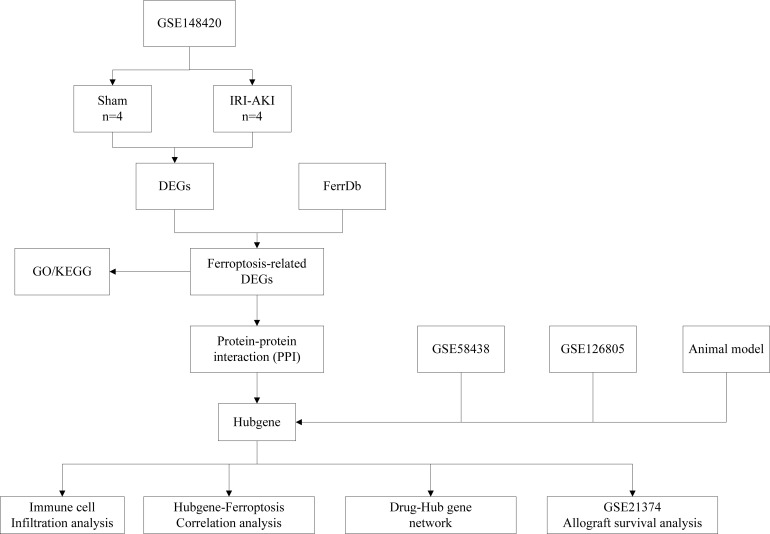
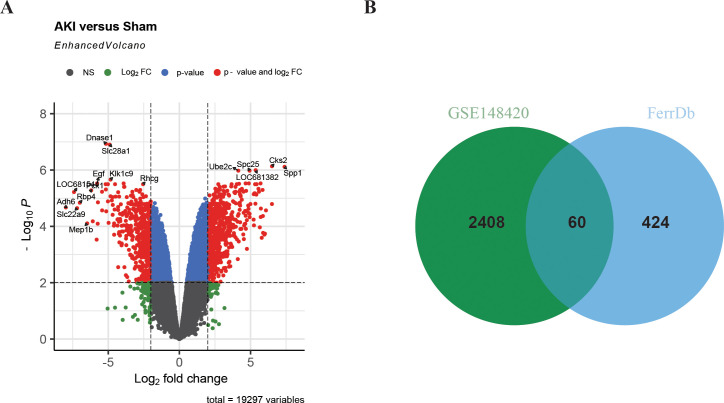
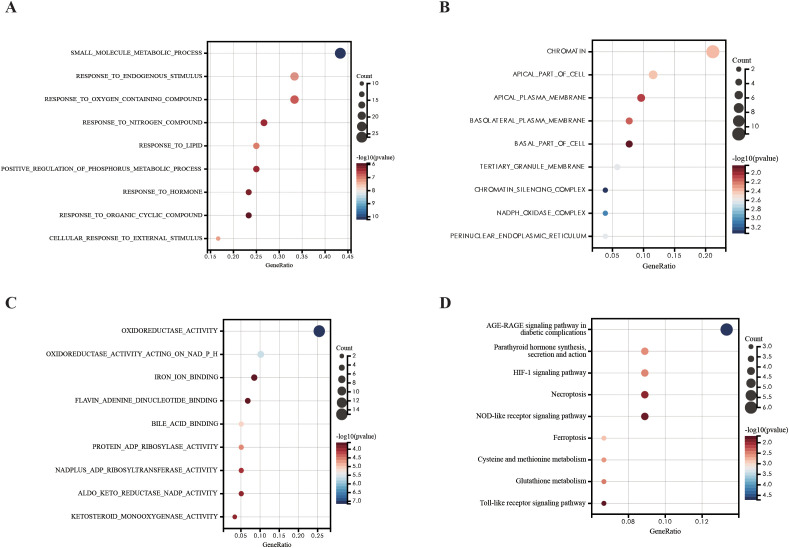
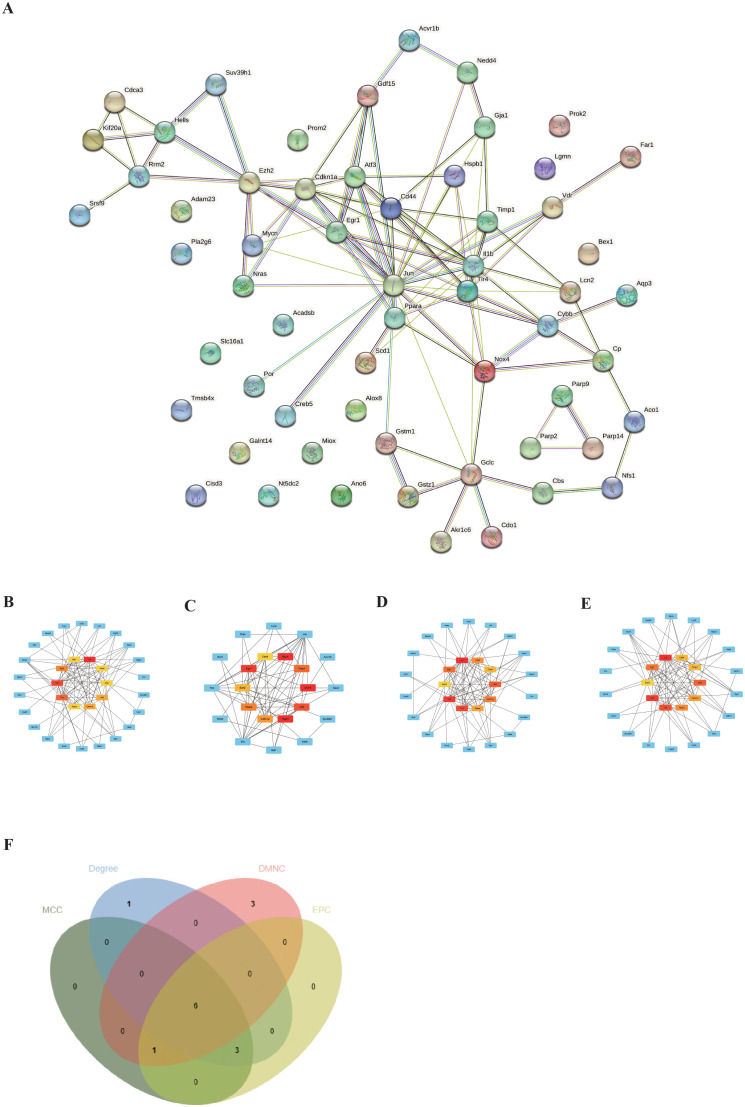
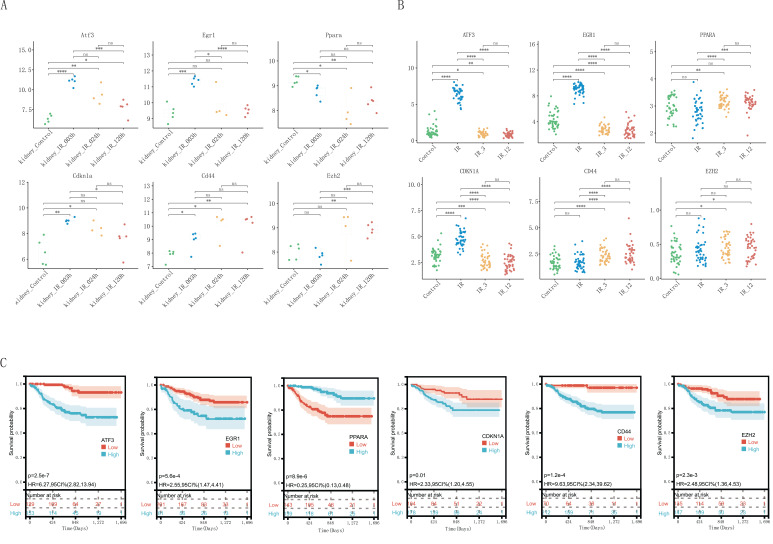
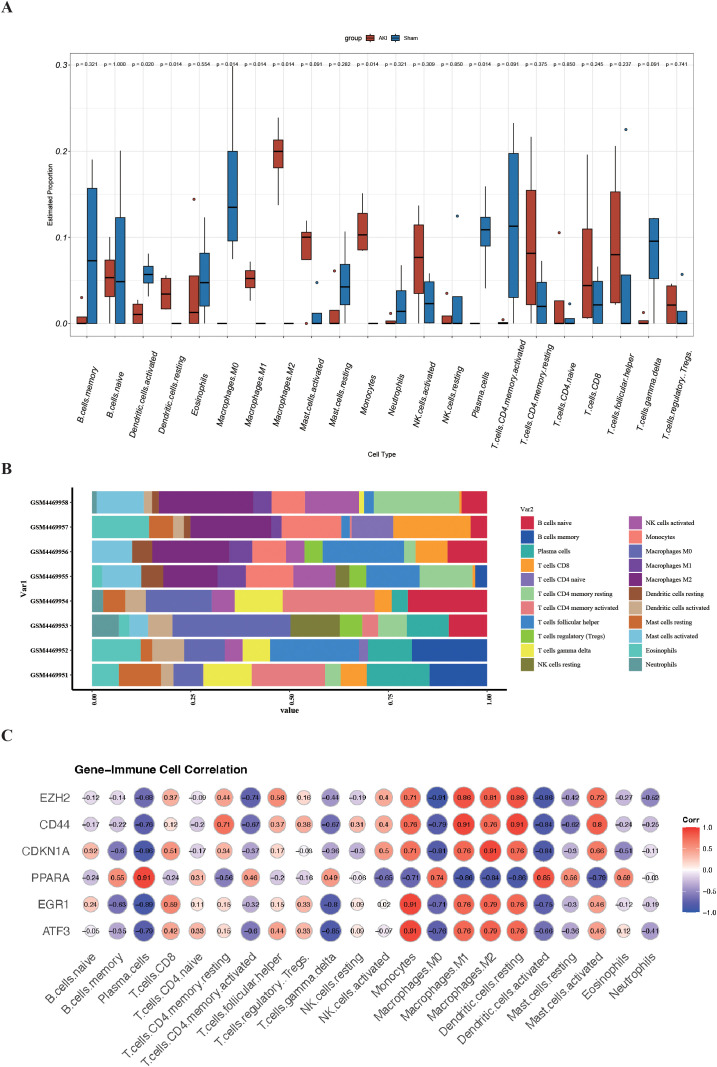
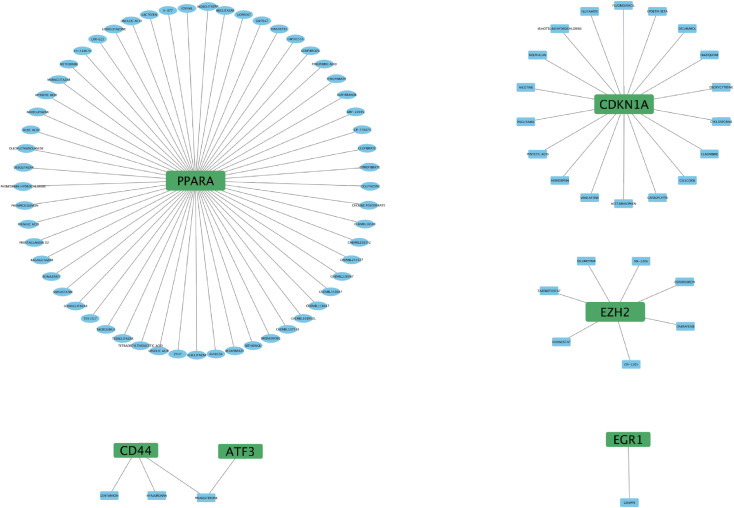
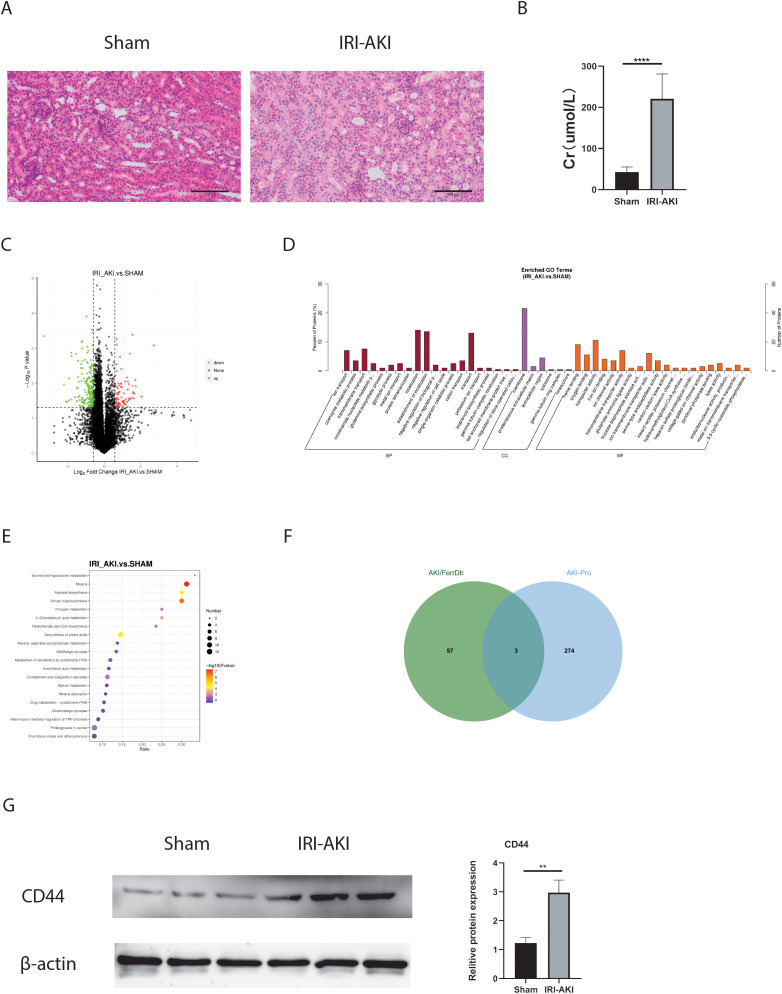
In this study, we identified 60 ferroptosis-related genes (FRGs) in renal IRI based on the GSE148420 dataset and FerrDb database. And then we performed functional annotation analysis using Gene Ontology (GO) and Kyoto Encyclopedia of Genes and Genomes (KEGG) pathway enrichment. Protein-protein interaction (PPI) network was constructed by online tool String. EZH2, CDKN1A, PPARA, EGR1, ATF3, and CD44 were identited as six ferroptosis-related hubgenes (FRHGs) using four methods, including MMC, Degree, DMNC, and EPC. FRHGs expression level were verified by the validation sets GSE58438 and GSE126805. Protein expression level of FRHGs verified by Proteomics and Western blot. Cibersort was utilized to analyze immune cell infiltration during renal IRI as well as the correlation between FRHGs and immune cells. The GSE21374 dataset was used for renal allografts survival analysis. Finally, We induced the IRI-AKI animal model and illustrated the importance of FRGHs CD44 in ferroptosis and the accumulation of macrophages.
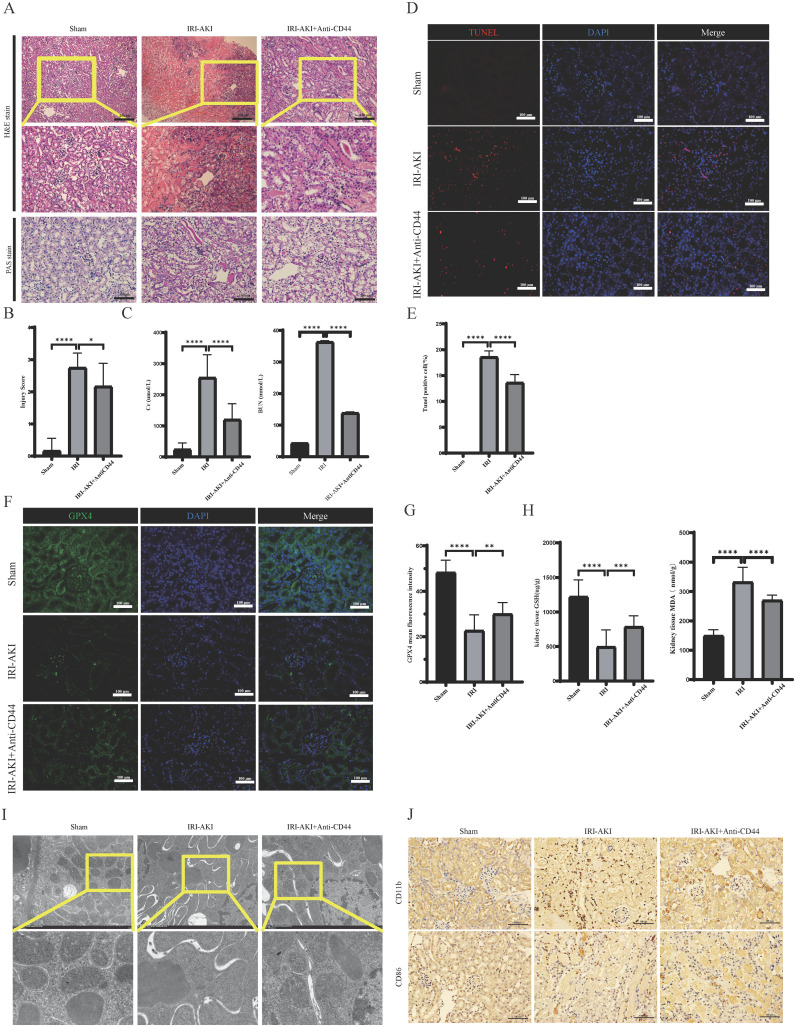
We identified 6 FRHGs. We found that FRHGs not only exhibited significant correlation with immune cells but also directly influenced the survival of transplanted kidneys in the human population. Among six FRHGs, only CD44 was overexpressed at both the gene and protein levels. Anti-CD44 exerts a protective effect by inhibiting ferroptosis and the accumulation of M1 macrophages during renal IRI. This study provided new insights into the pathogenesis of renal IRI and provided new evidence for its treatment.
肾缺血再灌注损伤(IRI)是急性肾损伤(AKI)的关键事件之一,在肾移植过程中不可避免,最终导致肾移植丢失。铁死亡是一种新发现的程序性细胞死亡。最近的研究表明,铁死亡可能参与肾 IRI 的病理生理过程。因此,我们旨在确定肾 IRI 期间与铁死亡相关的生物标志物及其对肾移植的影响。
我们进行了全面的生物信息学分析,并建立了 IRI-AKI 动物模型,以说明铁死亡相关枢纽基因(FRHGs)在 IRI-AKI 中的关键作用及其对肾移植的潜在影响。
在这项研究中,我们根据 GSE148420 数据集和 FerrDb 数据库确定了 60 个与肾 IRI 相关的铁死亡相关基因(FRGs)。然后,我们使用基因本体论(GO)和京都基因与基因组百科全书(KEGG)途径富集进行了功能注释分析。通过在线工具 String 构建了蛋白质-蛋白质相互作用(PPI)网络。使用 MMC、Degree、DMNC 和 EPC 四种方法鉴定出 EZH2、CDKN1A、PPARA、EGR1、ATF3 和 CD44 六个铁死亡相关枢纽基因(FRHGs)。通过验证集 GSE58438 和 GSE126805 验证了 FRHGs 的表达水平。通过蛋白质组学和 Western blot 验证了 FRHGs 的蛋白表达水平。利用 Cibersort 分析肾 IRI 期间免疫细胞浸润以及 FRHGs 与免疫细胞的相关性。使用 GSE21374 数据集进行肾移植存活分析。最后,我们诱导了 IRI-AKI 动物模型,说明了 FRGHs CD44 在铁死亡和巨噬细胞积累中的重要性。
我们确定了 6 个 FRHGs。我们发现,FRHGs 不仅与免疫细胞具有显著相关性,而且直接影响人类人群中移植肾脏的存活。在六个 FRHGs 中,只有 CD44 在基因和蛋白水平上均过度表达。抗 CD44 通过抑制肾 IRI 期间的铁死亡和 M1 巨噬细胞的积累发挥保护作用。本研究为肾 IRI 的发病机制提供了新的见解,并为其治疗提供了新的证据。