Department of Biomedical Engineering, Keimyung University, Daegu 42601, Republic of Korea.
Int J Mol Sci. 2024 Nov 12;25(22):12156. doi: 10.3390/ijms252212156.
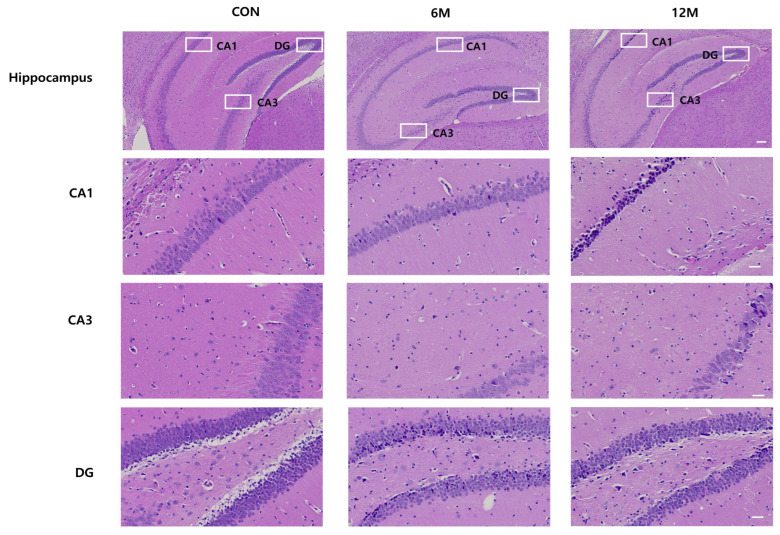
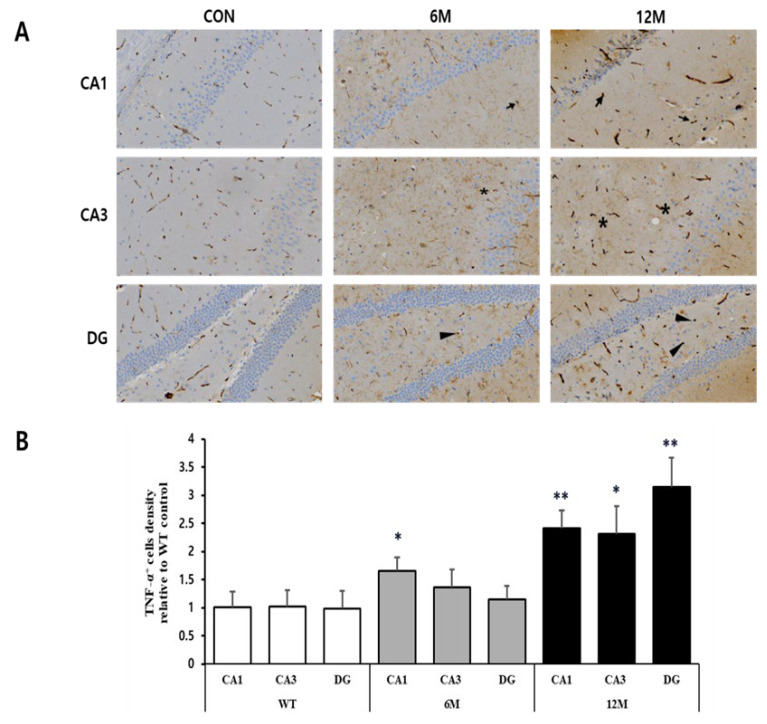
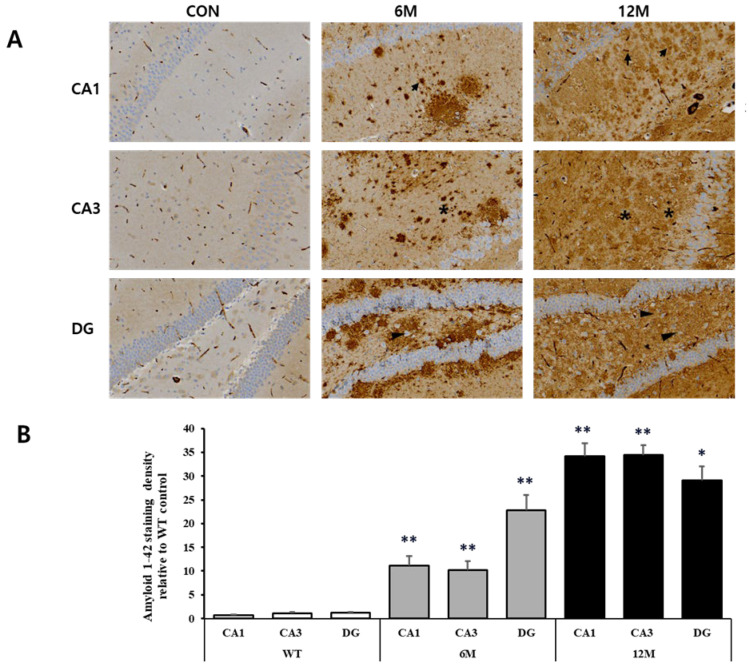
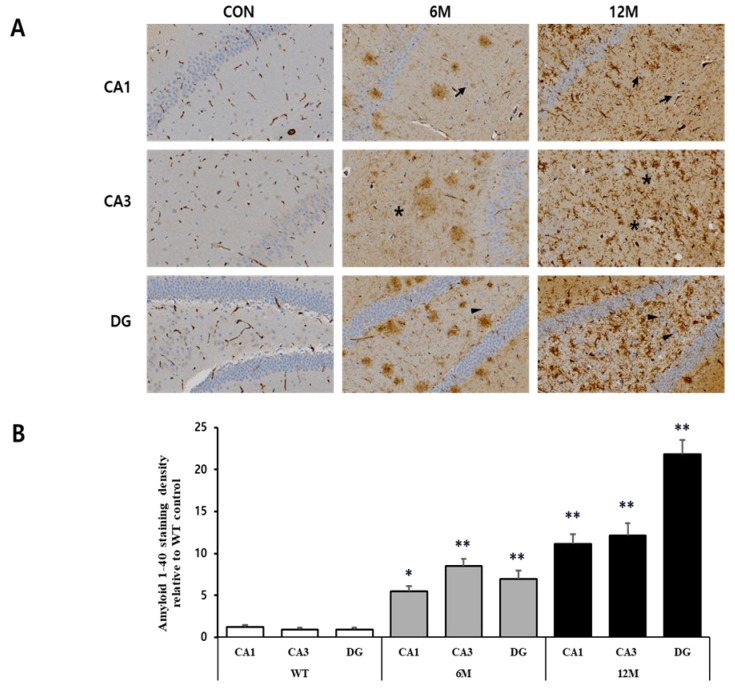
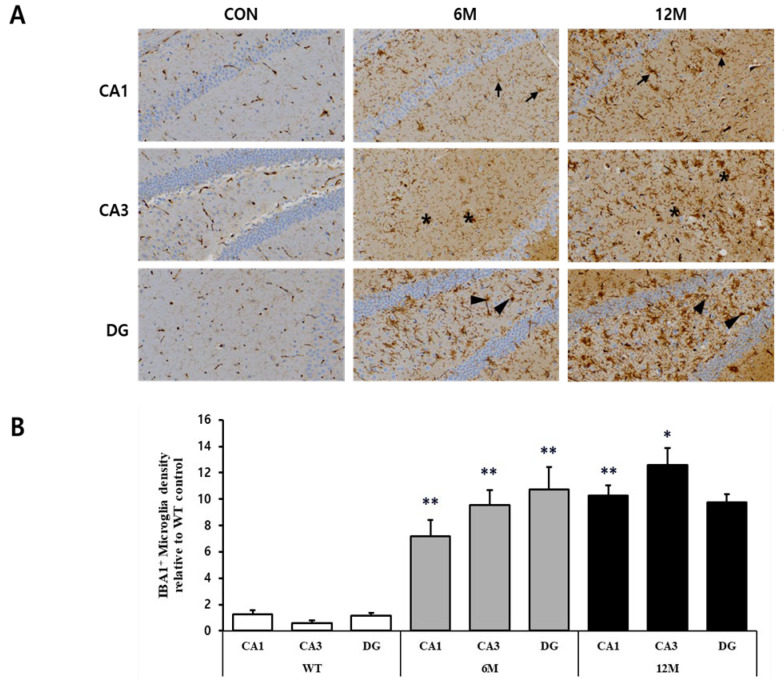
In this study, the distinct patterns of glial response and neurodegeneration within the CA1, CA3, and dentate gyrus (DG) regions of the hippocampus were examined in 5XFAD mice at 6 and 12 months of age. The primary feature of this transgenic mouse model is the rapid onset of amyloid pathology. We employed quantitative assessments via immunohistochemistry, incorporating double staining techniques, followed by observation with light microscopy and subsequent digital analysis of microscopic images. We identified significantly increased Aβ deposition in these three hippocampal regions at 6 and 12 months of transgenic mice. Moreover, the CA1 and CA3 regions showed higher vulnerability, with signs of reactive astrogliosis such as increased astrocyte density and elevated GFAP expression. Additionally, we observed a significant rise in microglia density, along with elevated inflammatory markers (TNFα) in these hippocampal regions. These findings highlight a non-uniform glial and neuronal response to Aβ plaque deposition within the hippocampal regions of 5xFAD mice, potentially contributing to the neurodegenerative and memory deficit characteristics of Alzheimer's disease in this model.
在这项研究中,我们研究了 5XFAD 小鼠在 6 个月和 12 个月时海马体 CA1、CA3 和齿状回(DG)区域中神经胶质反应和神经退行性变的明显模式。这种转基因小鼠模型的主要特征是淀粉样蛋白病理学的快速发作。我们通过免疫组织化学进行了定量评估,采用了双重染色技术,然后用光学显微镜观察,并对显微镜图像进行了数字分析。我们发现转基因小鼠在 6 个月和 12 个月时这三个海马区域的 Aβ沉积明显增加。此外,CA1 和 CA3 区域表现出更高的脆弱性,出现了反应性星形胶质细胞增生的迹象,例如星形胶质细胞密度增加和 GFAP 表达升高。此外,我们还观察到这些海马区域的小胶质细胞密度显著增加,同时炎症标志物(TNFα)升高。这些发现突出了 5xFAD 小鼠海马区 Aβ斑块沉积中神经胶质和神经元反应的不均匀性,这可能导致该模型中阿尔茨海默病的神经退行性变和记忆缺陷特征。