Venigalla Siddharth, Rehman Muhammad Uzair, Deitrich Jakob N, Trainer Robert, Gorgey Ashraf S
Spinal Cord Injury and Disorders, Richmond VA Medical Center, Richmond, VA 23249, USA.
Department of Biomedical Engineering, Virginia Commonwealth University, Richmond, VA 23284, USA.
J Clin Med. 2024 Nov 13;13(22):6826. doi: 10.3390/jcm13226826.
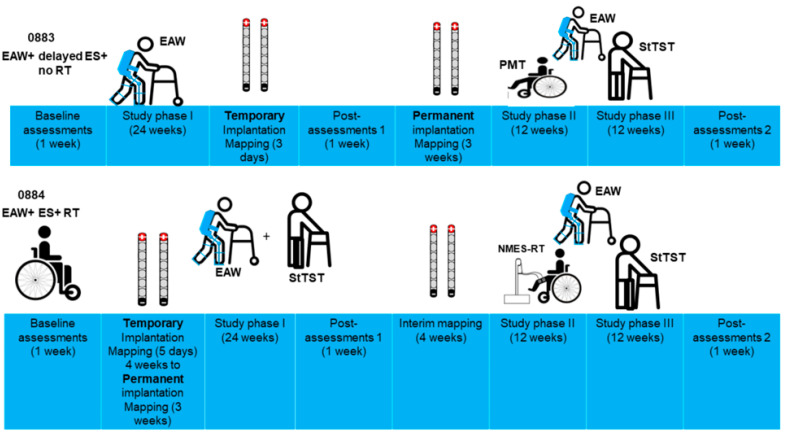
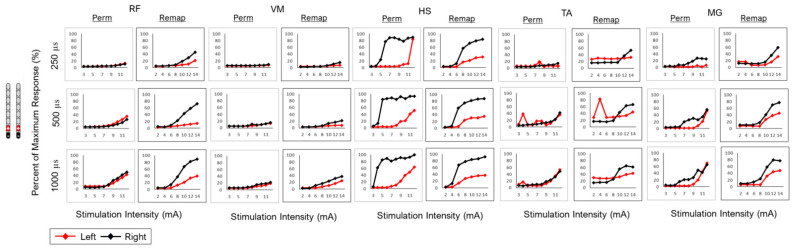
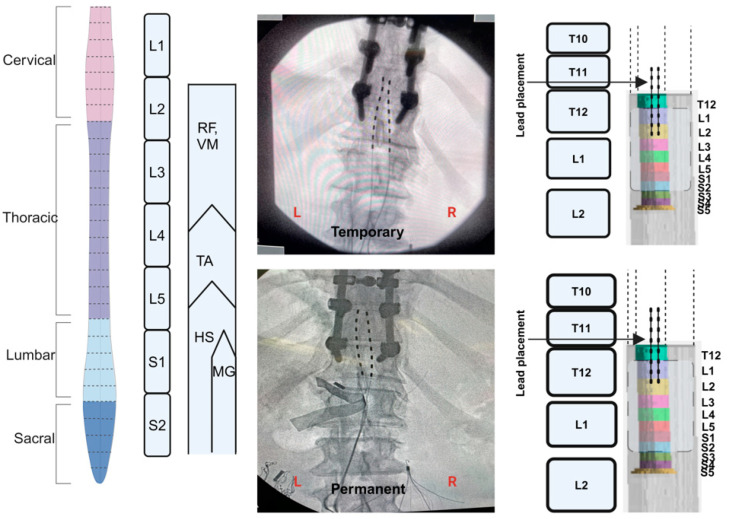
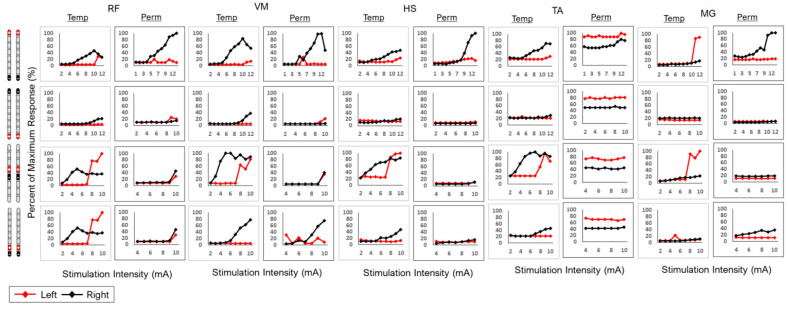
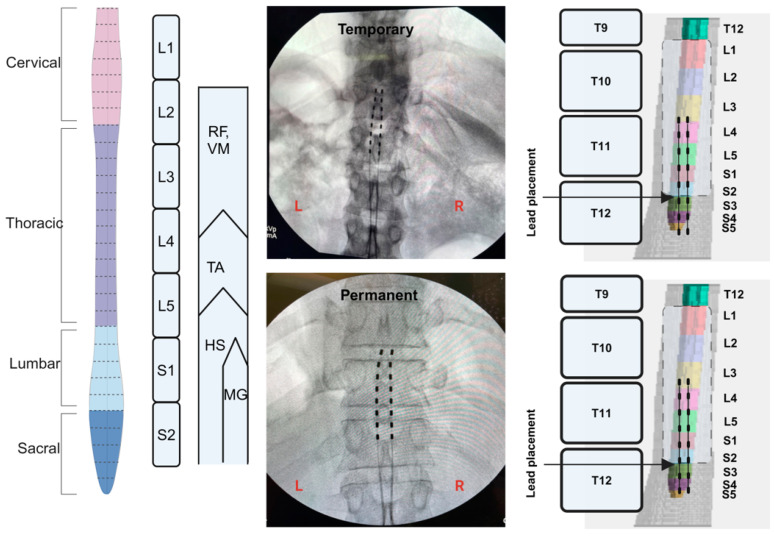
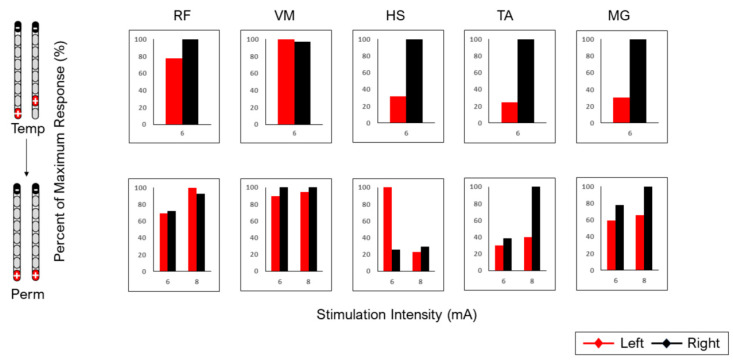
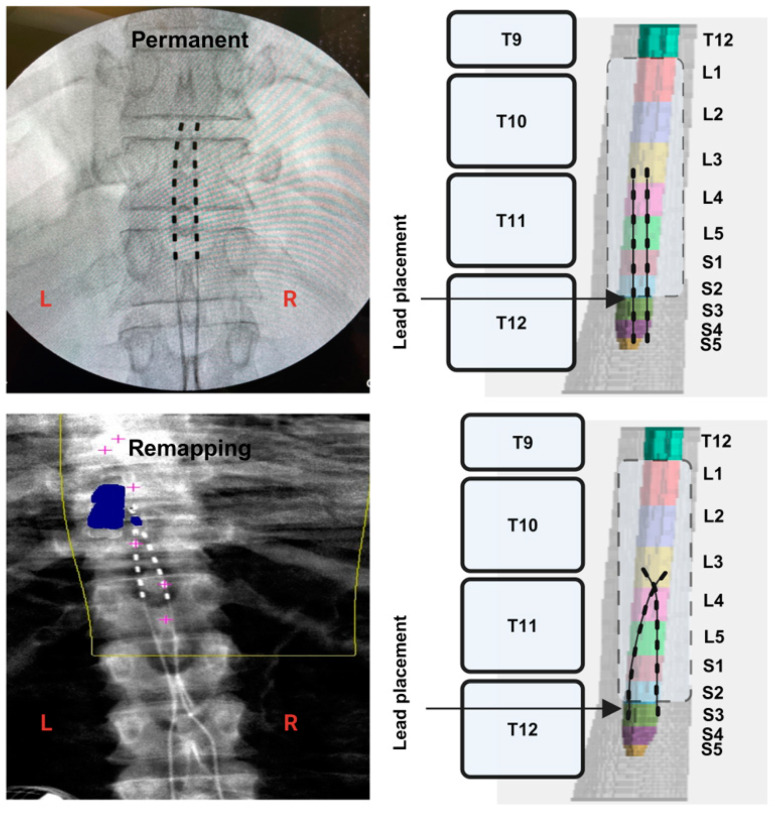
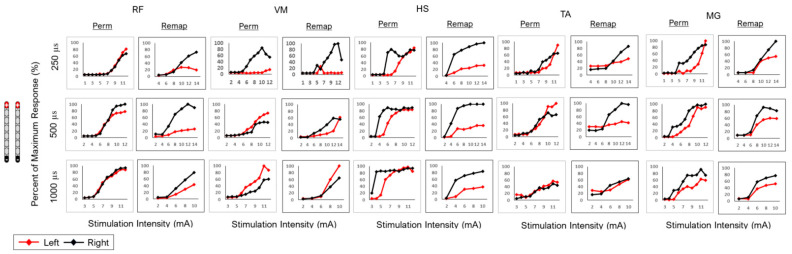
: Spinal cord epidural stimulation (SCES) has the potential to restore motor functions following spinal cord injury (SCI). Spinal cord mapping is a cornerstone step towards successfully configuring SCES to improve motor function, aiming to restore standing and stepping abilities in individuals with SCI. While some centers have advocated for the use of intraoperative mapping to anatomically target the spinal cord locomotor centers, this is a resource-intensive endeavor and may not be a feasible approach in all centers. : Two participants underwent percutaneous SCES implantation as part of a clinical trial. Each participant underwent a temporary (1-week, two-lead) trial followed by a permanent, two-lead implantation. SCES configurations were matched between temporary and permanent mappings, and motor evoked potential in response to 2 Hz, for a duration of 250-1000 µs and with an amplitude of 1-14 mA, was measured using electromyography. T2 axial MRI images captured prior to implantation were used to retrospectively reconstruct the lumbosacral segments of the spinal cord. The effects of lead migration on mapping were further determined in one of the participants. : In both participants, there were recognized discrepancies in the recruitment curves of the motor evoked potentials across different muscle groups between temporary and permanent SCES mappings. These may be explained by retrospective MRI reconstruction of the spinal cord, which indicated that the percutaneous leads did not specifically target the entire L1-S2 segments in both participants. Minor lead migration appeared to have a minimal impact on spinal cord mapping outcomes in one of the participants but did dampen the motor activity of the hip and knee muscle groups. : Temporary mapping coupled with MRI reconstruction has the potential to be considered as guidance for permanent implantation considering target activation of the spinal cord locomotor centers. Since lead migration may alter the synergistic coordination between different muscle groups and since lead migration of 1-2 contacts is expected and planned for in clinical practice, it can be better guided with proper spinal cord mapping and a diligent SCES lead trial beforehand.
脊髓硬膜外刺激(SCES)有潜力在脊髓损伤(SCI)后恢复运动功能。脊髓图谱绘制是成功配置SCES以改善运动功能的关键步骤,旨在恢复SCI患者的站立和行走能力。虽然一些中心主张使用术中图谱绘制来从解剖学上定位脊髓运动中枢,但这是一项资源密集型工作,可能并非在所有中心都可行。:两名参与者作为一项临床试验的一部分接受了经皮SCES植入。每位参与者都进行了为期1周的临时(双导联)试验,随后进行永久性双导联植入。临时和永久性图谱绘制的SCES配置相匹配,并使用肌电图测量了在2Hz频率下、持续时间为250 - 1000微秒且幅度为1 - 14毫安时的运动诱发电位。植入前采集的T2轴位MRI图像用于回顾性重建脊髓的腰骶段。在其中一名参与者中进一步确定了导联迁移对图谱绘制的影响。:在两名参与者中,临时和永久性SCES图谱绘制之间不同肌肉群的运动诱发电位募集曲线存在明显差异。这可能可以通过脊髓的回顾性MRI重建来解释,该重建表明经皮导联在两名参与者中并未专门针对整个L1 - S2节段。在其中一名参与者中,轻微的导联迁移似乎对脊髓图谱绘制结果影响最小,但确实减弱了髋部和膝部肌肉群的运动活动。:考虑到脊髓运动中枢的目标激活,临时图谱绘制与MRI重建相结合有潜力被视为永久性植入的指导。由于导联迁移可能会改变不同肌肉群之间的协同协调,并且由于在临床实践中预计并计划有1 - 2个触点的导联迁移,因此可以通过适当的脊髓图谱绘制和事先认真的SCES导联试验来更好地指导。