Cucciolini Giada, Corda Irene, Forfori Francesco, Corradi Francesco
Department of Surgical, Medical, Molecular Pathology and Critical Care Medicine, University of Pisa, 56126 Pisa, Italy.
J Clin Med. 2024 Nov 17;13(22):6920. doi: 10.3390/jcm13226920.
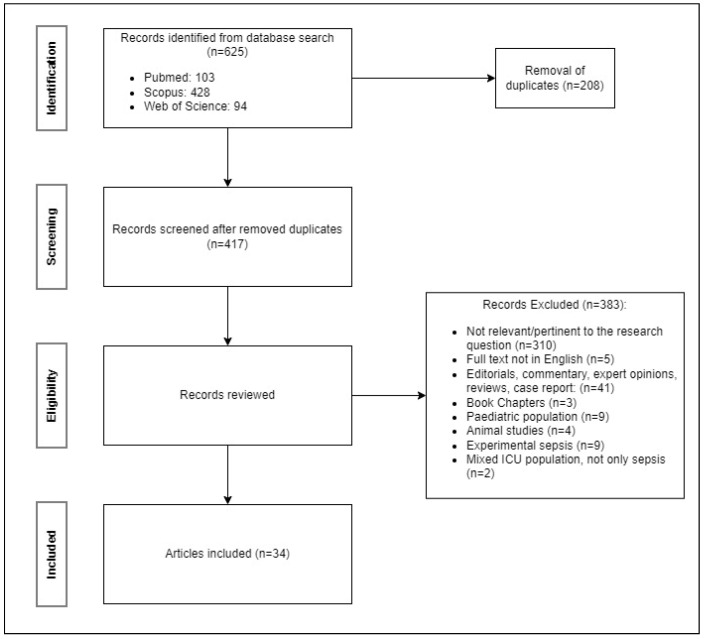
Sepsis-associated encephalopathy (SAE) is linked to high mortality and impaired neurologic outcome. Brain ultrasonography (US) is a non-invasive tool for cerebral monitoring. A scoping review of the literature in three databases was performed to answer if brain perfusion is altered in sepsis, to determine the role of brain US in guiding resuscitation and its ability to predict the outcome. Randomized controlled trials, clinical trials, observational studies, and systematic reviews on adults with sepsis or septic shock in the ICU were included. A total of 625 articles were screened, and 34 included. There were 85% observational studies and 15% systematic reviews with or without meta-analysis. The majority of studies had a small sample size and used different metrics. The studies focused on cerebral blood flow (CBF) alterations reporting variable results (CBF increased, normal, or decreased). The findings showed a variable rate of cerebral autoregulation (CAR) impairment, with higher incidence in the early stages of sepsis and associations with poor neurological outcomes. However, the impact of CAR and CBF alterations on neurological outcomes and mortality was not clear. Very few studies were found on resuscitation. In conclusion, brain US can identify cerebral perfusions alterations and its usage in sepsis is promising. However, the current body of evidence for its usage is poor and lacks standardization.
脓毒症相关性脑病(SAE)与高死亡率和神经功能预后受损有关。脑部超声检查(US)是一种用于脑部监测的非侵入性工具。我们对三个数据库中的文献进行了范围综述,以回答脓毒症时脑灌注是否改变,确定脑部超声在指导复苏中的作用及其预测预后的能力。纳入了关于重症监护病房(ICU)中患有脓毒症或脓毒性休克的成年人的随机对照试验、临床试验、观察性研究和系统评价。共筛选出625篇文章,其中34篇被纳入。有85%的观察性研究和15%的有或无荟萃分析的系统评价。大多数研究样本量较小且使用了不同的指标。这些研究聚焦于脑血流量(CBF)改变,报告的结果各异(CBF增加、正常或减少)。研究结果显示脑自动调节(CAR)受损的发生率各异,在脓毒症早期发生率较高,且与不良神经功能预后相关。然而,CAR和CBF改变对神经功能预后和死亡率的影响尚不清楚。关于复苏的研究极少。总之,脑部超声能够识别脑灌注改变,其在脓毒症中的应用前景广阔。然而,目前关于其应用的证据不足且缺乏标准化。