Calu Valentin, Piriianu Catalin, Miron Adrian, Grigorean Valentin Titus
Elias University Emergency Hospital, 011461 Bucharest, Romania.
Department of Surgery, Carol Davila University of Medicine and Pharmacy, 020021 Bucharest, Romania.
Life (Basel). 2024 Nov 12;14(11):1465. doi: 10.3390/life14111465.
Surgical treatment for rectal cancer may cause complications that exacerbate the condition, lengthen hospital stays, and raise healthcare costs. Rectal cancer surgery complications can be detected immediately with postoperative C-reactive protein (CRP) monitoring. Elevated levels of CRP indicate the presence of inflammation and can serve as a predictive factor for future outcomes.
A retrospective cohort analysis was performed on 67 rectal cancer surgery patients. Prior to and after surgery, CRP levels were measured on days 1-3 and 4-7. Postoperative complications were linked to CRP, surgical approach (open, laparoscopic, conversion), and patient characteristics. This study included -tests, chi-square tests, Mann-Whitney U tests, ANOVA, Pearson and Spearman correlation analyses, and logistic regression.
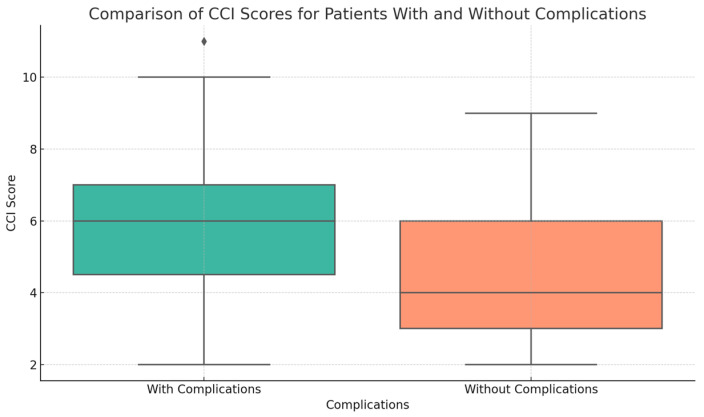
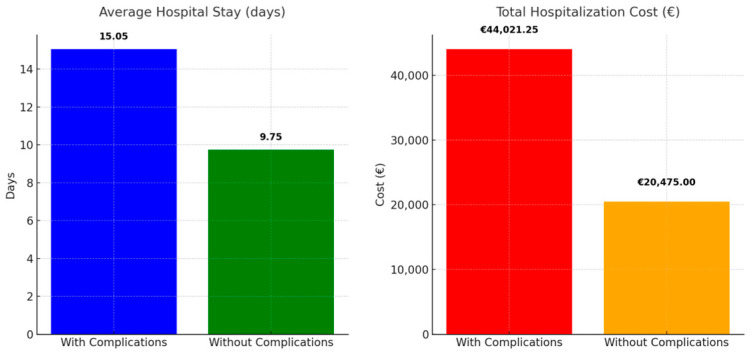
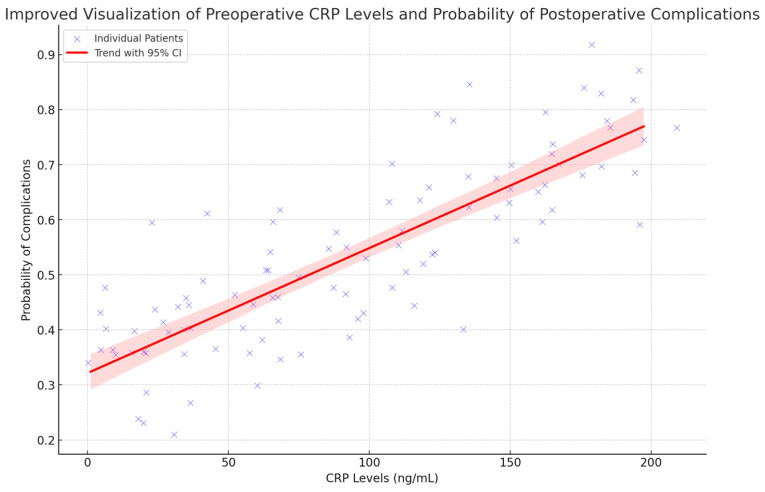
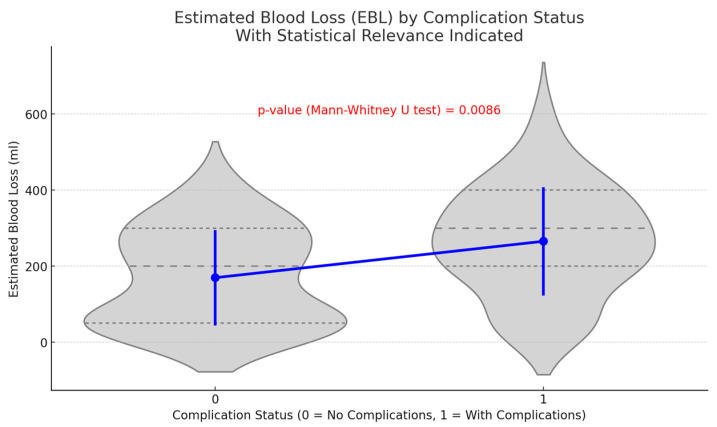
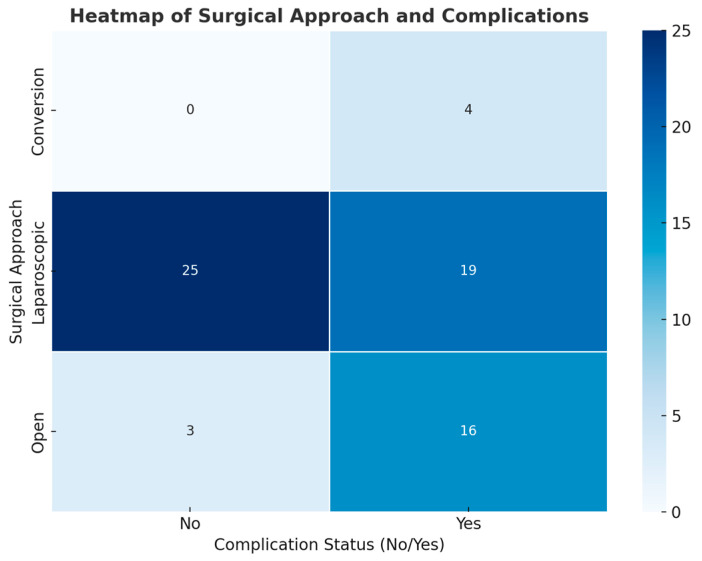
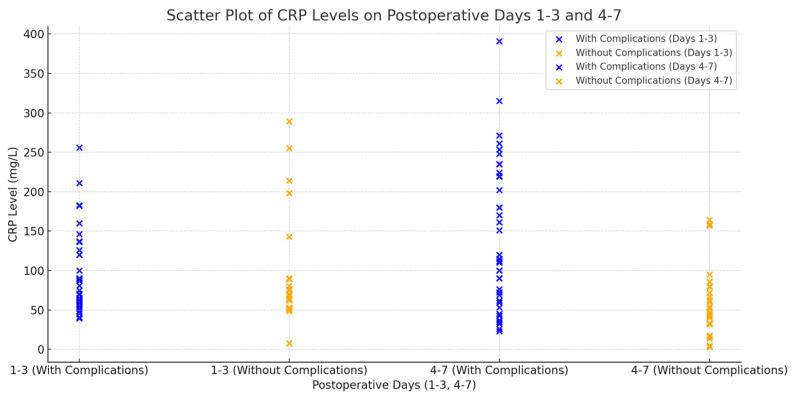
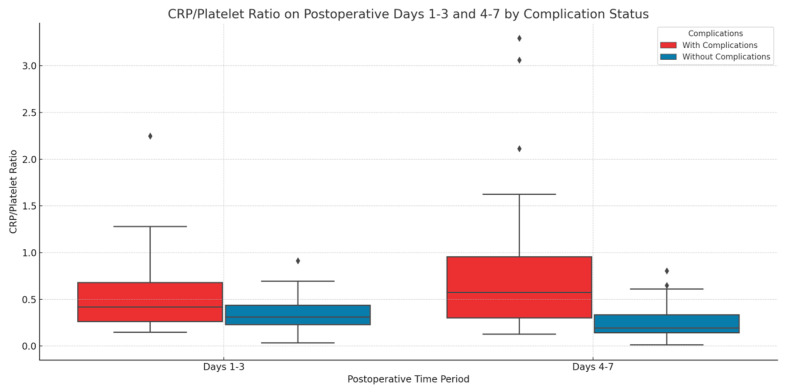
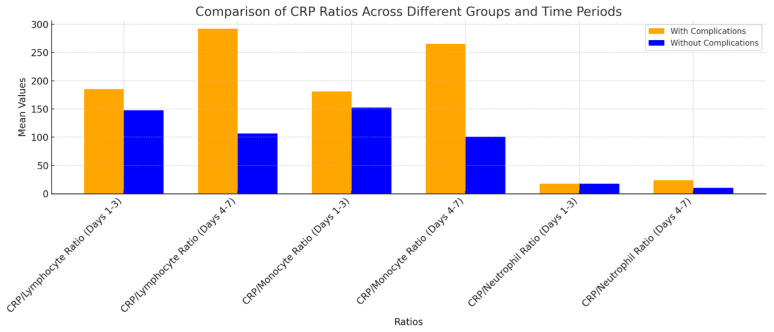
There was a significant correlation between high levels of CRP on postoperative days 4-7 and the development of problems ( < 0.001). The ratios of CRP/albumin and CRP/platelet were highly predictive of problems over this period ( = 0.000033). Patients who encountered problems had a notably greater estimated blood loss ( = 0.0086). Logistic regression analysis demonstrated a statistically significant relationship between higher Charlson Comorbidity Index (CCI) scores and an elevated probability of experiencing problems ( = 0.0078). Moreover, patients who underwent laparoscopic surgery but had to be converted to an open method saw a notably greater incidence of complications ( = 0.0022). From a financial standpoint, the average cost per patient with complications was EUR 1128.75, resulting in a total cost of EUR 44,021.25 for all 39 patients. Conversely, patients who did not experience any difficulties had a cost of EUR 731.25 per patient, resulting in a total of EUR 20,475.00 for all 28 patients.
Regularly monitoring CRP, particularly between days 4 and 7 following surgery for rectal cancer, can promptly identify any complications. Monitoring CRP levels and promptly managing any abnormalities can enhance surgical outcomes and reduce healthcare costs.
直肠癌手术治疗可能引发并发症,导致病情加重、住院时间延长及医疗费用增加。术后监测C反应蛋白(CRP)可即时发现直肠癌手术并发症。CRP水平升高表明存在炎症,可作为未来预后的预测因素。
对67例直肠癌手术患者进行回顾性队列分析。术前及术后第1 - 3天和第4 - 7天测量CRP水平。术后并发症与CRP、手术方式(开放、腹腔镜、中转)及患者特征相关。本研究包括t检验、卡方检验、曼 - 惠特尼U检验、方差分析、Pearson和Spearman相关性分析以及逻辑回归分析。
术后第4 - 7天CRP高水平与并发症发生之间存在显著相关性(P < 0.001)。在此期间,CRP/白蛋白和CRP/血小板比值对并发症具有高度预测性(P = 0.000033)。出现并发症的患者估计失血量显著更多(P = 0.0086)。逻辑回归分析表明,较高的查尔森合并症指数(CCI)评分与发生并发症的概率升高之间存在统计学显著关系(P = 0.0078)。此外,接受腹腔镜手术但中转至开放手术的患者并发症发生率显著更高(P = 0.0022)。从经济角度看,有并发症的患者平均每人费用为1128.75欧元,39例患者总费用为44021.25欧元。相反,未出现任何问题的患者每人费用为731.25欧元,28例患者总计20475.00欧元。
定期监测CRP,尤其是直肠癌手术后第4至7天之间的CRP,可及时发现任何并发症。监测CRP水平并及时处理异常情况可改善手术预后并降低医疗费用。