Department of Nutrition-Related Disease Prevention, Department of Metabolic Disease Prevention, Faculty of Public Health in Bytom, Medical University of Silesia, Bytom, Poland.
Department of Cardiovascular Disease Prevention, Department of Metabolic Disease Prevention, Faculty of Public Health in Bytom, Medical University of Silesia, Bytom, Poland.
Med Sci Monit. 2024 Nov 27;30:e945899. doi: 10.12659/MSM.945899.
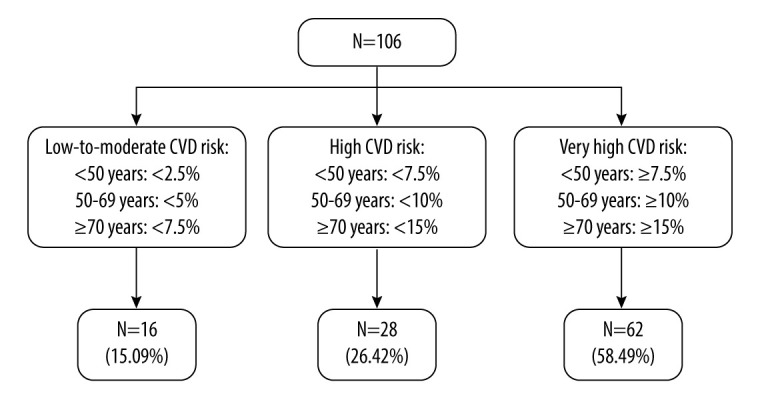
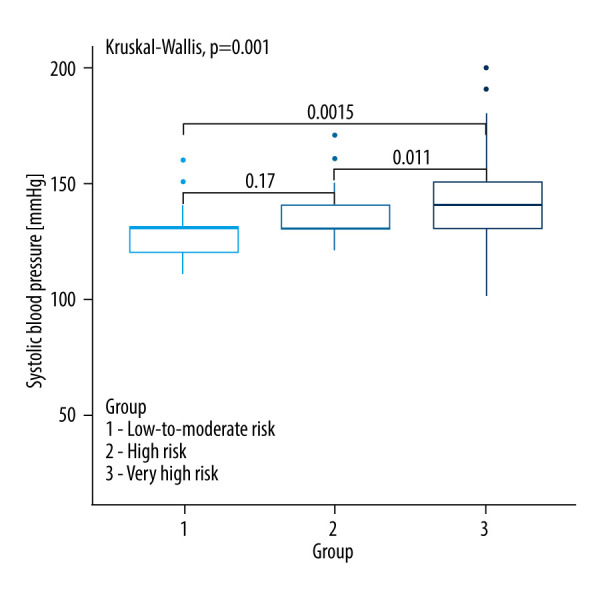
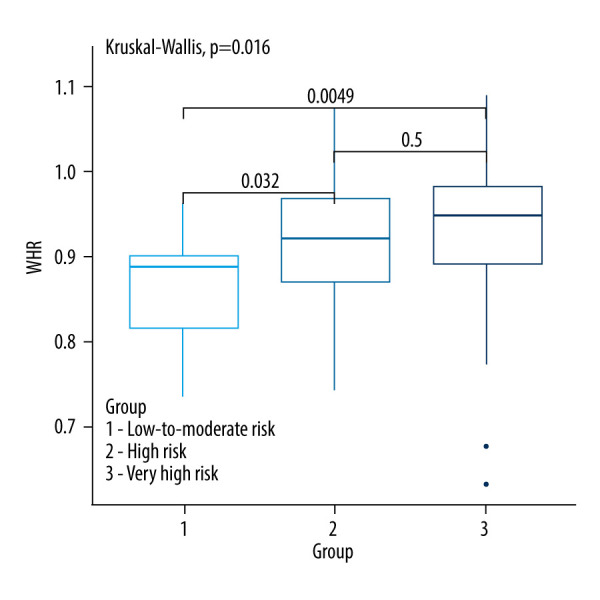
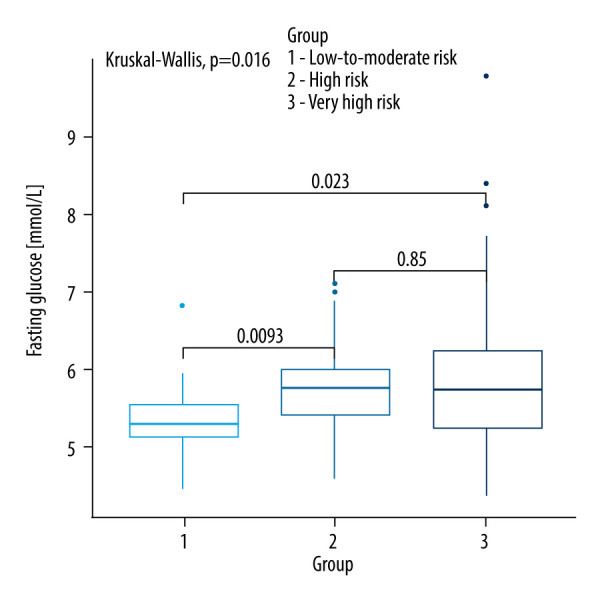
BACKGROUND Non-functioning adrenal adenomas (NFA) are prevalent tumors often associated with metabolic disturbances compared to the general population. This study aimed to evaluate cardiovascular disease (CVD) risk in 106 patients with NFA using SCORE2 and SCORE2-OP algorithms. MATERIAL AND METHODS The study sample comprised of 106 patients with NFA. CVD risk was assessed using SCORE2 and SCORE2-OP charts. The study population was divided across different categories: low-to-moderate risk, high-risk, very high-risk of CVD. Anthropometric measurements, metabolic indices, lipid profiles, and carbohydrate metabolism parameters were analyzed across different CVD risk groups. RESULTS Very high-risk patients had a higher waist-to-hip ratio (WHR) value (0.95; 0.89-0.98) compared to low-to-moderate risk patients (0.89; 0.84-0.91; P=0.0049). Also, high-risk patients had a higher WHR value (0.92; 0.87-0.97) compared to low-to-moderate risk patients (0.89; 0.84-0.91; P=0.032). Patients with low-to-moderate CVD risk had significantly lower fasting glucose levels compared to patients with high CVD risk (5.35; 5.08-5.61 vs 5.78; 5.39-6.03; P=0.0093) as well as compared to patients with very high risk (5.35; 5.08-5.61 vs 5.83; 5.22-6.28; P=0.0230). There was no significant difference in lipid parameters and atherogenic indices between the groups based on CVD risk according to SCORE2 and SCORE2-OP. CONCLUSIONS Elevated fasting glucose levels are significantly associated with higher CVD risk in NFA patients, particularly in high and very high-risk group. Systolic blood pressure and WHR were identified as cost-effective measures for predicting of CVD among NFA patients. Metabolic indices did not show any significant differences across CVD risk groups.
与普通人群相比,无功能性肾上腺腺瘤(NFA)是一种常见的代谢紊乱相关肿瘤。本研究旨在使用 SCORE2 和 SCORE2-OP 算法评估 106 例 NFA 患者的心血管疾病(CVD)风险。
研究样本包括 106 例 NFA 患者。使用 SCORE2 和 SCORE2-OP 图表评估 CVD 风险。根据不同的 CVD 风险类别将研究人群分为低至中度风险、高风险和极高风险。对不同 CVD 风险组的人体测量指标、代谢指数、血脂谱和糖代谢参数进行分析。
极高风险患者的腰围-臀围比(WHR)值(0.95;0.89-0.98)高于低至中度风险患者(0.89;0.84-0.91;P=0.0049)。此外,高风险患者的 WHR 值(0.92;0.87-0.97)高于低至中度风险患者(0.89;0.84-0.91;P=0.032)。与高 CVD 风险患者(5.35;5.08-5.61 与 5.78;5.39-6.03;P=0.0093)和极高风险患者(5.35;5.08-5.61 与 5.83;5.22-6.28;P=0.0230)相比,低至中度 CVD 风险患者的空腹血糖水平显著降低。根据 SCORE2 和 SCORE2-OP,各组之间的血脂参数和致动脉粥样硬化指数没有差异。
空腹血糖升高与 NFA 患者的 CVD 风险显著相关,尤其是在高风险和极高风险组。收缩压和 WHR 被确定为预测 NFA 患者 CVD 的具有成本效益的措施。代谢指数在 CVD 风险组之间没有显示出任何显著差异。