Dong Lining, Li Junxian, Hu Yanyun, Chai Ruoting, Zhu Ye, Zhu Liying, Fan Nengguang, Zhang Zhijian, Pan Jiemin, Yan Jinhua, Liu Fang
Department of Endocrinology and Metabolism, Shanghai General Hospital, Shanghai Jiao Tong University, School of Medicine, Shanghai, China.
Shanghai Key Laboratory of Diabetes, Department of Endocrinology & Metabolism, Shanghai Jiao-Tong University Affiliated Sixth People's Hospital, Shanghai Clinical Medical Center of Diabetes, Shanghai Key Clinical Center of Metabolic Diseases, Shanghai Institute for Diabetes, Shanghai, China.
Front Endocrinol (Lausanne). 2024 Nov 12;15:1464755. doi: 10.3389/fendo.2024.1464755. eCollection 2024.
Hypoglycemia represents a serious acute complication in individuals with type 1 diabetes mellitus (T1DM). In order to more effectively identify and discriminate the occurrence of hypoglycemic events in patients with T1DM, this study aims to evaluate the impact of two distinct glucose monitoring systems-Flash Glucose Monitoring (FGM) and Continuous Glucose Monitoring (CGM)-on the management of blood glucose levels and the emotional responses associated with hypoglycemic episodes in individuals with T1DM.
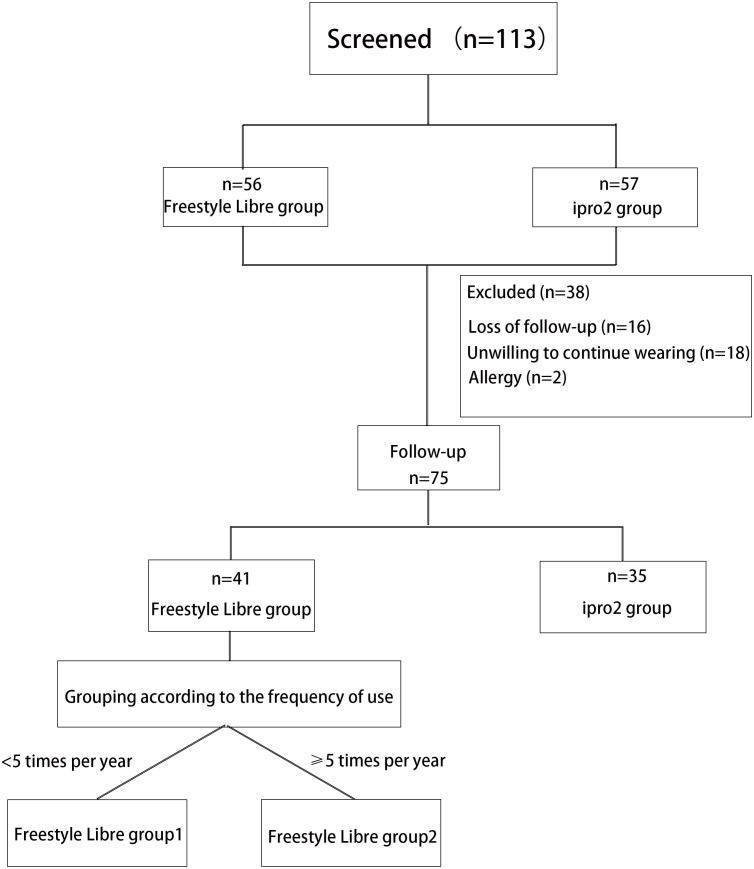
In this study, a total of 113 patients with type 1 diabetes mellitus were enrolled and allocated to two groups for the implementation of Glucose Monitoring Systems (GMS). The groups consisted of the FreeStyle Libre group (FGM, n=56) and the ipro2 group (CGM, n=57). Participants in both groups utilized GMS at least biannually and completed a set of three questionnaires: the Diabetes Monitoring and Treatment Satisfaction Questionnaire (DMTSQ), the Diabetes Specific Quality of Life (DQOL), and the Chinese Version of the Hypoglycemia Fear Survey II (CFHSII). Clinical data, CGM metrics, and questionnaire scores were collected at the initial visit and after a one-year follow-up period.
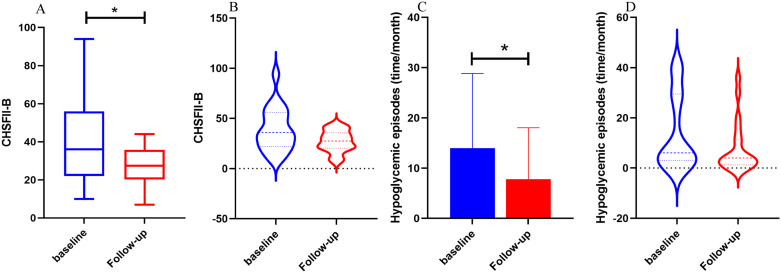
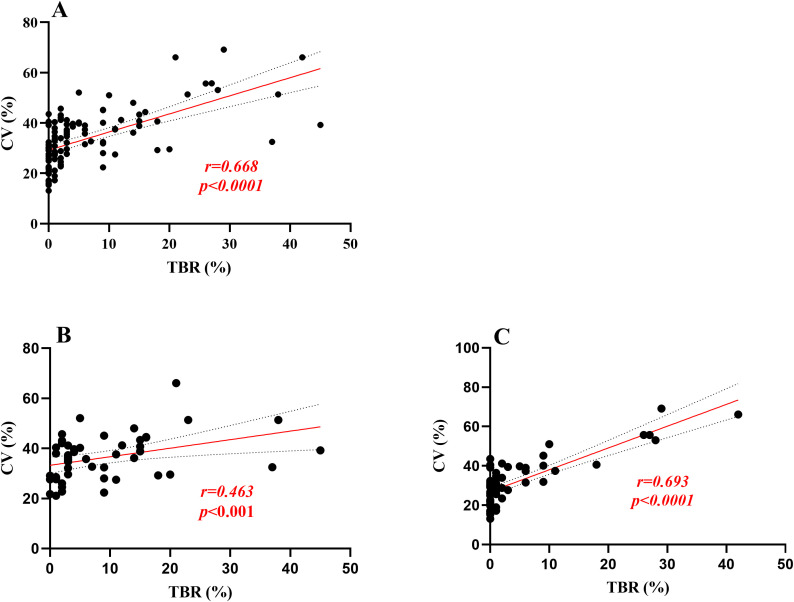
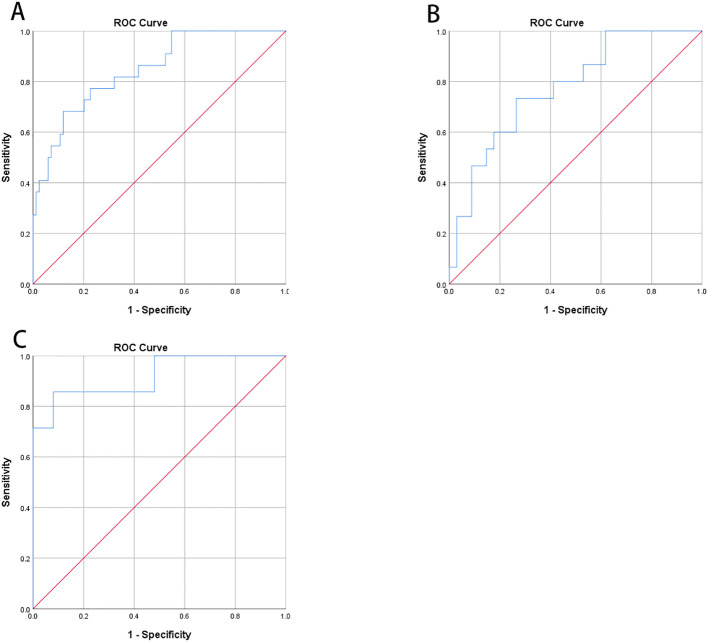
The glucose coefficient of variation (GCV) and the standard deviation of blood glucose (SDBG) were independently associated with Time Below Range (TBR). Specifically, GCV could predict TBR ≥12%, with a cut-off point of 40.55. This yielded a specificity of 88.10% and a sensitivity of 68.18% in the overall patient population. For the FreeStyle Libre group and the iPro2 group, the cut-off points were 38.69 and 40.55, respectively, with specificities of 0.74 and 0.92, and sensitivities of 0.73 and 0.86, respectively. In the FreeStyle Libre group, where the frequency of use was greater than or equal to five times per year, the hypoglycemic episodes (time/month) and CHFSII-B scores were significantly reduced at follow-up compared to baseline (7.80 ± 10.25 vs 13.95 ± 14.87; 27.37 ± 11.05 vs 38.90 ± 21.61, respectively, all P <0.05).
The utilization of multiple Flash Glucose Monitoring (FGM) implementations proved to be valuable in discriminating the occurrence of hypoglycemia and mitigating the fear of hypoglycemic episodes in patients with type 1 diabetes. Within the parameters of Glucose Monitoring Systems (GMS), the glucose glycemic variability (GCV) was identified as a predictive factor for the risk of severe hypoglycemia (TBR > 12%). The optimal cut-off point for GCV was determined to be 40.55.
低血糖是1型糖尿病(T1DM)患者的一种严重急性并发症。为了更有效地识别和区分T1DM患者低血糖事件的发生,本研究旨在评估两种不同的血糖监测系统——动态葡萄糖监测(FGM)和持续葡萄糖监测(CGM)——对T1DM患者血糖水平管理以及与低血糖发作相关的情绪反应的影响。
本研究共纳入113例1型糖尿病患者,并将其分为两组以实施血糖监测系统(GMS)。两组分别为FreeStyle Libre组(FGM,n = 56)和ipro2组(CGM,n = 57)。两组参与者至少每半年使用一次GMS,并完成一套三份问卷:糖尿病监测与治疗满意度问卷(DMTSQ)、糖尿病特异性生活质量问卷(DQOL)和中文版低血糖恐惧调查II(CFHSII)。在初次就诊时和一年随访期后收集临床数据、CGM指标和问卷分数。
血糖变异系数(GCV)和血糖标准差(SDBG)与血糖低于目标范围时间(TBR)独立相关。具体而言,GCV可以预测TBR≥12%,截断点为40.55。在总体患者人群中,其特异性为88.10%,敏感性为68.18%。对于FreeStyle Libre组和iPro2组,截断点分别为38.69和40.55,特异性分别为0.74和0.92,敏感性分别为0.73和0.86。在FreeStyle Libre组中,每年使用频率大于或等于五次的患者,随访时低血糖发作次数(次/月)和CHFSII - B评分较基线显著降低(分别为7.80±10.25 vs 13.95±14.87;27.37±11.05 vs 38.90±21.61,均P<0.05)。
多次使用动态葡萄糖监测(FGM)在区分低血糖的发生以及减轻1型糖尿病患者对低血糖发作的恐惧方面被证明是有价值的。在血糖监测系统(GMS)参数范围内,血糖变异性(GCV)被确定为严重低血糖风险(TBR>12%)的预测因素。GCV的最佳截断点确定为40.55。