Aix-Marseille Univ, CNRS, INP, Institute of Neurophysiopathology UMR7051, Team Gliomagenesis and Microenvironment, Faculté des Sciences Médicales et Paramédicales - Secteur Timone, 27, Bd Jean Moulin, Marseille, 13005, France.
Department of Drug Science and Technology, University of Turin, Turin, 10125, Italy.
J Exp Clin Cancer Res. 2024 Nov 28;43(1):311. doi: 10.1186/s13046-024-03231-4.
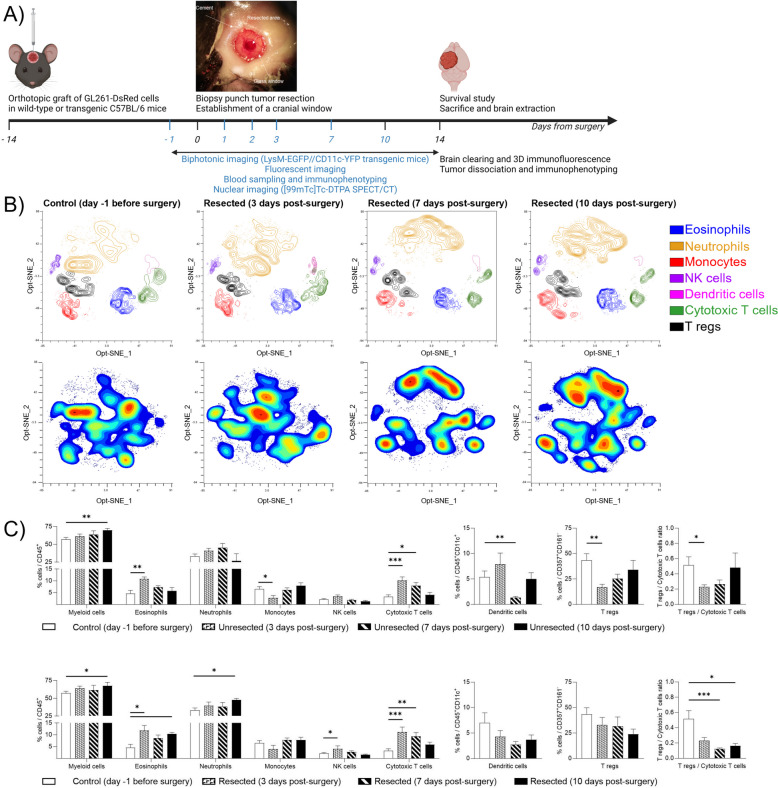
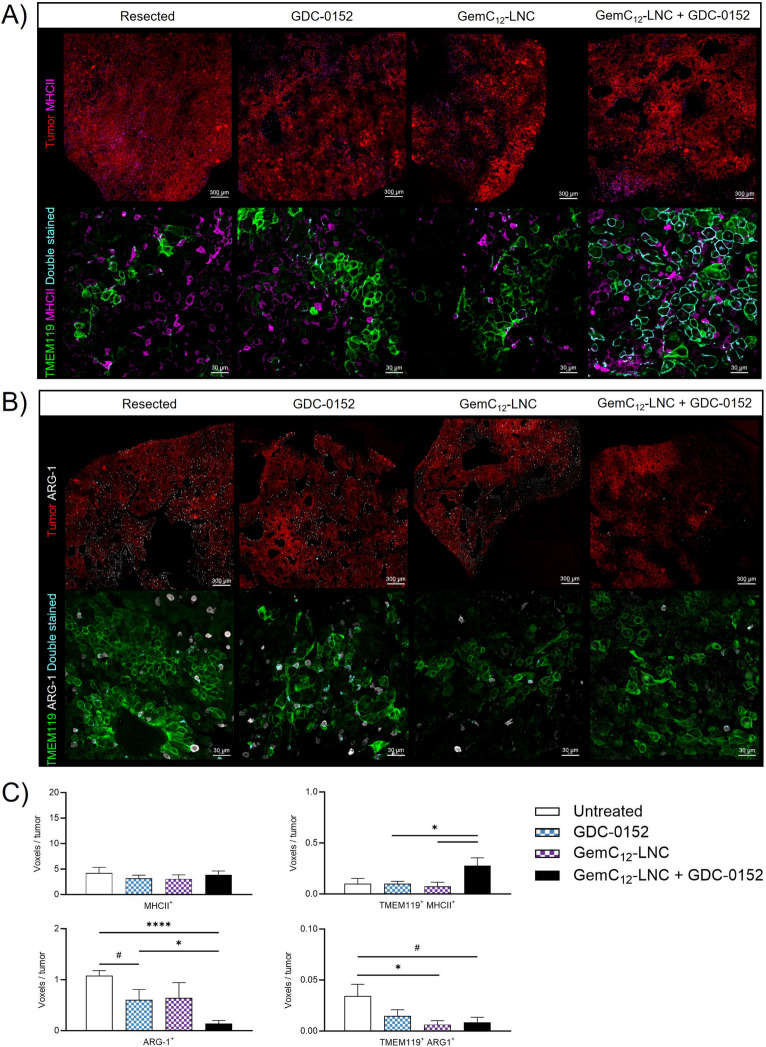
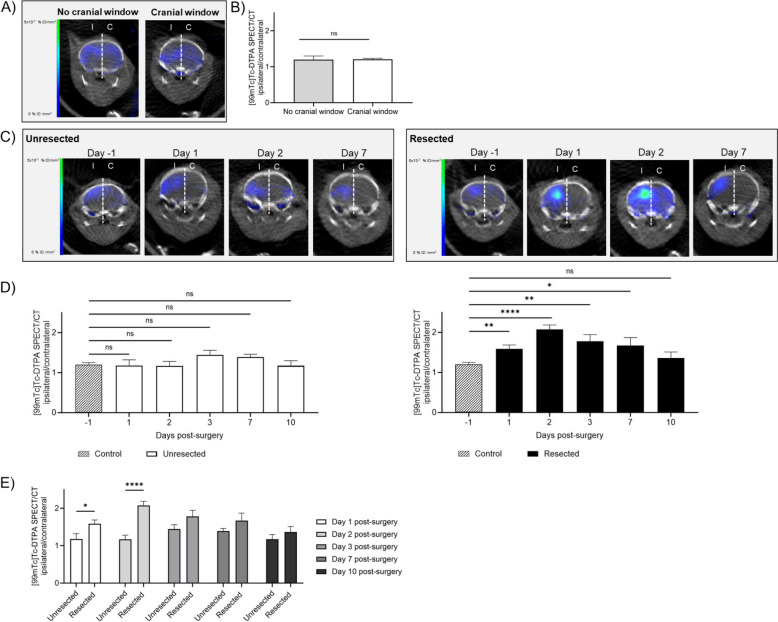
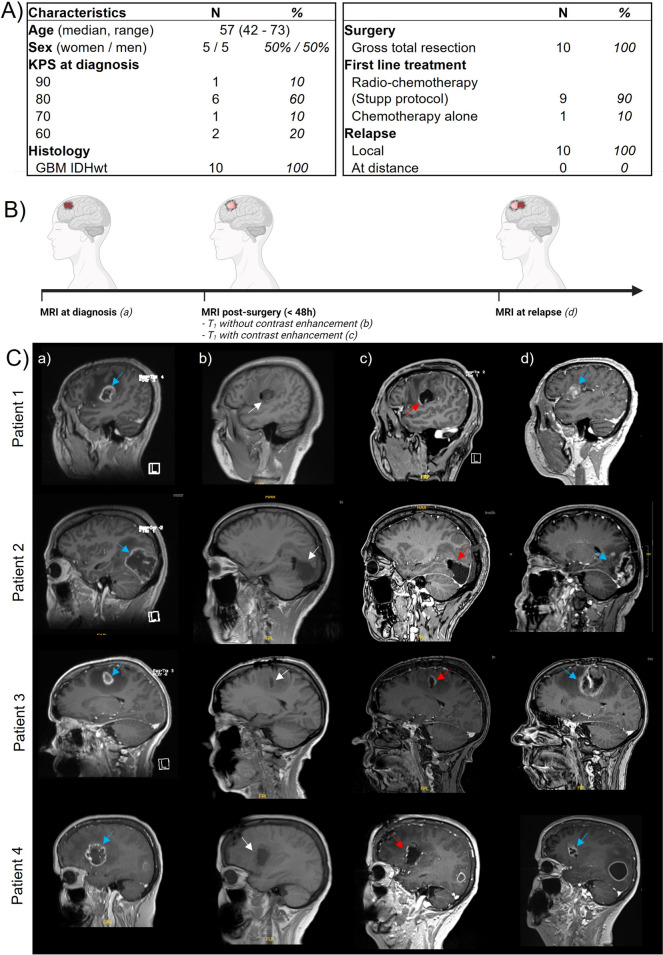
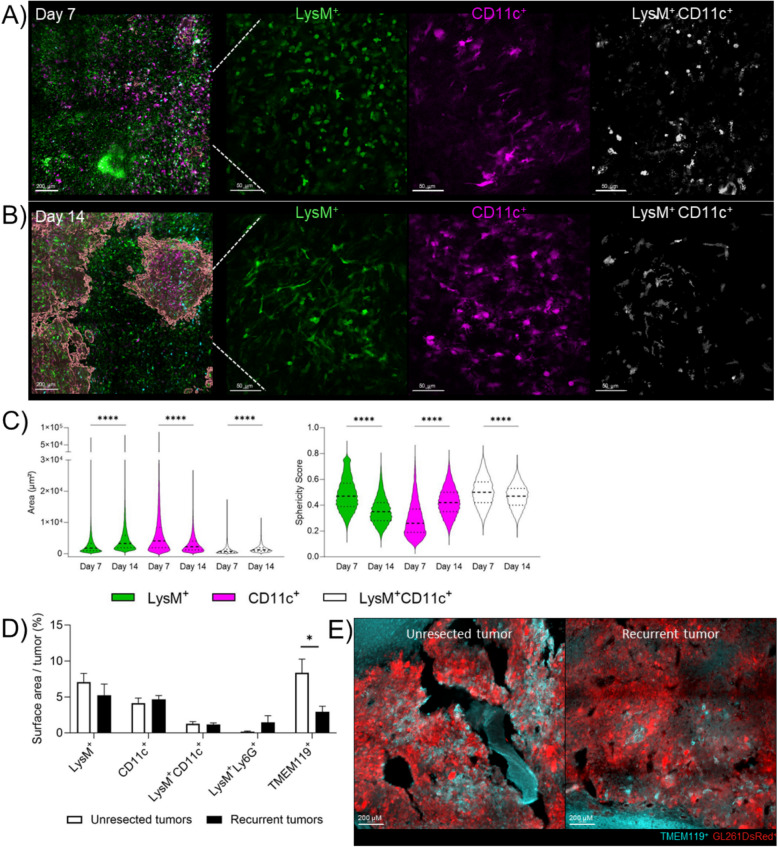
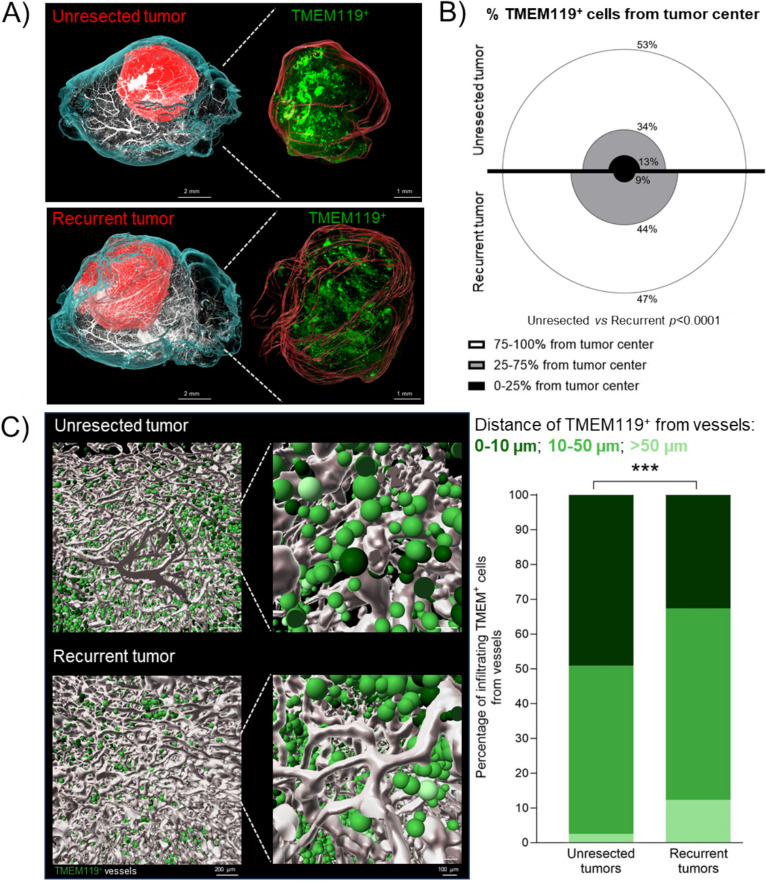
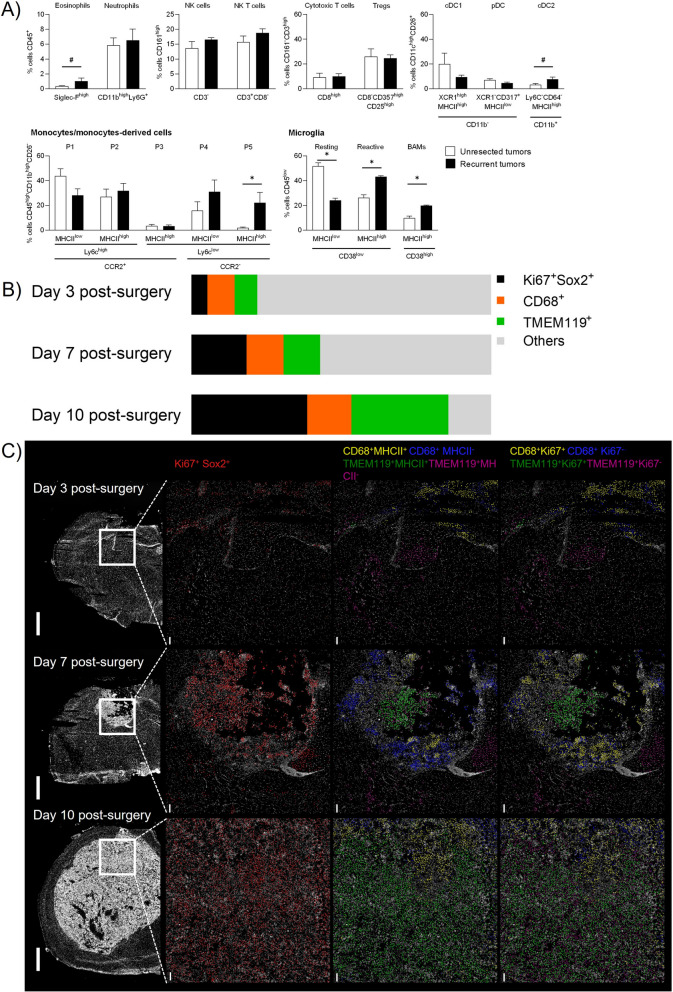
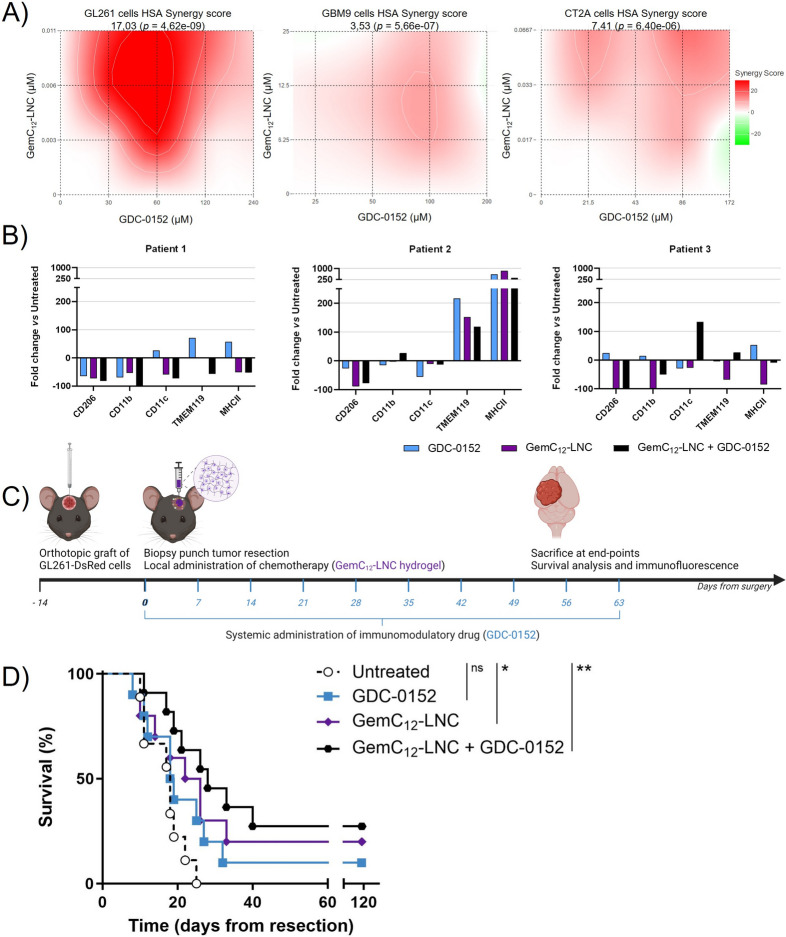
Glioblastoma (GBM), an incurable primary brain tumor, typically requires surgical intervention followed by chemoradiation; however, recurrences remain fatal. Our previous work demonstrated that a nanomedicine hydrogel (GemC-LNC) delays recurrence when administered post-surgery. However, tumor debulking also triggers time-dependent immune reactions that promote recurrence at the resection cavity borders. We hypothesized that combining the hydrogel with an immunomodulatory drug could enhance therapeutic outcomes. A thorough characterization of the post-surgical microenvironment (SMe) is crucial to guide combinatorial approaches.In this study, we performed cellular resolution imaging, flow cytometry and spatial hyperplexed immunofluorescence imaging to characterize the SMe in a syngeneic mouse model of tumor resection. Owing to our dynamic approach, we observed transient opening of the blood-brain barrier (BBB) during the first week after surgery. BBB permeability post-surgery was also confirmed in GBM patients. In our murine model, we also observed changes in immune cell morphology and spatial location post-surgery over time in resected animals as well as the accumulation of reactive microglia and anti-inflammatory macrophages in recurrences compared to unresected tumors since the first steps of recurrence growth. Therefore we investigated whether starting a systemic treatment with the SMAC mimetic small molecule (GDC-0152) directly after surgery would be beneficial for enhancing microglial anti-tumoral activity and decreasing the number of anti-inflammatory macrophages around the GemC-LNC hydrogel-loaded tumor cavity. The immunomodulatory effects of this drug combination was firstly shown in patient-derived tumoroids. Its efficacy was confirmed in vivo by survival analysis and correlated with reversal of the immune profile as well as delayed tumor recurrence.This comprehensive study identified critical time frames and immune cellular targets within the SMe, aiding in the rational design of combination therapies to delay recurrence onset. Our findings suggest that post-surgical systemic injection of GDC-0152 in combination with GemC-LNC local treatment is a promising and innovative approach for managing GBM recurrence, with potential for future translation to human patient.
胶质母细胞瘤(GBM)是一种无法治愈的原发性脑肿瘤,通常需要手术干预后进行放化疗;然而,复发仍是致命的。我们之前的工作表明,一种纳米医学水凝胶(GemC-LNC)在手术后给药可以延迟复发。然而,肿瘤切除术也会引发时间依赖性免疫反应,促进切除腔边界的复发。我们假设将水凝胶与免疫调节剂联合使用可以增强治疗效果。对手术后微环境(SMe)进行全面表征对于指导联合治疗方法至关重要。在这项研究中,我们使用细胞分辨率成像、流式细胞术和空间超多重免疫荧光成像技术对肿瘤切除的同种异体小鼠模型中的 SMe 进行了表征。由于我们采用了动态方法,我们观察到手术后第一周内血脑屏障(BBB)短暂开放。手术后 BBB 通透性也在 GBM 患者中得到了证实。在我们的小鼠模型中,我们还观察到手术后随着时间的推移,切除动物的免疫细胞形态和空间位置发生变化,以及在复发时与未切除肿瘤相比,反应性小胶质细胞和抗炎巨噬细胞的积累。因此,我们研究了直接在手术后开始用 SMAC 模拟小分子(GDC-0152)进行全身治疗是否有利于增强小胶质细胞的抗肿瘤活性并减少 GemC-LNC 水凝胶负载肿瘤腔周围的抗炎巨噬细胞数量。这种药物组合的免疫调节作用首先在患者来源的肿瘤球中得到证实。其疗效通过生存分析在体内得到证实,并与免疫表型的逆转以及肿瘤复发的延迟相关。这项全面的研究确定了 SMe 中的关键时间框架和免疫细胞靶点,有助于合理设计联合治疗方案以延迟复发的发生。我们的研究结果表明,手术后系统性注射 GDC-0152 联合 GemC-LNC 局部治疗是一种有前途的创新方法,可以用于治疗 GBM 复发,具有向人类患者转化的潜力。