Department of Nephrology, Shanghai East Hospital, Tongji University School of Medicine, Shanghai, China.
Department of Nephrology, Shanghai Songjiang District Central Hospital, Shanghai, China.
Ren Fail. 2024 Dec;46(2):2431637. doi: 10.1080/0886022X.2024.2431637. Epub 2024 Nov 28.
Whether angiotensin receptor-neprilysin inhibitor (ARNI) can reduce the incidence of cardiovascular events and improve peritoneal function in peritoneal dialysis (PD) patients remains unclear. Thus, this study aims to clarify the role of ARNI in PD patients.
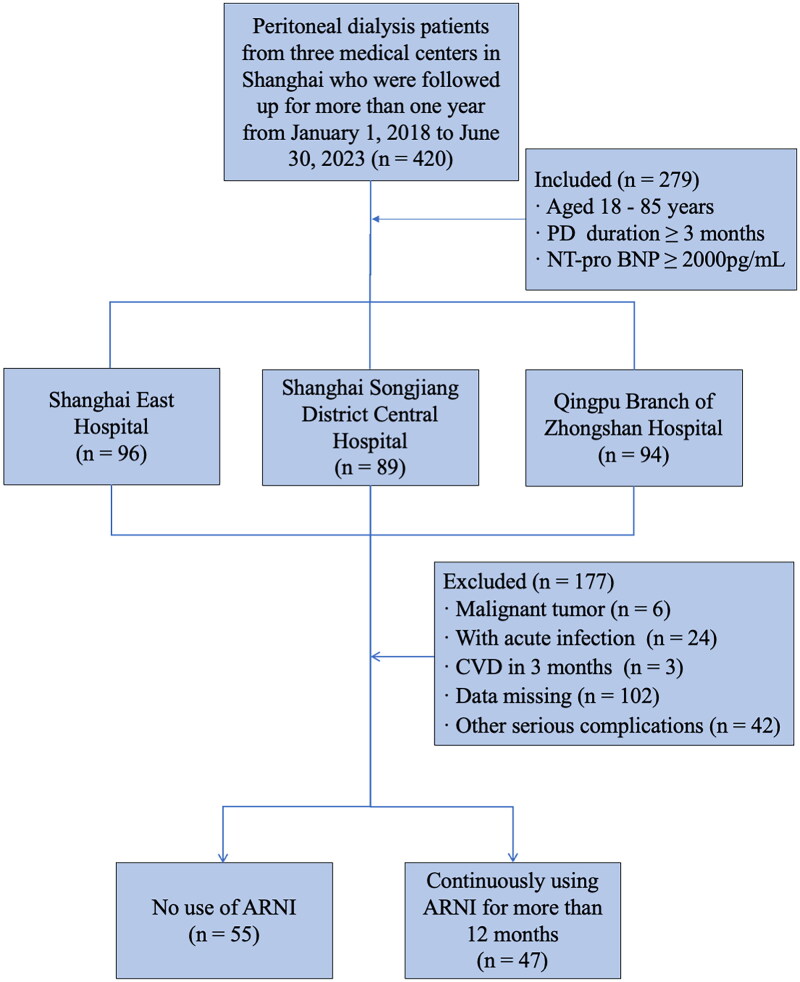
This was a multicenter retrospective study. A total of 102 patients were enrolled for analysis. Patients who continuously used ARNI for 12 months were assigned to the ARNI group ( = 55), while those who never used ARNI to the control group ( = 47). Clinical indicators and cardiovascular risk factors were analyzed, along with experiments on neoangiogenesis to investigate the underlying molecular mechanisms of peritoneal protection by ARNI.
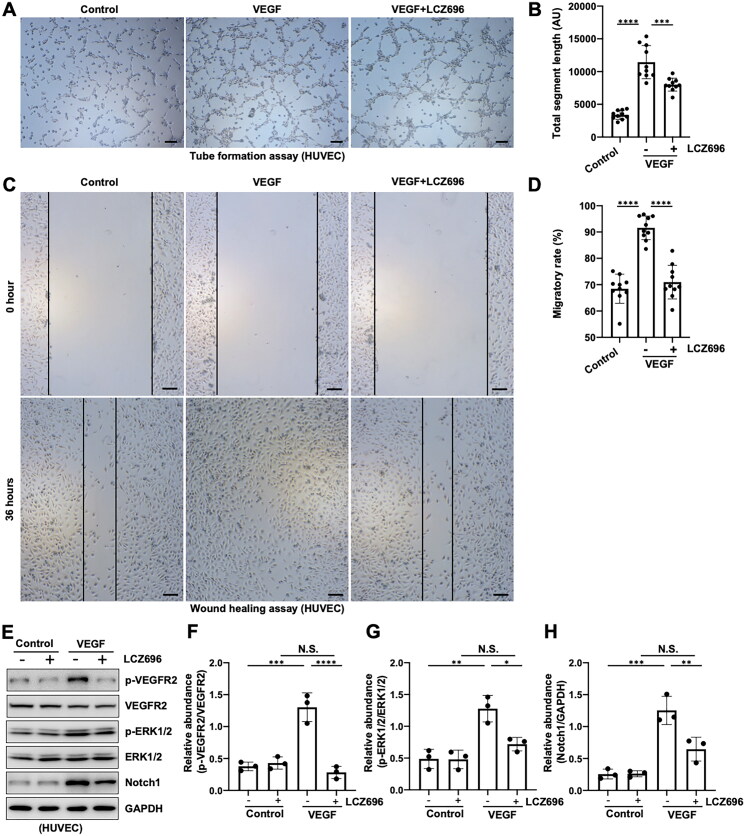
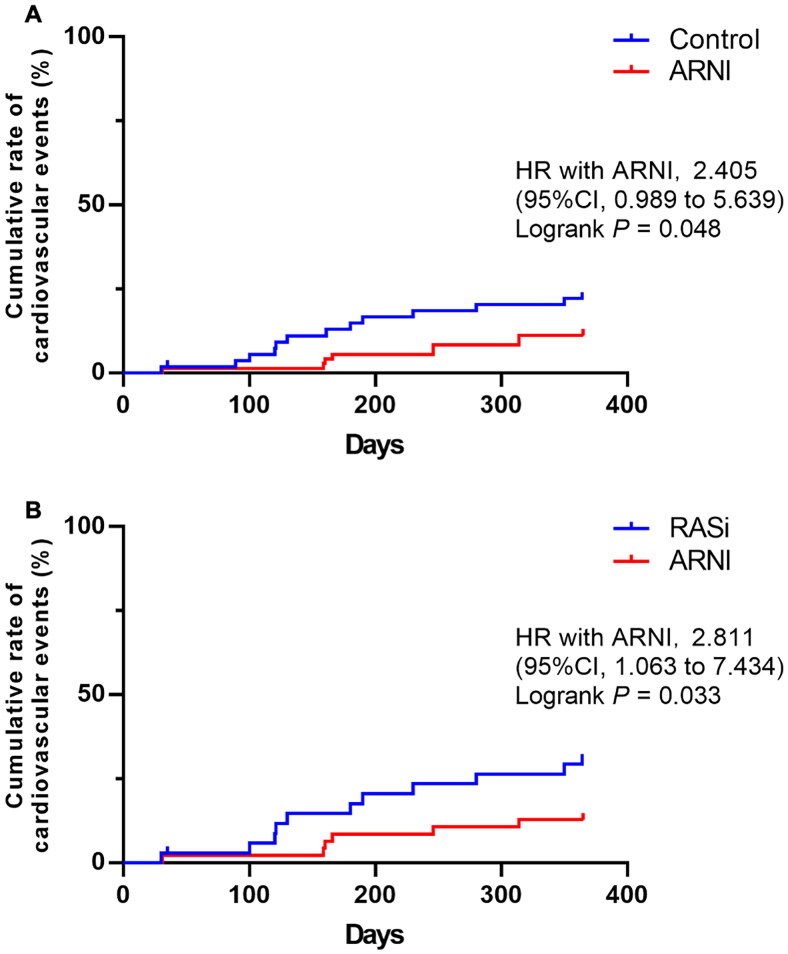
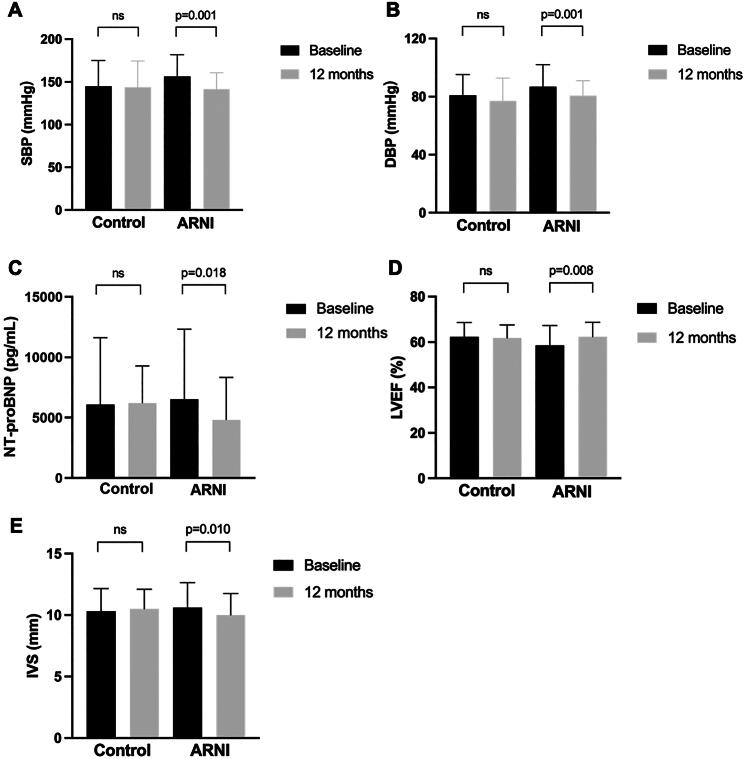
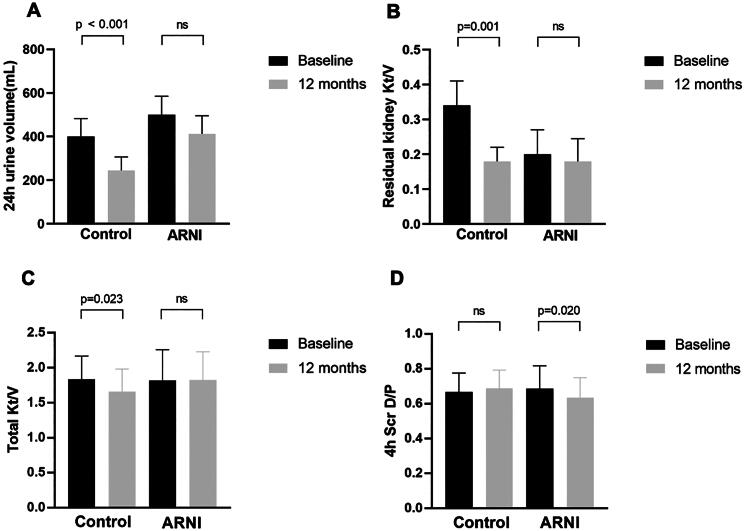
Systolic blood pressure ( = 0.001), diastolic blood pressure ( = 0.001), and left ventricular ejection fraction ( = 0.008) were statistically improved after 12 months of ARNI therapy, whereas these metrics did not change in control patients. The risk factors for the occurrence of cardiac events in PD patients included the use of ARNI [hazard ratio (HR) 0.053; 95% confidence interval (CI), 0.006-0.492] and NT-proBNP level (HR 2.317; 95% CI, 1.179-4.554). Additionally, there was a decrease in 4-hour ratio of creatinine concentration in dialysate to plasma (4h Scr D/P) in the ARNI group ( = 0.020). The experiments showed that LCZ696, a combination of sacubitril and valsartan, inhibited neoangiogenesis the VEGFR2/ERK1/2 and Notch1 pathways.
ARNI may play a protective role in reducing the incidence of cardiovascular events and decreasing solute transport in PD patients.
血管紧张素受体-脑啡肽酶抑制剂(ARNI)是否能降低腹膜透析(PD)患者心血管事件的发生率并改善腹膜功能尚不清楚。因此,本研究旨在阐明 ARNI 在 PD 患者中的作用。
这是一项多中心回顾性研究。共纳入 102 例患者进行分析。连续使用 ARNI 12 个月的患者被分配到 ARNI 组(n=55),从未使用过 ARNI 的患者被分配到对照组(n=47)。分析临床指标和心血管危险因素,并进行新生血管生成实验,以研究 ARNI 对腹膜保护的潜在分子机制。
ARNI 治疗 12 个月后,收缩压(P=0.001)、舒张压(P=0.001)和左心室射血分数(P=0.008)均有统计学改善,而对照组患者的这些指标没有变化。PD 患者发生心脏事件的危险因素包括使用 ARNI[风险比(HR)0.053;95%置信区间(CI)0.006-0.492]和 NT-proBNP 水平(HR 2.317;95% CI,1.179-4.554)。此外,ARNI 组 4 小时肌酐浓度比(4h Scr D/P)降低(P=0.020)。实验表明,沙库巴曲缬沙坦(LCZ696)抑制了新生血管生成的 VEGFR2/ERK1/2 和 Notch1 通路。
ARNI 可能在降低 PD 患者心血管事件发生率和减少溶质转运方面发挥保护作用。