Zhang Fen, Zhang Tingting, Yang Sisi, Wang Di, Zhuo Qianqian, Qin Xianhui, Gong Nirong, Ai Jun
State Key Laboratory of Organ Failure Research, Guangdong Provincial Key Laboratory of Renal Failure Research, Guangzhou Regenerative Medicine and Health Guangdong Laboratory, National Clinical Research Center of Kidney Disease, Division of Nephrology, Nanfang Hospital, Southern Medical University, Guangzhou, China.
Front Med (Lausanne). 2022 Jun 3;9:831541. doi: 10.3389/fmed.2022.831541. eCollection 2022.
There are few data about the effectiveness and safety of angiotensin receptor-neprilysin inhibitor (ARNI) sacubitril-valsartan in end-stage renal disease (ESRD) patients undergoing peritoneal dialysis (PD). The present study was conducted to evaluate the association between sacubitril-valsartan treatment and peritoneal ultrafiltration (PUF) in PD patients.
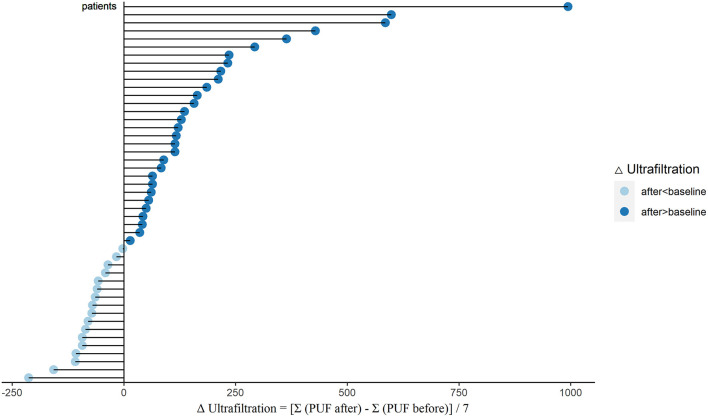
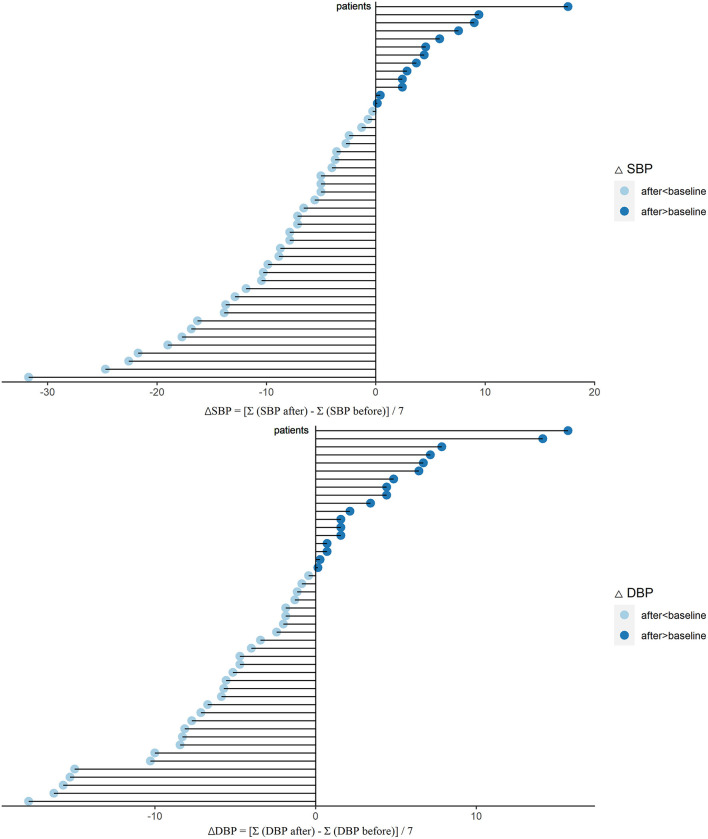
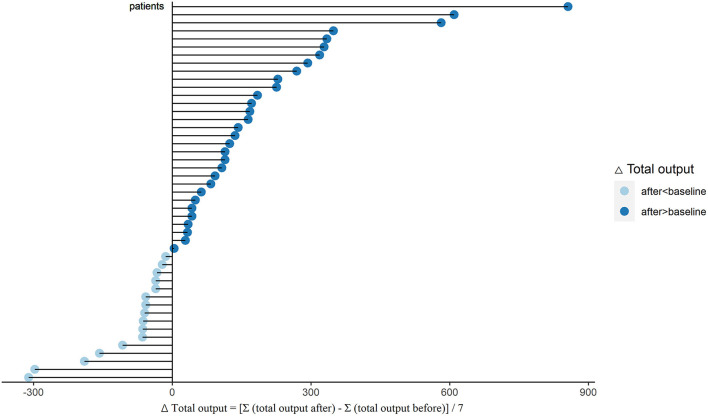
Forty-seven ESRD patients undergoing PD for at least 3 months without severe congestive heart failure (CHF) were included in this study. Sacubitril-valsartan (generally 100 mg b.i.d) was administered after consultation with the nephrologist. Angiotensin-converting enzyme (ACE) inhibitors and angiotensin receptor blockers (ARBs) were required to be discontinued 36 h before prescribing sacubitril-valsartan. Other treatments and dialysis modality did not change. Baseline demographic and clinical parameters were collected before ARNI administration, and daily PUF, urine volume, total output, blood pressure (BP), and body weight were collected within 7 days before and after ARNI treatment. After treated with sacubitril-valsartan, 30 patients (63.8%) had a significant increase of PUF [up to 150.4 (110.7, 232.1) ml per day], while the remaining 17 (36.2%) had a slight decrease. The overall increase of PUF was 66.4 (21.4, 123.2) ml/24 h within the 7 days after sacubitril-valsartan administration, which was significantly higher than those before ( = 0.004). Total output, BP, and body weight also significantly improved. No adverse drug reactions were observed.
Our study indicated that sacubitril-valsartan was associated with the increase of short-term PUF and total output in PD patients.
关于血管紧张素受体脑啡肽酶抑制剂(ARNI)沙库巴曲缬沙坦在接受腹膜透析(PD)的终末期肾病(ESRD)患者中的有效性和安全性的数据较少。本研究旨在评估沙库巴曲缬沙坦治疗与PD患者腹膜超滤(PUF)之间的关联。
本研究纳入了47例接受PD至少3个月且无严重充血性心力衰竭(CHF)的ESRD患者。在与肾病科医生协商后给予沙库巴曲缬沙坦(一般为100 mg,每日两次)。在开具沙库巴曲缬沙坦之前36小时需要停用血管紧张素转换酶(ACE)抑制剂和血管紧张素受体阻滞剂(ARB)。其他治疗和透析方式不变。在给予ARNI之前收集基线人口统计学和临床参数,并在ARNI治疗前后7天内收集每日PUF、尿量、总排出量、血压(BP)和体重。接受沙库巴曲缬沙坦治疗后,30例患者(63.8%)的PUF显著增加[每天增加至150.4(110.7,232.1)ml],而其余17例(36.2%)略有下降。沙库巴曲缬沙坦给药后7天内PUF的总体增加量为66.4(21.4,123.2)ml/24小时,显著高于给药前(P = 0.004)。总排出量、BP和体重也显著改善。未观察到药物不良反应。
我们的研究表明,沙库巴曲缬沙坦与PD患者短期PUF和总排出量的增加有关。