Petriv Nataliia, Suo Huizhen, Hochnadel Inga, Timrott Kai, Bondarenko Nina, Neubert Lavinia, Reinhard Elena, Jedicke Nils, Kaufhold Patrick, Guzmán Carlos Alberto, Lichtinghagen Ralf, Manns Michael P, Bantel Heike, Yevsa Tetyana
Department of Gastroenterology, Hepatology, Infectious Diseases and Endocrinology, Hannover Medical School (MHH), Hannover, Germany.
Department of General-, Visceral and Transplantation Surgery, MHH, Hannover, Germany.
JHEP Rep. 2024 Aug 22;6(12):101189. doi: 10.1016/j.jhepr.2024.101189. eCollection 2024 Dec.
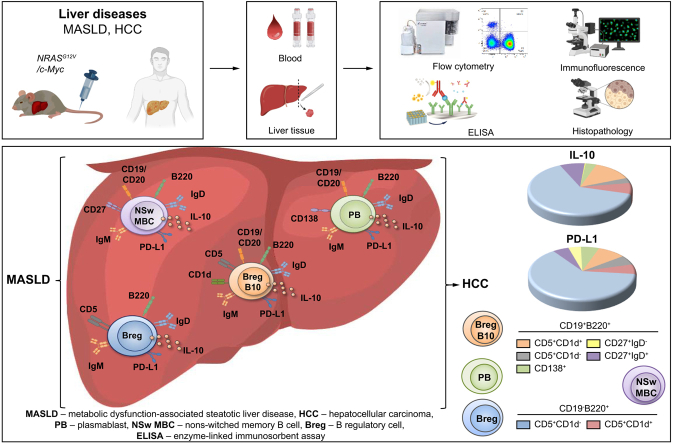
BACKGROUND & AIMS: Hepatocellular carcinoma (HCC) is the third leading cause of cancer-related death. Metabolic dysfunction-associated steatotic liver disease (MASLD) is a significant cause of HCC. Current treatment options for HCC are very limited. Recent evidence highlights B cells as key drivers in MASLD progression toward HCC. However, it remains unclear whether multiple B cell populations or a distinct B cell subset regulates inflammatory responses during liver disease progression. The scope of this study was to define protumorigenic B cell subsets in MASLD and HCC.
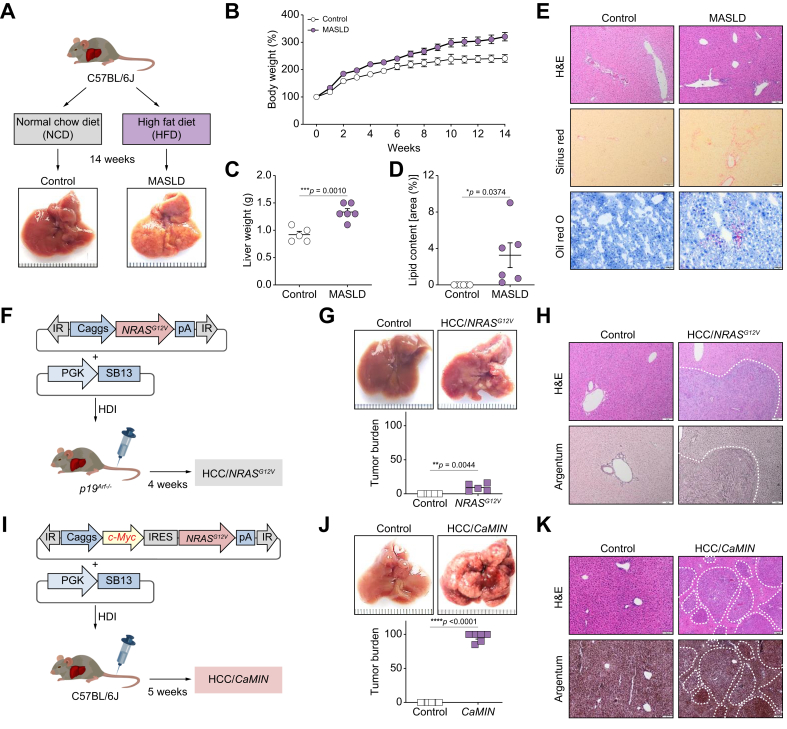
Multicolor flow cytometry, immunohistochemistry, and immunofluorescence analyses were performed to investigate B cell populations locally (in liver tissue) and systemically (in the blood) in mice with MASLD (n = 6) and HCC (n = 5-6). The results obtained in mice were also verified in patients with MASLD (n = 19) and HCC (n = 16).
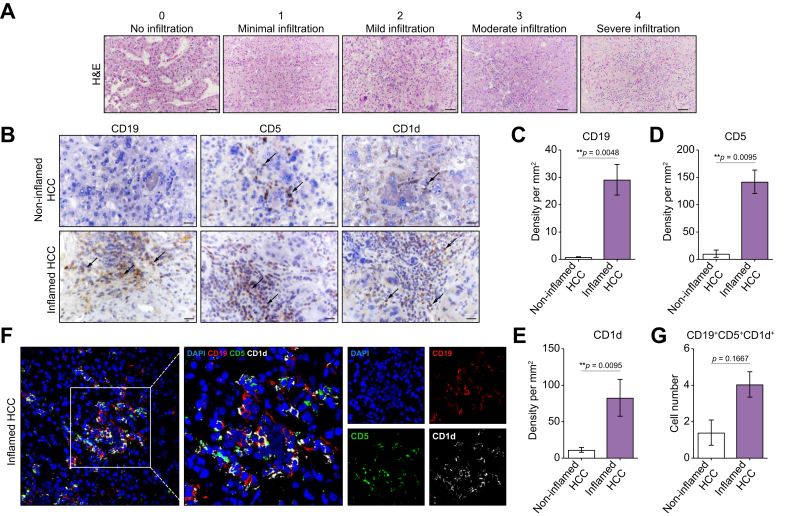
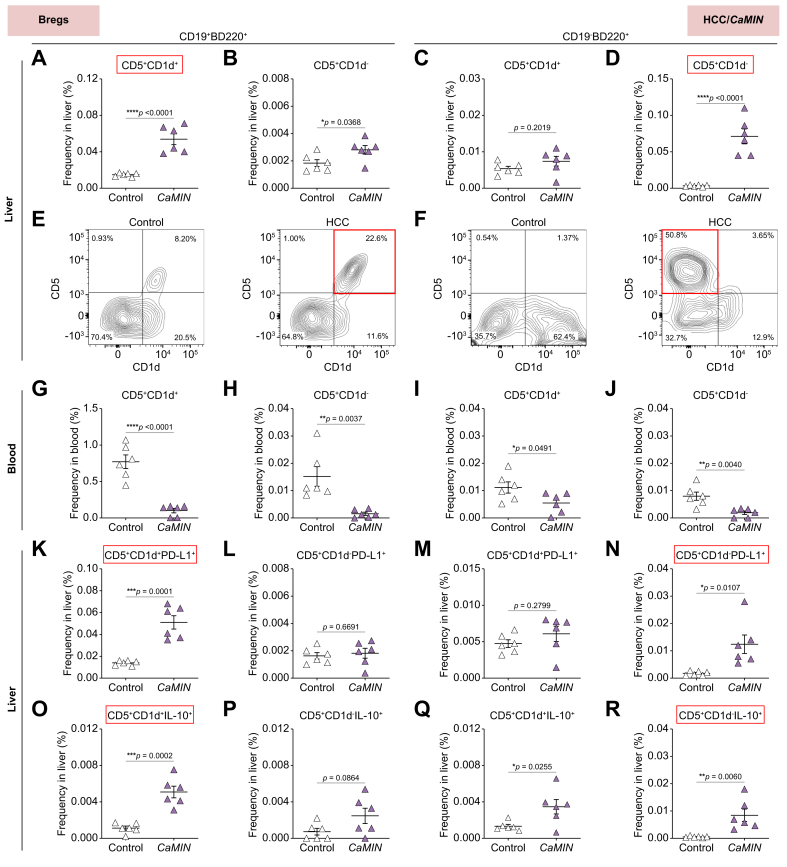
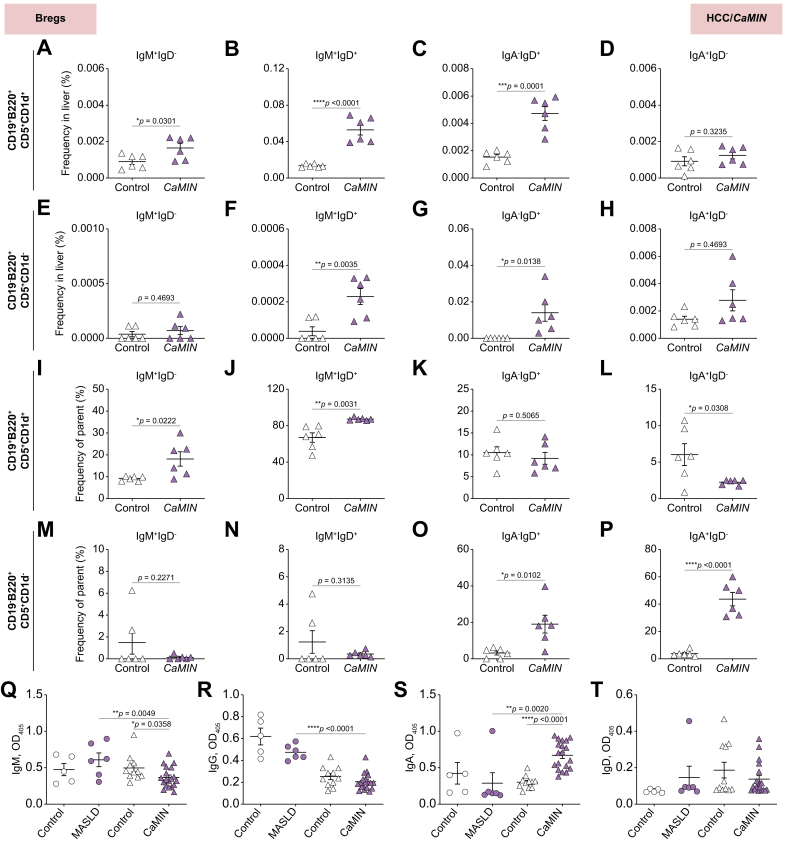
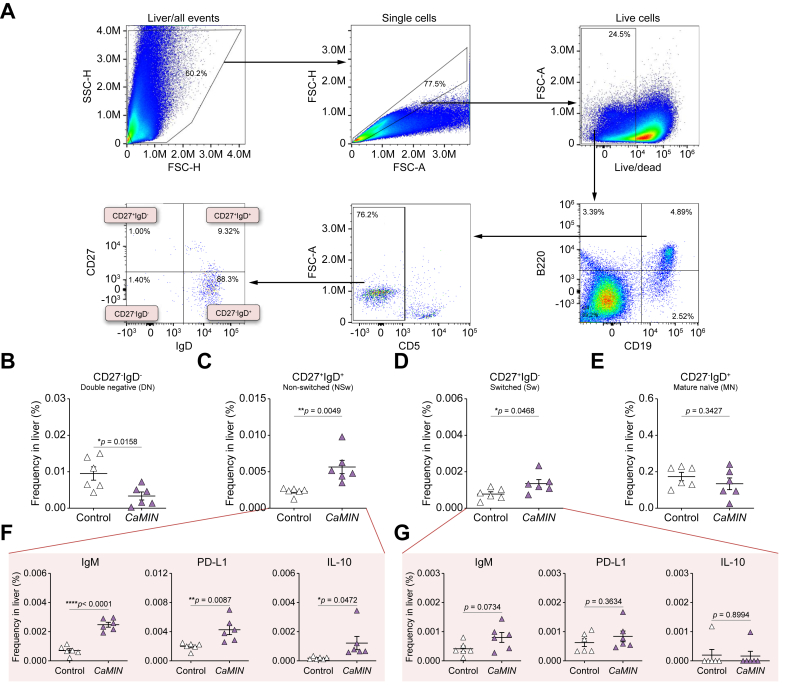
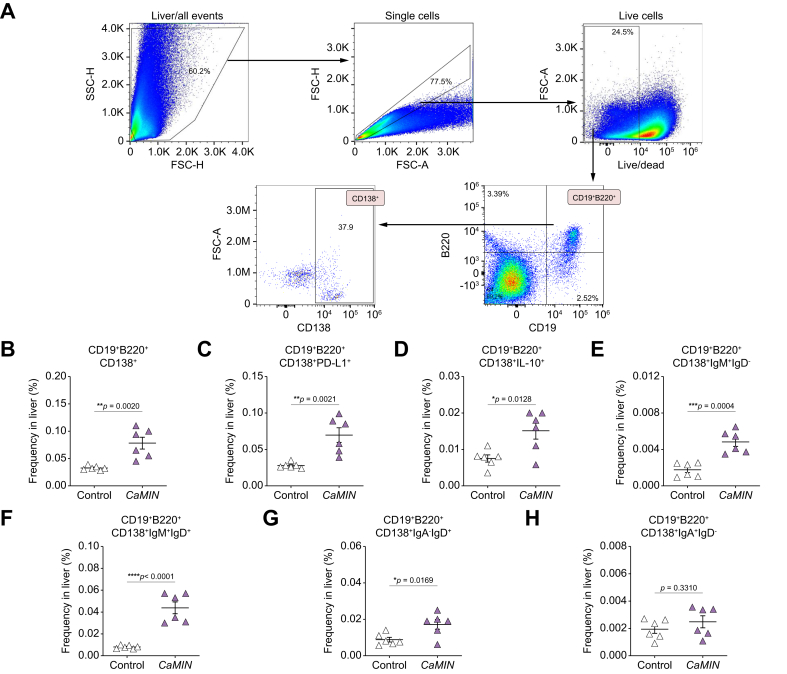
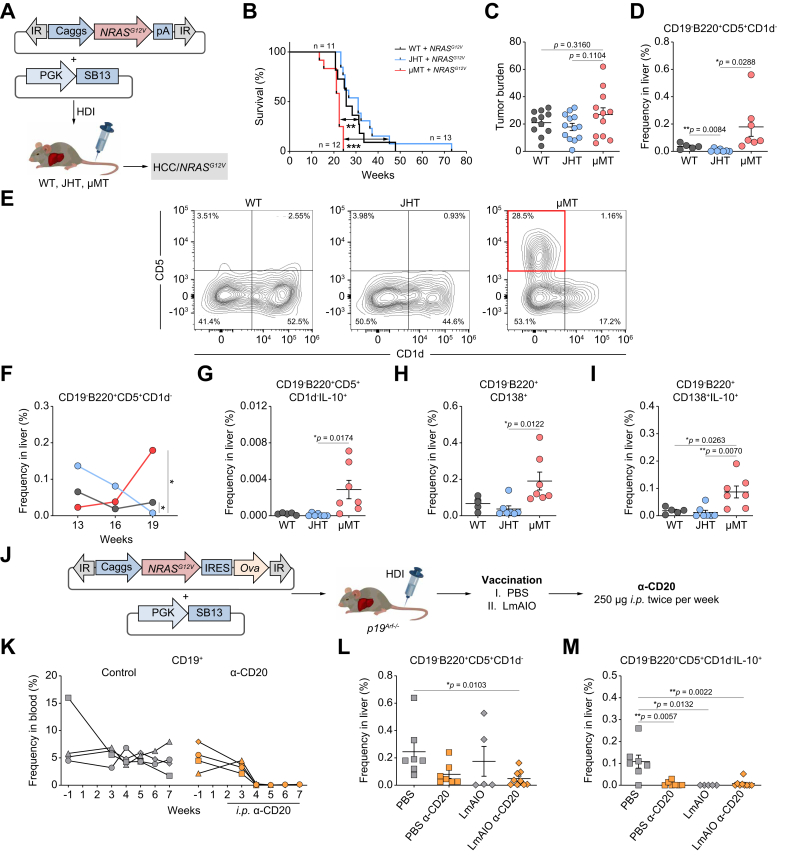
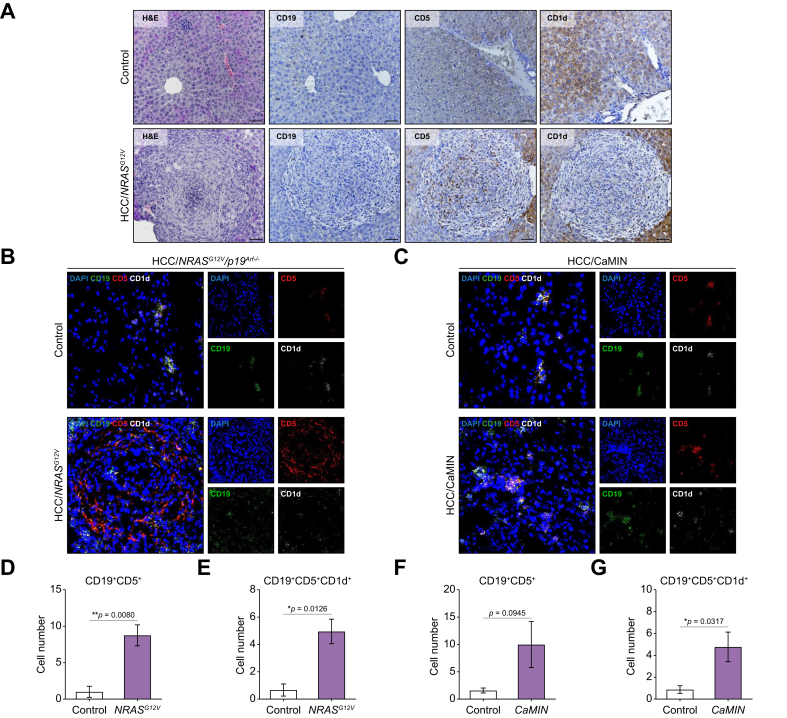
Our study revealed an increase of two regulatory B cell (Breg) subsets, CD19B220CD5CD1d ( <0.0001) and CD19B220CD5CD1d ( <0.0001), both of which highly overexpress IgM/IgD, PD-L1, and IL-10, in the livers of mice with MASLD and HCC. Furthermore, we showed that B-cell depletion therapy in combination with a based vaccine decreased CD19B220CD5CD1d Bregs ( = 0.0103), and improved survival of mice with HCC. We also found CD19CD5IL-10 ( = 0.0167), CD19CD5PD-L1 ( = 0.0333) and CD19CD5IgMIgD ( = 0.0317) B cells in human HCCs. In addition, strong overexpression of IgM/IgD, PD-L1, IL-10, were detected on non-switched memory B cells ( = 0.0049) and plasmablasts ( = 0.0020). The examination of blood samples obtained from patients with MASLD showed an increase of total B cells expressing IL-10 ( <0.0001) and IgM/IgD ( = 0.3361), CD19CD20CD5CD1d Bregs ( = 0.6424) and CD19CD20CD27 non-switched memory B cells ( = 0.0003).
Our results provide novel insights into the protumorigenic roles of several B cell subsets, the specific targeting of which could abrogate the progression of liver disease.
Hepatocellular carcinoma (HCC) is the primary liver cancer with a constantly rising mortality rate. Metabolic dysfunction-associated steatotic liver disease (MASLD) is an emerging important cause of HCC. Current treatment options for HCC are limited and there is a high risk of recurrence. The study aims to identify new therapeutic strategies by exploring the immunological aspects of MASLD and HCC. Our findings extend the current knowledge on the role of B cells in the progression of MASLD and HCC. This study emphasizes the involvement of IgMIgD regulatory B cells (Bregs) in malignant liver disease progression. These Bregs characterized by a high expression of PD-L1, IL-10, IgM, and IgD. Two other B cell subsets with immunosuppressive phenotype have been found in the study in murine liver disease - plasmablasts and non-switched memory B cells. Targeting these B cells could lead to more effective treatments of HCC.
肝细胞癌(HCC)是癌症相关死亡的第三大主要原因。代谢功能障碍相关脂肪性肝病(MASLD)是HCC的一个重要病因。目前HCC的治疗选择非常有限。最近的证据表明B细胞是MASLD向HCC进展的关键驱动因素。然而,尚不清楚是多个B细胞群体还是一个独特的B细胞亚群在肝病进展过程中调节炎症反应。本研究的范围是确定MASLD和HCC中促肿瘤的B细胞亚群。
采用多色流式细胞术、免疫组织化学和免疫荧光分析,研究MASLD(n = 6)和HCC(n = 5 - 6)小鼠肝脏局部(肝组织)和全身(血液)的B细胞群体。在小鼠中获得的结果也在MASLD患者(n = 19)和HCC患者(n = 16)中得到验证。
我们的研究发现,在患有MASLD和HCC的小鼠肝脏中,两个调节性B细胞(Breg)亚群CD19⁺B220⁺CD5⁺CD1d⁺(P < 0.0001)和CD19⁺B220⁺CD5⁻CD1d⁺(P < 0.0001)增加,这两个亚群均高度过表达IgM/IgD、PD - L1和IL - 10。此外,我们表明B细胞清除疗法联合一种基础疫苗可减少CD19⁺B220⁺CD5⁺CD1d⁺ Bregs(P = 0.0103),并提高HCC小鼠的生存率。我们还在人类HCC中发现了CD19⁺CD5⁺IL - 10⁺(P = 0.0167)、CD19⁺CD5⁺PD - L1⁺(P = 0.0333)和CD19⁺CD5⁺IgM⁺IgD⁺(P = 0.0317)B细胞。此外,在非转换记忆B细胞(P = 0.0049)和成浆细胞(P = 0.0020)上检测到IgM/IgD、PD - L1、IL - 10的强烈过表达。对MASLD患者血液样本的检测显示,表达IL - 10的总B细胞(P < 0.0001)和IgM/IgD(P = 0.3361)、CD19⁺CD20⁺CD5⁺CD1d⁺ Bregs(P = 0.6424)以及CD19⁺CD20⁺CD27⁺非转换记忆B细胞(P = 0.0003)增加。
我们的结果为几个B细胞亚群的促肿瘤作用提供了新的见解,特异性靶向这些亚群可能会消除肝病的进展。
肝细胞癌(HCC)是原发性肝癌,死亡率不断上升。代谢功能障碍相关脂肪性肝病(MASLD)是HCC新出现的一个重要病因。目前HCC的治疗选择有限且复发风险高。该研究旨在通过探索MASLD和HCC的免疫学方面来确定新的治疗策略。我们的发现扩展了目前关于B细胞在MASLD和HCC进展中作用的知识。本研究强调了IgM⁺IgD⁺调节性B细胞(Bregs)参与恶性肝病进展。这些Bregs的特征是高表达PD - L