Department of Medical Sciences, Graduate School, Soonchunhyang University, Asan-si, 31538, Republic of Korea.
Department of ICT Environmental Health System, Graduate School, Soonchunhyang University, Asan-si, 31538, Republic of Korea.
Breast Cancer Res. 2024 Nov 29;26(1):174. doi: 10.1186/s13058-024-01935-1.
Breast cancer is one of the most common cancers in women and is closely associated with obesity. Gremlin-2 (GREM2), an antagonist for bone morphogenetic proteins (BMPs), has been considered an inhibitor of adipogenic differentiation in adipose-derived stromal/stem cells. However, the role of GREM2 in breast cancer cells remains largely unknown, and its signaling mechanism has yet to be clarified.
Bioinformatics analysis was conducted using public databases. Breast cancer cells overexpressing mock or GREM2 were used for in vitro and in vivo studies. Cell viability, colony formation, migration, and animal studies were performed to investigate the role of GREM2 in breast cancer cells. Screening of target genes affected by GREM2 overexpression in breast cancer cells was performed through RNA sequencing (RNA-seq) analysis.
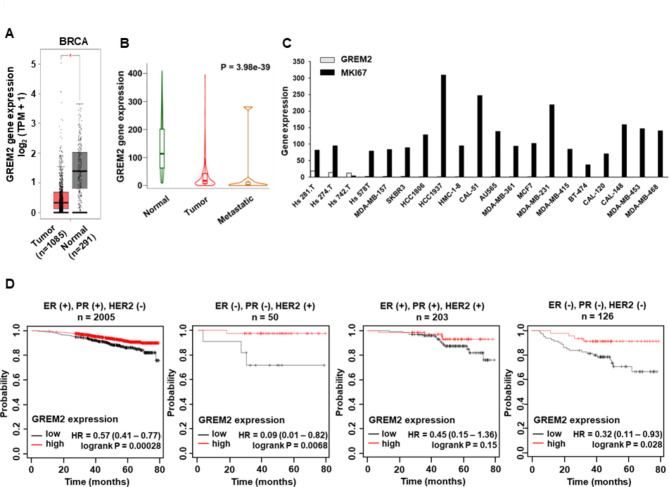
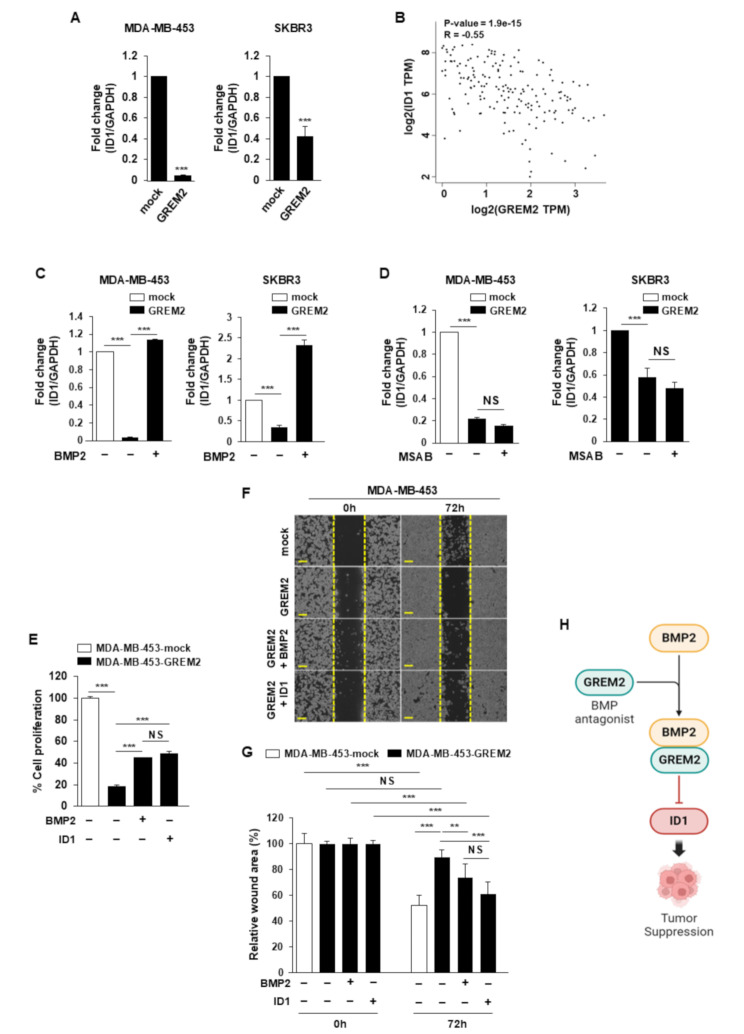
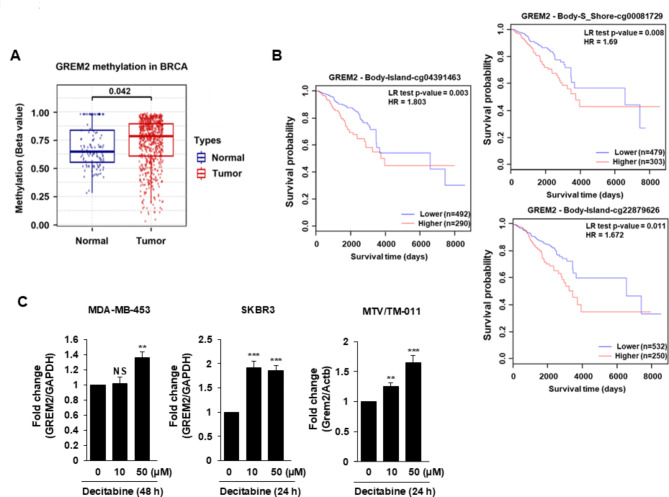
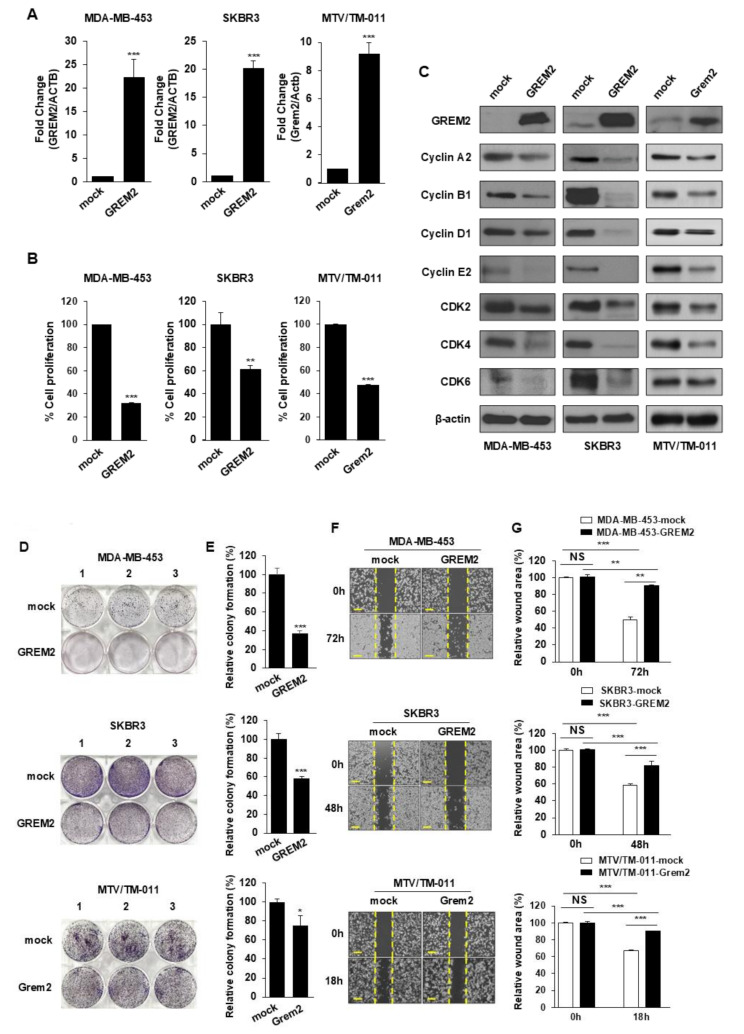
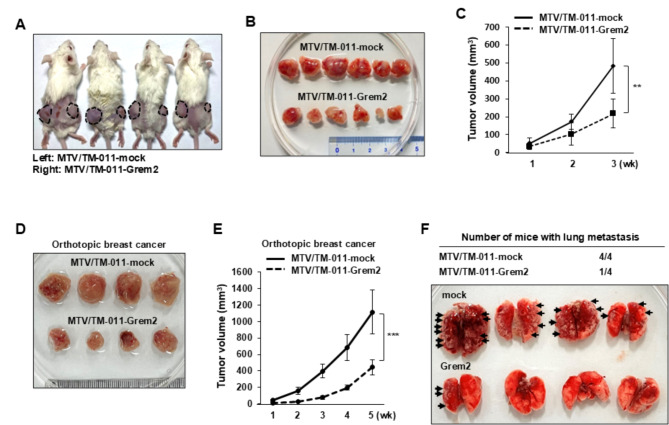
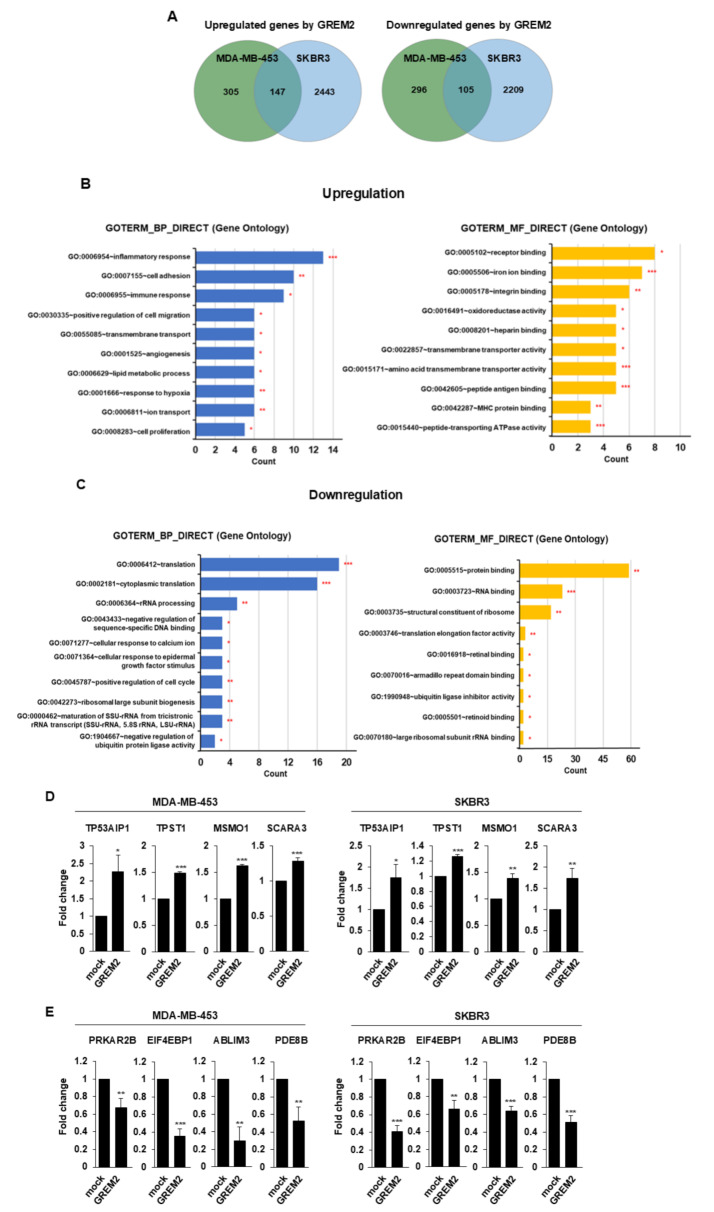
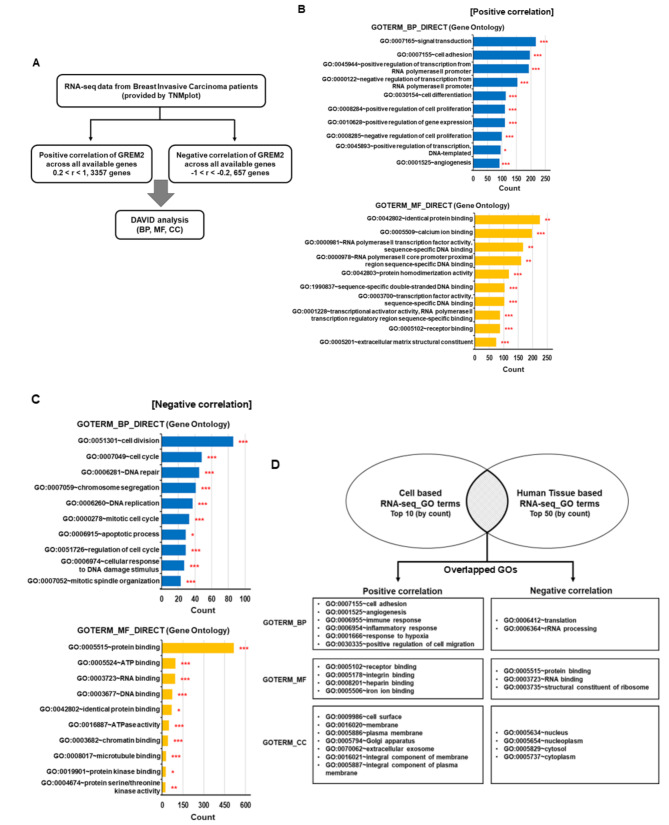
The expression level of GREM2 mRNA was significantly reduced in both breast cancer tissues and cell lines. Kaplan-Meier analysis showed that low expression of GREM2 and high methylation of the GREM2 promoter were each associated with poor patient survival. The low mRNA expression of GREM2 in breast cancer cells was increased by the demethylating agent decitabine. Breast cancer cells overexpressing GREM2 decreased cell proliferation when compared to control cells, both in vitro and in vivo. Through comparison of RNA-seq analysis between cell lines and tissue samples, gene ontologies that were consistently upregulated or downregulated by GREM2 in breast cancer were identified. In particular, the expression of inhibitor of DNA-binding-1 (ID1) was repressed by GREM2. BMP2 is one of the upstream regulators that increases the expression of ID1, and the expression of ID1 reduced by GREM2 was restored by overexpression of BMP2. Also, the migration ability of breast cancer cells, which had been suppressed by GREM2, was restored by BMP2 or ID1.
Low expression of GREM2 in breast cancer cells is associated with hypermethylation of the GREM2 promoter, which may ultimately contribute to poor patient survival. GREM2 participates in regulating the expression of various genes, including ID1, and is involved in suppressing the proliferation of breast cancer cells. This suggests that GREM2 has the potential to act as a novel tumor suppressor in breast cancer.
乳腺癌是女性最常见的癌症之一,与肥胖密切相关。Gremlin-2(GREM2)是骨形态发生蛋白(BMPs)的拮抗剂,被认为是脂肪源性基质/干细胞中脂肪生成分化的抑制剂。然而,GREM2 在乳腺癌细胞中的作用在很大程度上尚不清楚,其信号机制尚未阐明。
使用公共数据库进行生物信息学分析。使用过表达模拟物或 GREM2 的乳腺癌细胞进行体外和体内研究。进行细胞活力、集落形成、迁移和动物研究,以研究 GREM2 在乳腺癌细胞中的作用。通过 RNA 测序(RNA-seq)分析筛选受 GREM2 过表达影响的靶基因。
GREM2 mRNA 的表达水平在乳腺癌组织和细胞系中均显著降低。Kaplan-Meier 分析表明,GREM2 低表达和 GREM2 启动子高甲基化均与患者生存不良相关。乳腺癌细胞中 GREM2 的低 mRNA 表达可通过去甲基化剂地西他滨增加。与对照细胞相比,过表达 GREM2 的乳腺癌细胞在体外和体内均降低了细胞增殖。通过比较细胞系和组织样本的 RNA-seq 分析,确定了 GREM2 在乳腺癌中一致上调或下调的基因本体论。特别是,GREM2 抑制 DNA 结合蛋白 1(ID1)的表达。BMP2 是增加 ID1 表达的上游调节剂之一,GREM2 下调的 ID1 表达可通过 BMP2 的过表达恢复。此外,GREM2 抑制的乳腺癌细胞迁移能力可通过 BMP2 或 ID1 恢复。
乳腺癌细胞中 GREM2 的低表达与 GREM2 启动子的高甲基化有关,这可能最终导致患者生存不良。GREM2 参与调节包括 ID1 在内的各种基因的表达,并参与抑制乳腺癌细胞的增殖。这表明 GREM2 有可能成为乳腺癌的一种新的肿瘤抑制因子。