
脂蛋白(a):未被充分认识的风险与充满希望的未来。
Lipoprotein (a): Underrecognized Risk with a Promising Future.
作者信息
Manzato Matteo, Wright R Scott, Jaffe Allan S, Vasile Vlad C
机构信息
Department of Cardiovascular Diseases, Mayo Clinic College of Medicine, Rochester, MN 55905, USA.
Department of Laboratory Medicine and Pathology, Mayo Clinic College of Medicine, Rochester, MN 55905, USA.
出版信息
Rev Cardiovasc Med. 2024 Nov 6;25(11):393. doi: 10.31083/j.rcm2511393. eCollection 2024 Nov.
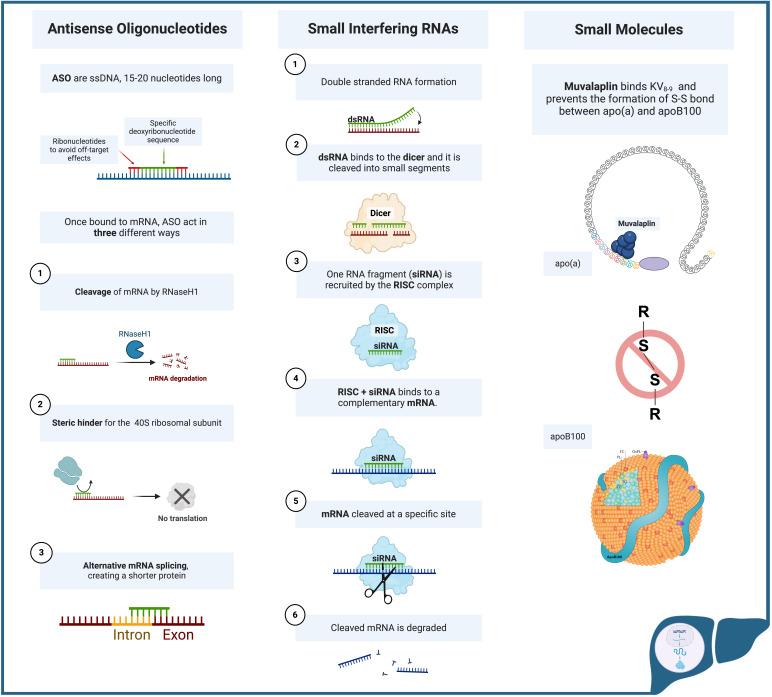
Lipoprotein a (Lp(a)) is a lipid biomarker that binds cholesterol and bears independent cardiovascular risk. Strategies to lower the level of Lp(a) and mitigate such risk are important both for primary and secondary prevention. Currently there are no approved therapies targeting Lp(a) directly. Lipid lowering therapies prescribed routinely may have no effect on Lp(a) levels. Some agents such as niacin and estrogens can significantly decrease Lp(a), but their use is not recommended due to their adverse safety profile. Statins increase Lp(a) levels by 10-20%, questioning the benefit of such therapy when this biomarker is elevated. The Food and Drug Administration (FDA) endorses new agents to address dyslipidemia such as proprotein convertase subtilisin/kexin type 9 inhibitors (PCSK9-i) and Inclisiran, a small interfering RNA. These approaches have been shown to also significantly reduce Lp(a), but more clinical data is needed before implementing their use in clinical practice. Clinical trials are currently ongoing to test the efficacy of newly developed antisense oligonucleotides and small interfering RNAs targeting the gene encoding for Lp(a) in hepatocytes, while other investigations assess small molecules that inhibit Lp(a) assembly. This review summarizes the pathophysiology and clinical implications of Lp(a) elevation, and focuses on proposed Lp(a) therapies and the current state of the clinical trials of such novel agents.
脂蛋白a(Lp(a))是一种结合胆固醇并具有独立心血管风险的脂质生物标志物。降低Lp(a)水平并减轻此类风险的策略对于一级和二级预防都很重要。目前尚无直接针对Lp(a)的获批疗法。常规开具的降脂疗法可能对Lp(a)水平没有影响。一些药物如烟酸和雌激素可显著降低Lp(a),但由于其不良安全性,不建议使用。他汀类药物会使Lp(a)水平升高10%-20%,当这种生物标志物升高时,质疑此类疗法的益处。美国食品药品监督管理局(FDA)批准了新的药物来治疗血脂异常,如前蛋白转化酶枯草溶菌素/kexin 9型抑制剂(PCSK9-i)和小干扰RNA英克西兰。这些方法也已被证明能显著降低Lp(a),但在临床实践中应用之前还需要更多的临床数据。目前正在进行临床试验,以测试新开发的针对肝细胞中Lp(a)编码基因的反义寡核苷酸和小干扰RNA的疗效,而其他研究则评估抑制Lp(a)组装的小分子。本综述总结了Lp(a)升高的病理生理学和临床意义,并重点介绍了提议的Lp(a)疗法以及此类新型药物的临床试验现状。
 Zotero 插件