Peterson Hannah M, Holler Jenna C, Boswell Abby, Trepanier Lauren A
Department of Medical Sciences, School of Veterinary Medicine, University of Wisconsin-Madison, Madison, USA.
J Clin Transl Sci. 2024 Oct 24;8(1):e172. doi: 10.1017/cts.2024.546. eCollection 2024.
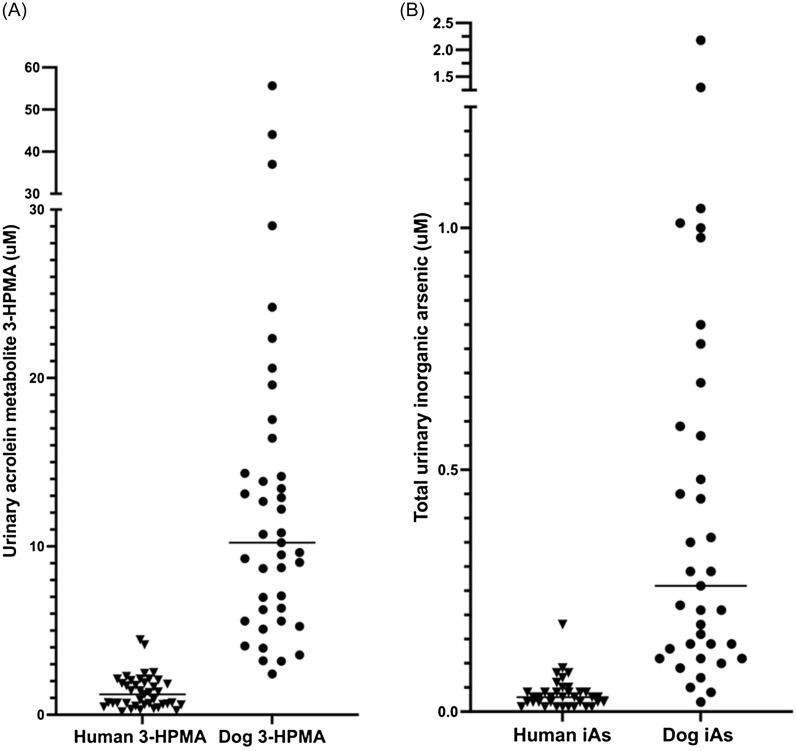
Major risk factors for urothelial cell carcinoma (UCC) in people are smoking and occupational exposures. However, up to 30% of human UCC risk is still unexplained. Pet dogs develop UCC that models the clinical behavior of muscle-invasive human UCC. Dogs may therefore provide a useful model for non-tobacco, nonoccupational UCC risk. We previously found that nonsmoking human subjects and their pet dogs share exposures to the urothelial carcinogens acrolein and arsenic. We hypothesized that these urinary exposures would reach genotoxic concentrations in some individuals.
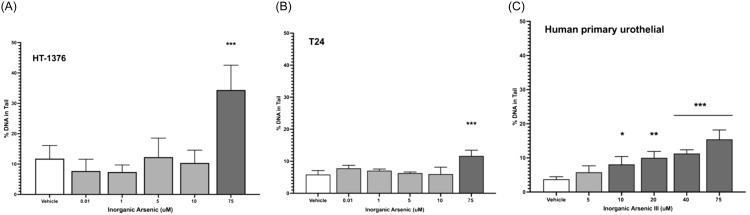
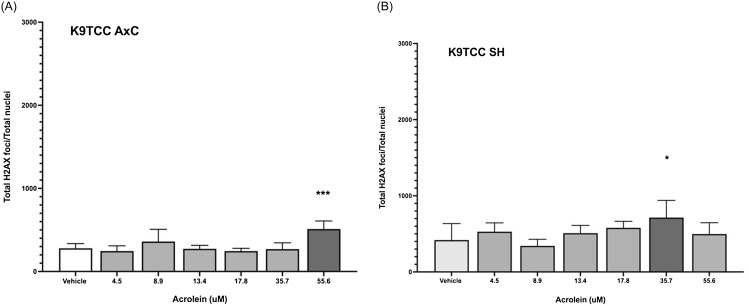
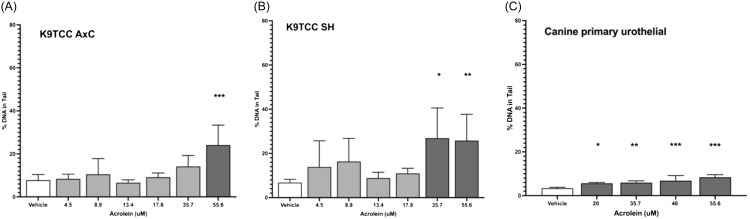
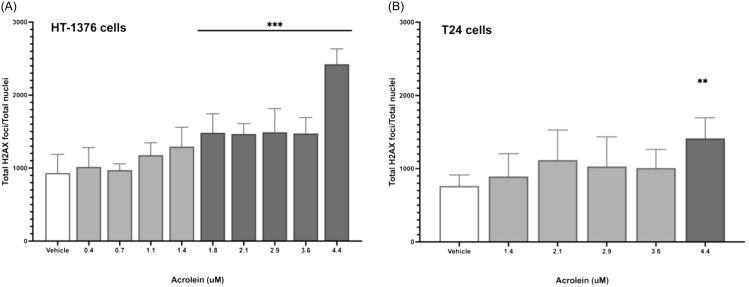
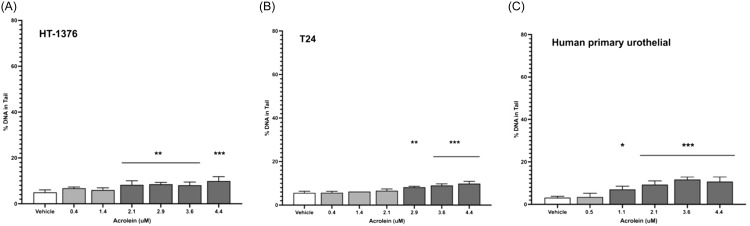
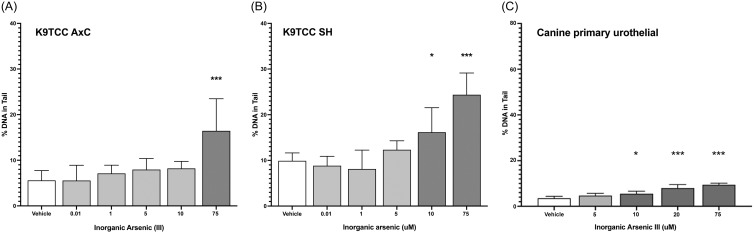
We exposed immortal and primary human and canine urothelial cells to acrolein and inorganic arsenic and used the γ-H2AX and comet assays to measure DNA damage.
For acrolein, we found a genotoxic threshold of 1.1-4.4 μM in human cells and a threshold of 20.0-55.6 μM in canine cells. These findings are consistent with potentially genotoxic urinary acrolein exposures in 51% of healthy human subjects and 17% of pet dogs previously surveyed. For inorganic arsenic, we found a genotoxic threshold of ≥10 μM in canine and human cell lines. No healthy human or canine subject reached these urinary inorganic arsenic exposures when assayed at a single time point.
Non-tobacco, nonoccupational acrolein exposures could increase the risk of early urothelial DNA damage in both people and pet dogs. Ongoing studies will assess these chemical exposures in the setting of UCC in both human and canine patients.
人类尿路上皮细胞癌(UCC)的主要风险因素是吸烟和职业暴露。然而,高达30%的人类UCC风险仍无法解释。宠物狗会患上UCC,其临床行为可模拟人类肌肉浸润性UCC。因此,狗可能为非烟草、非职业性UCC风险提供一个有用的模型。我们之前发现,不吸烟的人类受试者及其宠物狗会接触尿路上皮致癌物丙烯醛和砷。我们推测,这些尿液暴露在某些个体中会达到基因毒性浓度。
我们将永生化和原代人及犬尿路上皮细胞暴露于丙烯醛和无机砷中,并使用γ-H2AX和彗星试验来测量DNA损伤。
对于丙烯醛,我们发现人类细胞中的基因毒性阈值为1.1 - 4.4 μM,犬类细胞中的阈值为20.0 - 55.6 μM。这些发现与之前调查的51%的健康人类受试者和17%的宠物狗尿液中可能具有基因毒性的丙烯醛暴露情况一致。对于无机砷,我们在犬类和人类细胞系中发现基因毒性阈值≥10 μM。在单次检测时并无健康的人类或犬类受试者达到这些尿液无机砷暴露水平。
非烟草、非职业性的丙烯醛暴露可能会增加人和宠物狗早期尿路上皮DNA损伤的风险。正在进行的研究将评估人类和犬类患者UCC情况下的这些化学暴露情况。