Damci Aysun, Hoeijmakers Janneke G J, den Hollander Marlies, Faber Catharina G, Waardenburg Sophie, van Laake-Geelen Charlotte C M, Köke Albère J A, Verbunt Jeanine A M C F
MHeNS, Mental Health and Neuroscience Research Institute, Maastricht University, Maastricht, 6200 MD, The Netherlands.
Department of Neurology, Maastricht University Medical Center+, Maastricht, 6229 HX, The Netherlands.
J Pain Res. 2024 Nov 25;17:3997-4010. doi: 10.2147/JPR.S481274. eCollection 2024.
Small fiber neuropathy (SFN) is characterized by neuropathic pain, associated with decreased quality of life (QOL). It remains unclear which psychosocial factors play a role in SFN. The experience sampling method (ESM) allows a profound understanding of the real-time fluctuations in reaction to events. The main goal of this study was to increase knowledge of the interrelationships between pain intensity, physical activity, and psychosocial factors in patients with SFN in daily practice over time.
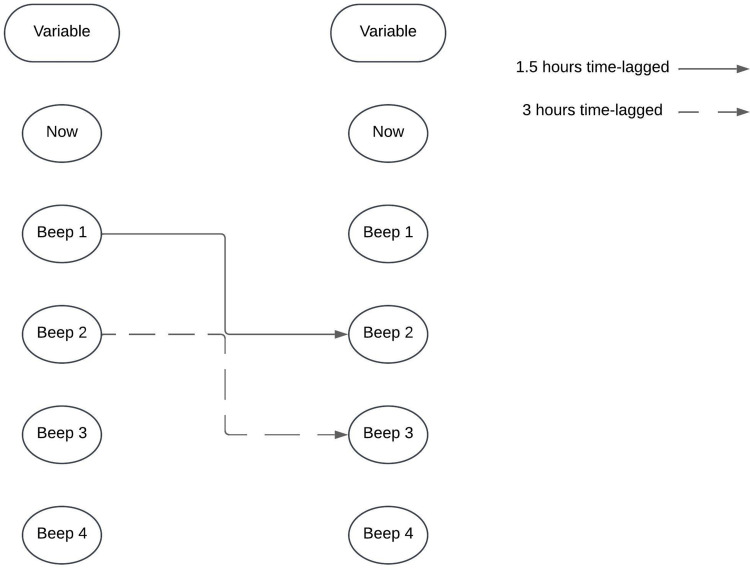
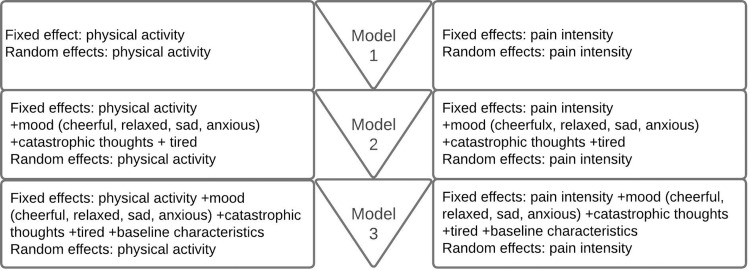
A prospective observational ESM study with the PsyMate© application (smart-eHealth GmbH, Luxembourg) was conducted at the Adelante location of Maastricht University Medical Center+ in the Netherlands. Participants with idiopathic SFN, older than 18 years, with an indication for rehabilitation, were included. Pain intensity, fatigue, positive and negative affect, physical activity, avoidance behavior, and pain catastrophic thoughts were incorporated into the ESM questions. Participants received 10 beep signals per day followed by the above-mentioned questions, for consecutive 7 days. The results were analyzed with linear mixed-effect models.
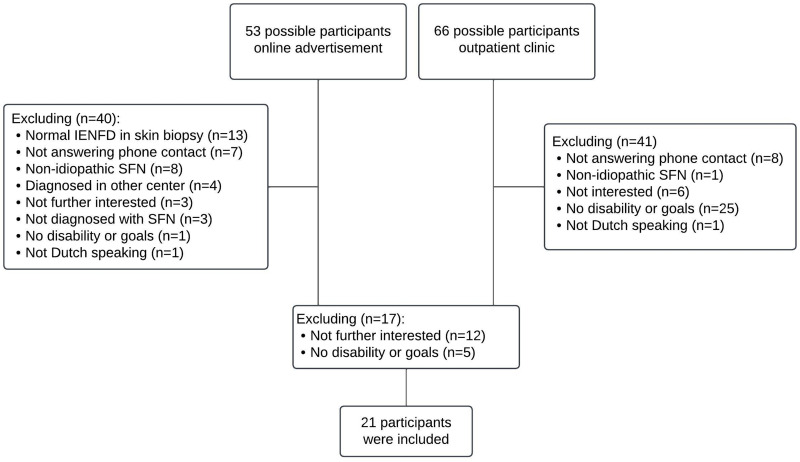
Twenty-one participants were included with a mean age of 48.24 (SD ± 13.89) years, of whom 76.2% were female. More pain (now) resulted in more physical activity (later) (a) and more physical activity (now) resulted in more pain (later) (b). The first association (a) is influenced by pain catastrophic thoughts and fatigue, and the second (b) by an increase in affective states and a lower level of avoidance behavior.
In idiopathic SFN, pain intensity, and physical activity showed a 2-sided association, influenced by catastrophic thoughts, fatigue, affective states, and avoidance behavior.
小纤维神经病变(SFN)的特征是神经性疼痛,与生活质量(QOL)下降相关。目前尚不清楚哪些社会心理因素在SFN中起作用。经验抽样法(ESM)有助于深入了解对事件反应的实时波动情况。本研究的主要目的是增加对日常实践中SFN患者疼痛强度、身体活动和社会心理因素之间相互关系随时间变化的认识。
在荷兰马斯特里赫特大学医学中心+的阿德拉特分院,使用PsyMate©应用程序(卢森堡smart-eHealth有限公司)进行了一项前瞻性观察性ESM研究。纳入年龄超过18岁、有康复指征的特发性SFN患者。ESM问题纳入了疼痛强度、疲劳、积极和消极情绪、身体活动、回避行为以及疼痛灾难化思维。参与者每天收到10次提示信号,随后是上述问题,持续7天。结果采用线性混合效应模型进行分析。
纳入21名参与者,平均年龄48.24(标准差±13.89)岁,其中76.2%为女性。更多疼痛(当下)导致更多身体活动(随后)(a),更多身体活动(当下)导致更多疼痛(随后)(b)。第一种关联(a)受疼痛灾难化思维和疲劳影响,第二种关联(b)受情绪状态增加和回避行为水平降低影响。
在特发性SFN中,疼痛强度和身体活动呈双向关联,受灾难化思维、疲劳、情绪状态和回避行为影响。