Marouzi Anousheh, Plante Charles, Fornssler Barbara
Research Department, Saskatchewan Health Authority, Saskatoon, Canada.
Department of Community Health and Epidemiology, University of Saskatchewan, Saskatoon, Canada.
Int J Popul Data Sci. 2024 Oct 17;9(1):2412. doi: 10.23889/ijpds.v9i1.2412. eCollection 2024.
Research on substance use harm in Canada has been hampered by an absence of linked data to analyse and report on the social drivers of substance use harm.
This study aims to address this gap by providing a fully annotated Stata do-file that links sociodemographic data to 11 years of hospitalisation and death outcomes. This do-file will greatly facilitate the creation of provincial and national substance use cohorts using line-level data available through Statistics Canada's Research Data Centres (RDC) program.
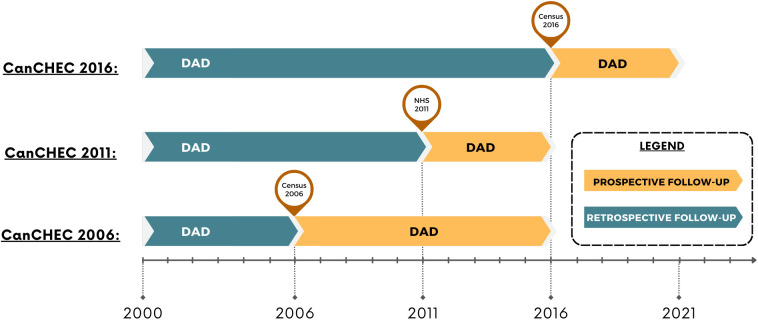
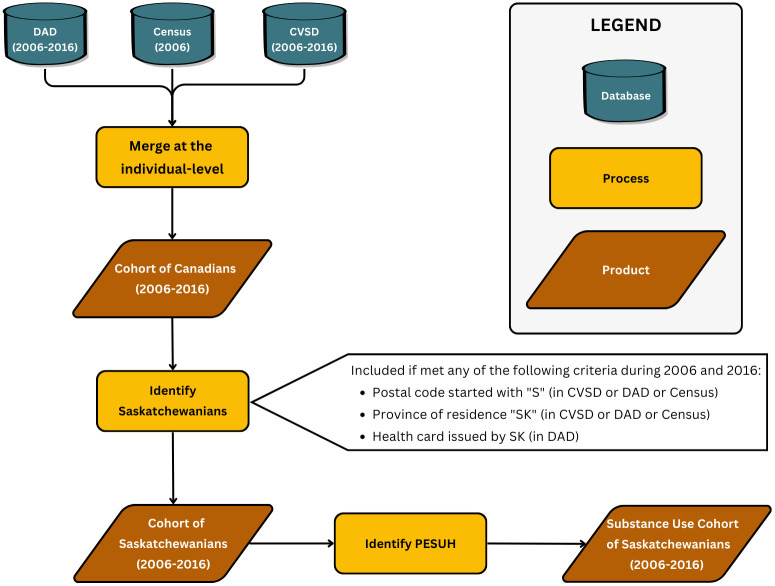
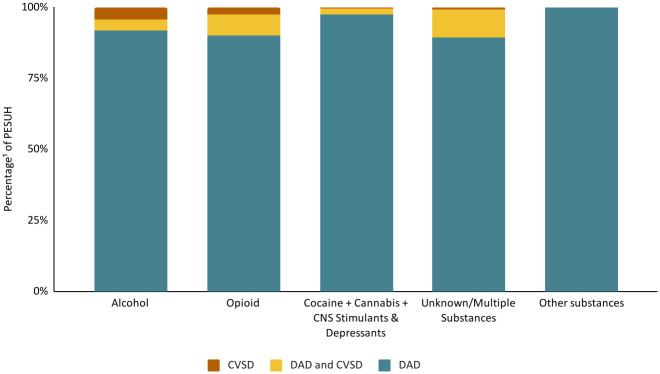
We used Canadian Census Health and Environment Cohorts (CanCHEC) 2006 to create a cohort of Saskatchewanians followed from 2006 to 2016. We linked sociodemographic information of the 2006 Census (long-form) respondents to their hospitalisation data captured in the Discharge Abstract Database (DAD) (2006 to 2016) and their mortality records in the Canadian Vital Statistics Death Database (CVSD) (2006 to 2016). We developed an algorithm to identify Saskatchewanians who experienced a substance use harm event. We validated the cohort by comparing our descriptive findings with those from other Canadian studies on substance use.
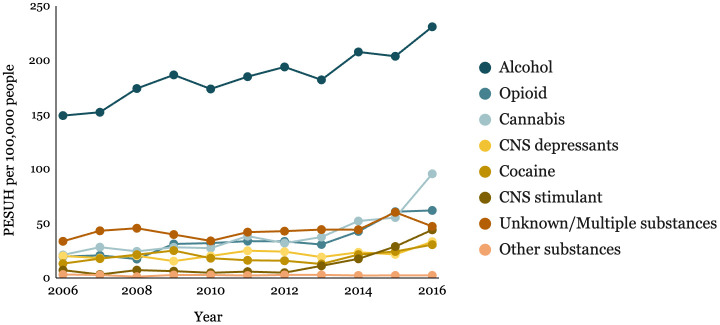
We used CanCHEC, a national data resource, whereas most previous studies have used provincial data resources. Despite this difference in constructing the cohorts, our results showed trends consistent with previous studies, including an overrepresentation of individuals with lower socioeconomic status among the people who experienced substance use harm (PESUH). Similar to other Canadian studies, our results indicate an increasing rate of substance use harm from 2006 to 2016.
This study provides a Stata do-file that compiles a validated substance use cohort using CanCHEC, enabling comprehensive substance use research by linking sociodemographic data with health outcomes. The do-file is likely to save researchers hundreds of hours and accelerate research on the drivers of substance use harms in Canada.
加拿大物质使用危害研究因缺乏关联数据以分析和报告物质使用危害的社会驱动因素而受阻。
本研究旨在通过提供一个完全注释的Stata do文件来填补这一空白,该文件将社会人口统计学数据与11年的住院和死亡结果相链接。此do文件将极大地促进利用加拿大统计局研究数据中心(RDC)项目提供的行级数据创建省级和国家级物质使用队列。
我们使用2006年加拿大人口普查健康与环境队列(CanCHEC)创建了一个2006年至2016年跟踪的萨斯喀彻温省人群队列。我们将2006年人口普查(长表)受访者的社会人口统计学信息与出院摘要数据库(DAD)(2006年至2016年)中记录的他们的住院数据以及加拿大生命统计死亡数据库(CVSD)(2006年至2016年)中的死亡记录相链接。我们开发了一种算法来识别经历过物质使用危害事件的萨斯喀彻温省居民。我们通过将我们的描述性结果与其他加拿大物质使用研究的结果进行比较来验证该队列。
我们使用了国家级数据资源CanCHEC,而之前的大多数研究使用的是省级数据资源。尽管在构建队列方面存在这种差异,但我们的结果显示出与之前研究一致的趋势,包括在经历物质使用危害的人群中社会经济地位较低的个体占比过高。与其他加拿大研究类似,我们的结果表明2006年至2016年物质使用危害发生率呈上升趋势。
本研究提供了一个Stata do文件,该文件使用CanCHEC编制了一个经过验证的物质使用队列,通过将社会人口统计学数据与健康结果相链接,实现了全面的物质使用研究。该do文件可能会为研究人员节省数百小时,并加速对加拿大物质使用危害驱动因素的研究。