
烟酰胺N-甲基转移酶负向调节肺腺癌中癌症相关成纤维细胞的促转移特性。
Nicotinamide N-methyltransferase negatively regulates metastasis-promoting property of cancer-associated fibroblasts in lung adenocarcinoma.
作者信息
Wang Peiyu, Wang Guangxi, Li Haoran, Yuan Yuyao, Chen Haiming, Wang Shaodong, Sun Zewen, Meng Fanjie, Li Yun, Yang Fan, Wang Jun, Chen Kezhong, Qiu Mantang
机构信息
Department of Thoracic Surgery, Peking University People's Hospital, Beijing, P. R. China.
Thoracic Oncology Institute, Peking University People's Hospital, Beijing, P. R. China.
出版信息
Cancer Commun (Lond). 2025 Feb;45(2):110-137. doi: 10.1002/cac2.12633. Epub 2024 Dec 2.
BACKGROUND
Recurrence and metastasis remain significant challenges in lung adenocarcinoma (LUAD) after radical resection. The mechanisms behind the recurrence and metastasis of LUAD remain elusive, and deregulated cellular metabolism is suspected to play a significant role. This study explores the metabolic and epigenetic regulation mediated by nicotinamide N-methyl transferase (NNMT) in LUAD.
METHODS
Untargeted metabolomic analyses were performed to detect metabolism irregularities. Single-cell RNA sequencing (RNA-seq) databases and multiplex immunofluorescence analysis were used to identify the location of NNMT within the tumor microenvironment. The biological functions of NNMT were investigated both in vitro and in vivo, with RNA-seq and chromatin immunoprecipitation-PCR providing insights into underlying mechanisms. Finally, single-cell RNA-seq data and immunohistochemistry of primary tumors were analyzed to validate the main findings.
RESULTS
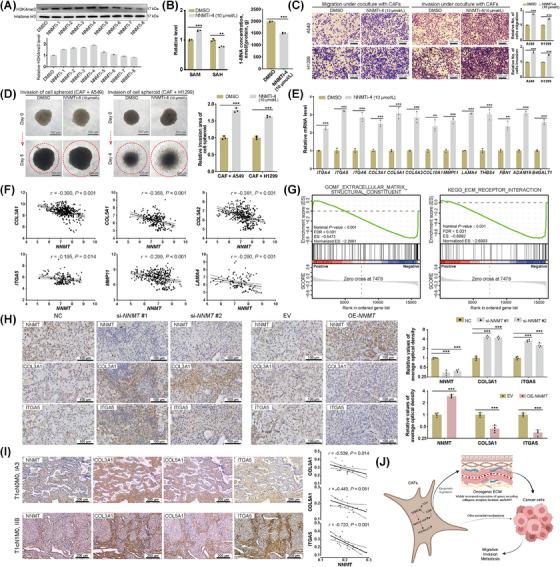
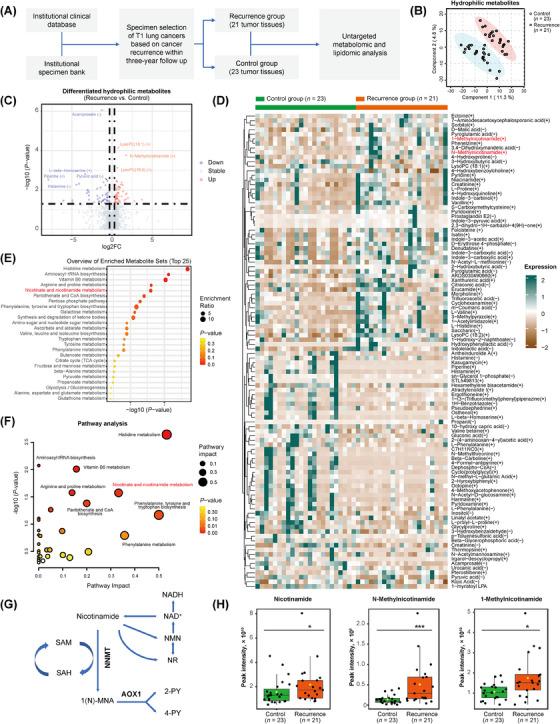
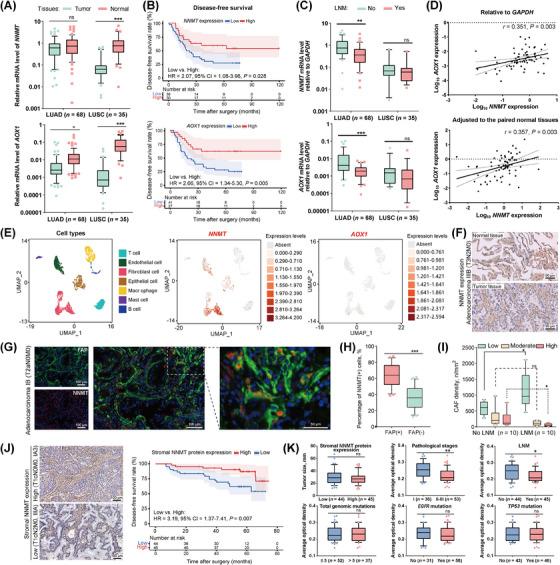
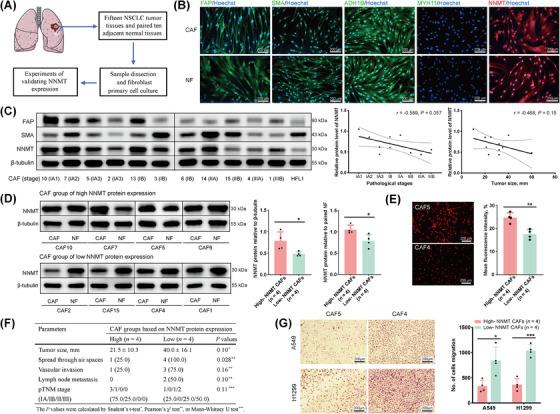
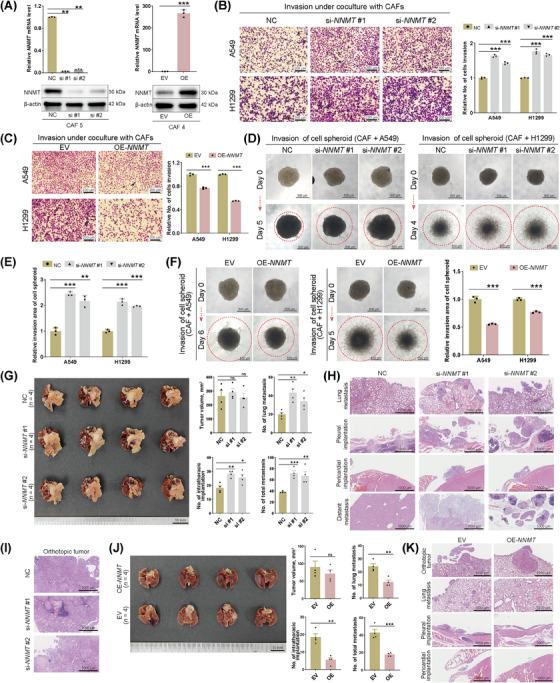
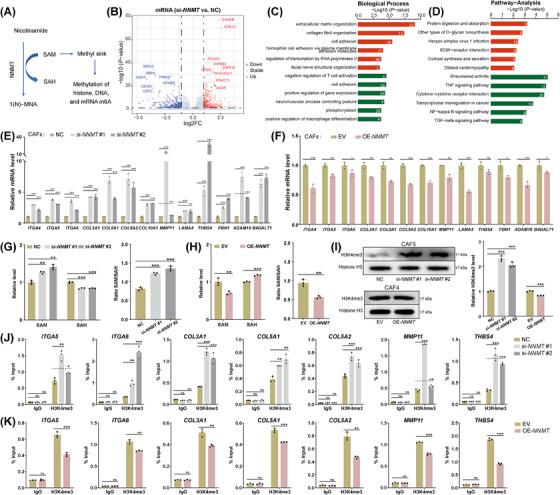
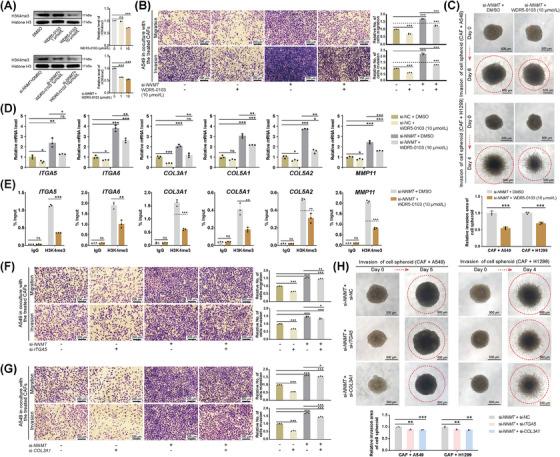
Untargeted metabolomic analyses revealed metabolic aberrations in amino acids, organic acids, lipids, and nicotinamide pathways, which are linked to metastasis of non-small cell lung cancer. NNMT is a key enzyme in nicotinamide metabolism, and we found the bulk tissue mRNA level of NNMT gene was inversely associated with LUAD metastasis. NNMT was proved to be predominantly expressed in cancer-associated fibroblasts (CAFs) within the stromal regions of LUAD, and a low stromal NNMT expression was identified as a predictor of poor disease-free survival following radical resection of LUAD. The isolation and primary culture of CAFs from LUAD enabled in vitro and in vivo experiments, which confirmed that NNMT negatively regulated the metastasis-promoting properties of CAFs in LUAD. Mechanistically, the downregulation of NNMT led to an increase in intracellular methyl groups by reducing the activity of the methionine cycle, resulting in heightened methylation at H3K4me3. This alteration triggered the upregulation of genes involved in extracellular matrix remodeling in CAFs, including those encoding collagens, integrins, laminins, and matrix metalloproteinases, thereby facilitating cancer cell invasion and metastasis. Reanalysis of single-cell RNA-seq data and immunohistochemistry assays of primary LUAD tissues substantiated NNMT's negative regulation of these genes in CAFs.
CONCLUSIONS
This study provides novel insights into the metabolic and epigenetic regulatory functions of NNMT in CAFs, expanding the current understanding of LUAD metastasis regulation and suggesting potential avenues for future research and therapeutic development.
背景
在根治性切除术后,复发和转移仍是肺腺癌(LUAD)面临的重大挑战。LUAD复发和转移背后的机制仍不清楚,细胞代谢失调被怀疑起了重要作用。本研究探讨烟酰胺N-甲基转移酶(NNMT)在LUAD中介导的代谢和表观遗传调控。
方法
进行非靶向代谢组学分析以检测代谢异常。利用单细胞RNA测序(RNA-seq)数据库和多重免疫荧光分析来确定NNMT在肿瘤微环境中的位置。在体外和体内研究NNMT的生物学功能,RNA-seq和染色质免疫沉淀-PCR为潜在机制提供了见解。最后,分析原发性肿瘤的单细胞RNA-seq数据和免疫组织化学以验证主要发现。
结果
非靶向代谢组学分析揭示了氨基酸、有机酸、脂质和烟酰胺途径中的代谢异常,这些与非小细胞肺癌的转移有关。NNMT是烟酰胺代谢中的关键酶,我们发现NNMT基因的大块组织mRNA水平与LUAD转移呈负相关。NNMT被证明主要在LUAD基质区域的癌症相关成纤维细胞(CAF)中表达,低基质NNMT表达被确定为LUAD根治性切除术后无病生存期差的预测指标。从LUAD中分离和原代培养CAF使得能够进行体外和体内实验,证实NNMT负向调节LUAD中CAF的促转移特性。机制上,NNMT的下调通过降低甲硫氨酸循环的活性导致细胞内甲基基团增加,从而导致H3K4me3处甲基化增强。这种改变引发了CAF中参与细胞外基质重塑的基因上调,包括那些编码胶原蛋白、整合素、层粘连蛋白和基质金属蛋白酶的基因,从而促进癌细胞侵袭和转移。对原发性LUAD组织的单细胞RNA-seq数据和免疫组织化学分析的重新分析证实了NNMT对CAF中这些基因的负向调节。
结论
本研究为NNMT在CAF中的代谢和表观遗传调控功能提供了新见解,扩展了目前对LUAD转移调控的理解,并为未来研究和治疗开发提出了潜在途径。
 Zotero 插件