Aboushaar Nour, Serrano Natalia
Global Medical Affairs, Bayer HealthCare LLC, Whippany, NJ, United States.
Ernest Mario School of Pharmacy, Rutgers, the State University of New Jersey, Piscataway, NJ, United States.
Front Pain Res (Lausanne). 2024 Nov 18;5:1445280. doi: 10.3389/fpain.2024.1445280. eCollection 2024.
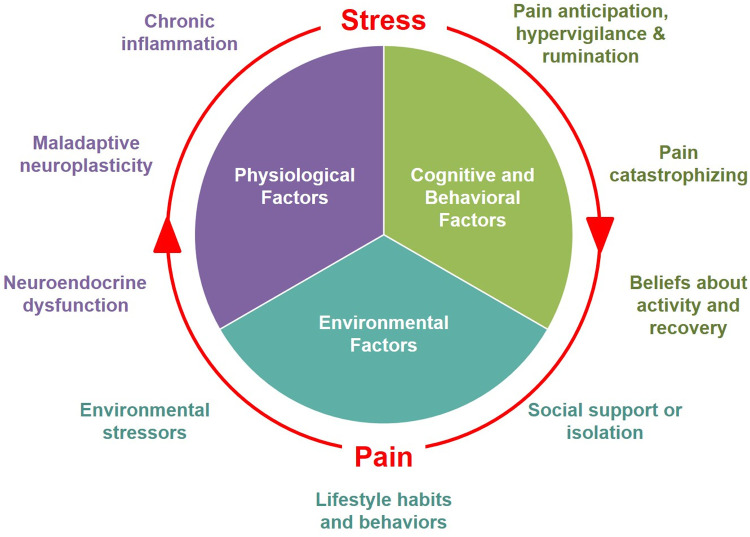
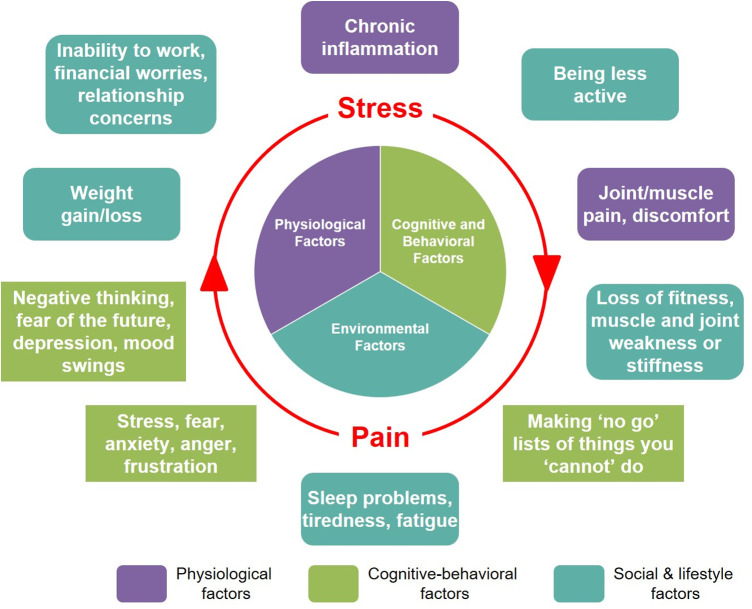
While distinct, pain and stress share complex biological and psychological mechanisms that-despite their protective functions-can lead to clinically maladaptive changes requiring therapeutic intervention when they recur or persist. Recognized as "worldwide epidemics" of modern life, both conditions significantly affect an individual's quality of life, functioning, and well-being; without timely intervention, they can become chronic, leading to substantial economic costs via healthcare expenses, lost wages, and reduced productivity. Evidence suggests that pain and stress not only feed into but exacerbate each other through a "vicious cycle," driven by overlapping physiological, cognitive, and social mechanisms, indicating mutually reinforcing dynamics between pain and stress. In this review, we highlight the importance of recognizing the overlapping mechanisms that promote the persistence of pain and stress: (1) key physiological processes like maladaptive neuroplasticity, neuroendocrine dysfunction, and chronic inflammation; (2) cognitive and behavioral patterns such as fear avoidance, hypervigilance, and catastrophizing; along with (3) social, lifestyle, and environmental influences, such as socioeconomic status, lack of social support, and lifestyle choices. Through a case study, we illustrate the real-world implications of this vicious cycle perpetuating both conditions. We call for a paradigm shift in pain and stress management, advocating for a holistic management strategy encompassing pharmacological, psychological, and lifestyle interventions that address the underlying biopsychosocial factors. By fostering greater awareness among primary care practitioners and healthcare professionals, it is possible to better support individuals in breaking the cycle of pain and stress, thereby enhancing their quality of life and overall well-being.
疼痛和压力虽然有所不同,但它们有着复杂的生物和心理机制。尽管这些机制具有保护功能,但当它们反复出现或持续存在时,可能会导致临床上的适应不良变化,需要进行治疗干预。这两种情况被视为现代生活中的“全球流行病”,都严重影响个人的生活质量、功能和幸福感;如果不及时干预,它们可能会变成慢性疾病,通过医疗费用、工资损失和生产力下降导致巨大的经济成本。有证据表明,疼痛和压力不仅相互影响,而且通过生理、认知和社会机制重叠驱动的“恶性循环”相互加剧,表明疼痛和压力之间存在相互强化的动态关系。在这篇综述中,我们强调认识到促进疼痛和压力持续存在的重叠机制的重要性:(1)关键的生理过程,如适应不良的神经可塑性、神经内分泌功能障碍和慢性炎症;(2)认知和行为模式,如恐惧回避、过度警惕和灾难化思维;以及(3)社会、生活方式和环境影响,如社会经济地位、缺乏社会支持和生活方式选择。通过一个案例研究,我们说明了这种恶性循环使这两种情况持续存在的现实意义。我们呼吁在疼痛和压力管理方面进行范式转变,倡导一种全面的管理策略,包括解决潜在生物心理社会因素的药物、心理和生活方式干预措施。通过提高初级保健从业者和医疗专业人员的认识,有可能更好地支持个人打破疼痛和压力的循环,从而提高他们的生活质量和整体幸福感。