Karim Shahid, Zenzal Theodore J, Beati Lorenza, Sen Raima, Adegoke Abdulsalam, Kumar Deepak, Downs Latoyia P, Keko Mario, Nussbaum Ashly, Becker Daniel J, Moore Frank R
School of Biological, Environmental, and Earth Sciences, University of Southern Mississippi, Hattiesburg, MS, United States.
United States Geological Survey, Wetland and Aquatic Research Center, Lafayette, LA, United States.
Front Cell Infect Microbiol. 2024 Nov 18;14:1472598. doi: 10.3389/fcimb.2024.1472598. eCollection 2024.
The long-distance, seasonal migrations of birds make them an effective ecological bridge for the movement of ticks. The introduction of exotic tick species to new geographical regions can cause the emergence of novel tick-borne pathogens. This study examined the prevalence of exotic tick species parasitizing migratory songbirds at stopover sites along the northern Gulf of Mexico using the mitochondrial 12S rRNA gene.
Overall, 421 individual ticks in the genera , , and were recorded from 28 songbird species, of which and were the most abundant tick genera and species, respectively. A high throughput 16S ribosomal RNA sequencing approach characterized the microbial communities and identified pathogenic microbes in all tick samples.
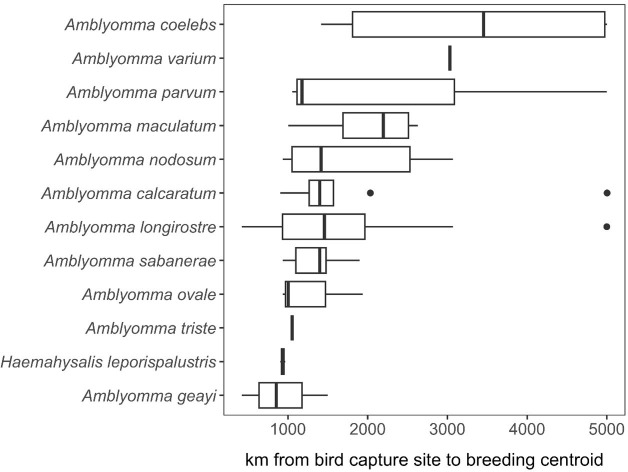
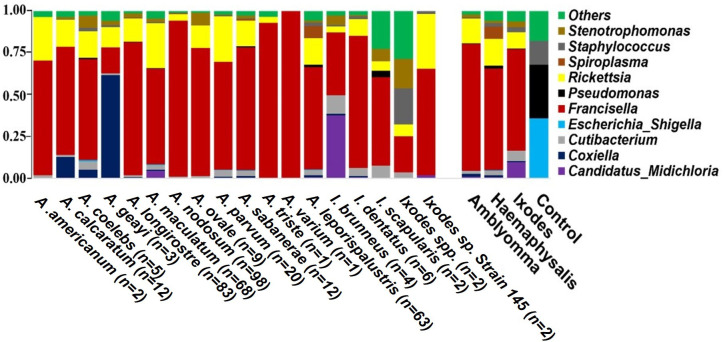
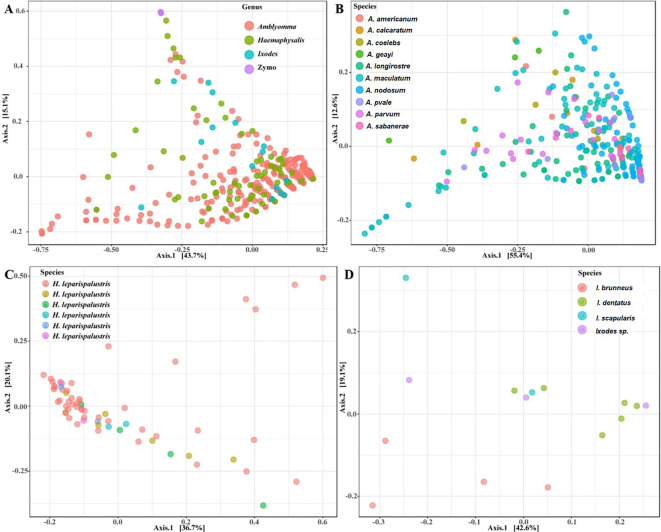
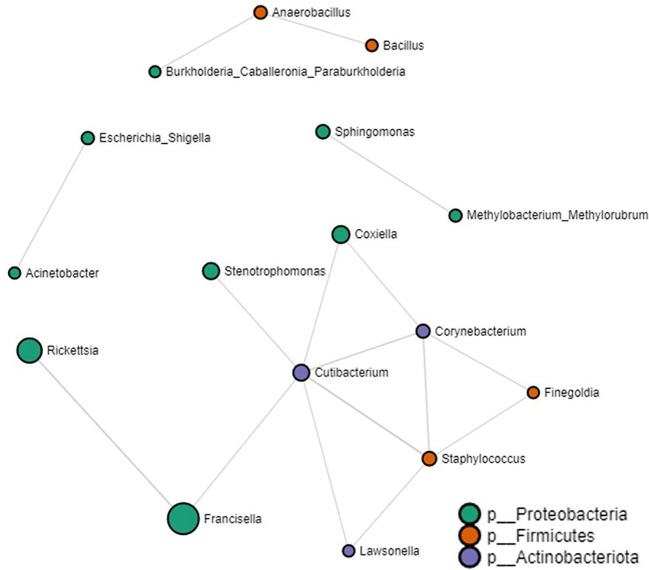
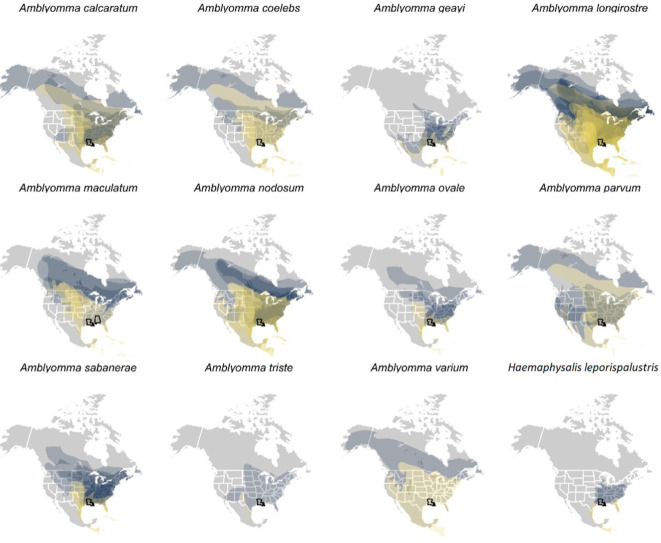
Microbial profiles showed that Proteobacteria was the most abundant phylum. The most abundant pathogens were and endosymbiont , , and . Permutation multivariate analysis of variance revealed that the relative abundance of and drives microbial patterns across the tick genera. We also noted a higher percentage of positive correlations in microbe-microbe interactions among members of the microbial communities. Network analysis suggested a negative correlation between a) and and, b) and . Lastly, mapping the distributions of bird species parasitized during spring migrations highlighted geographic hotspots where migratory songbirds could disperse ticks and their pathogens at stopover sites or upon arrival to their breeding grounds, the latter showing mean dispersal distances from 421-5003 kilometers. These findings spotlight the potential role of migratory birds in the epidemiology of tick-borne pathogens.
鸟类的长途季节性迁徙使它们成为蜱虫移动的有效生态桥梁。将外来蜱种引入新的地理区域可能导致新型蜱传病原体的出现。本研究利用线粒体12S rRNA基因,调查了墨西哥湾北部中途停歇地寄生在候鸟鸣禽身上的外来蜱种的流行情况。
总共从28种鸣禽身上记录了421只属于、和属的蜱虫个体,其中和分别是最丰富的蜱属和蜱种。一种高通量16S核糖体RNA测序方法对所有蜱虫样本中的微生物群落进行了特征分析,并鉴定出了致病微生物。
微生物图谱显示,变形菌门是最丰富的门类。最丰富的病原体是和内共生菌、、和。置换多元方差分析表明,和的相对丰度驱动了各蜱属间的微生物模式。我们还注意到微生物群落成员之间的微生物-微生物相互作用中,正相关的比例更高。网络分析表明,a)和之间以及b)和之间存在负相关。最后,绘制春季迁徙期间被寄生鸟类物种的分布图,突出了地理热点地区,在这些地区,候鸟鸣禽可能在中途停歇地或到达繁殖地时传播蜱虫及其病原体,后者显示平均传播距离为421 - 5003公里。这些发现突出了候鸟在蜱传病原体流行病学中的潜在作用。