Osada Takahiro, Nakajima Koji, Shirokoshi Tomohiko, Ogawa Akitoshi, Oka Satoshi, Kamagata Koji, Aoki Shigeki, Oshima Yasushi, Tanaka Sakae, Konishi Seiki
Department of Neurophysiology, Juntendo University School of Medicine, Bunkyo-ku, Tokyo, Japan.
Department of Orthopaedic Surgery, The University of Tokyo School of Medicine, Bunkyo-ku, Tokyo, Japan.
Nat Commun. 2024 Dec 3;15(1):10380. doi: 10.1038/s41467-024-54564-9.
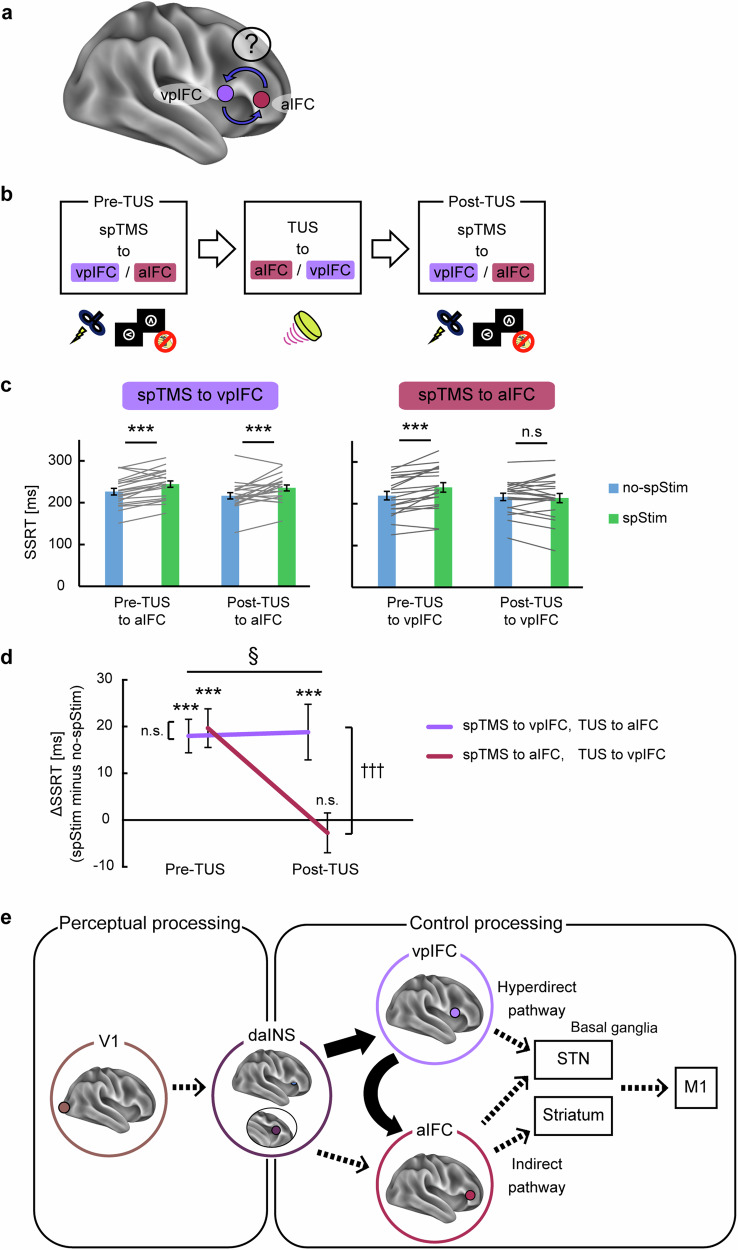
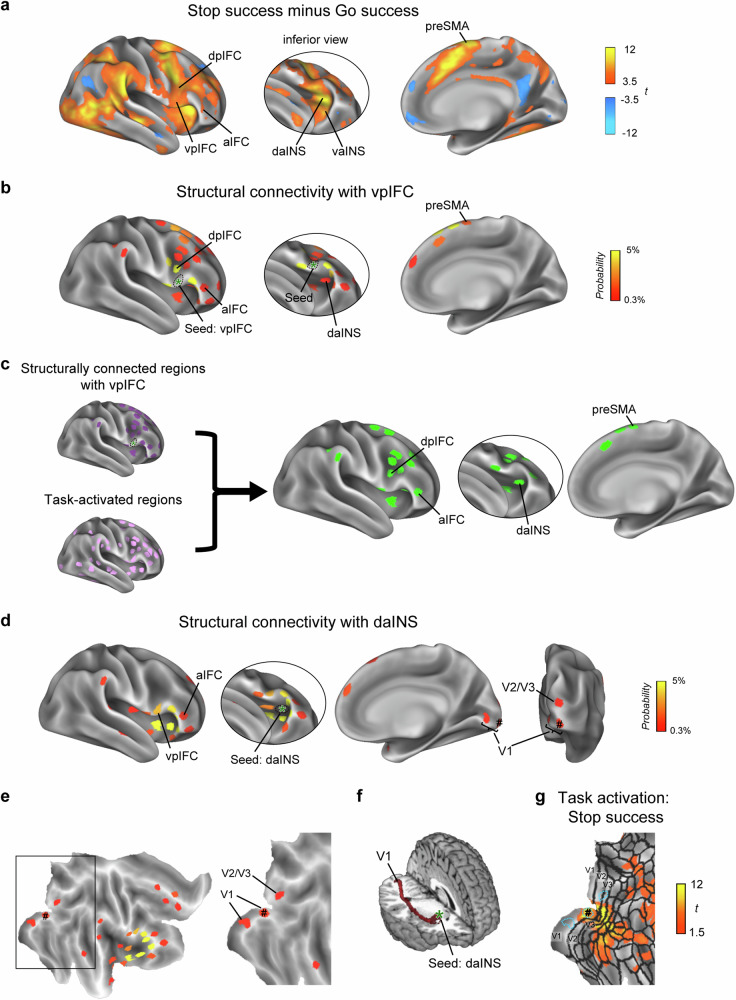
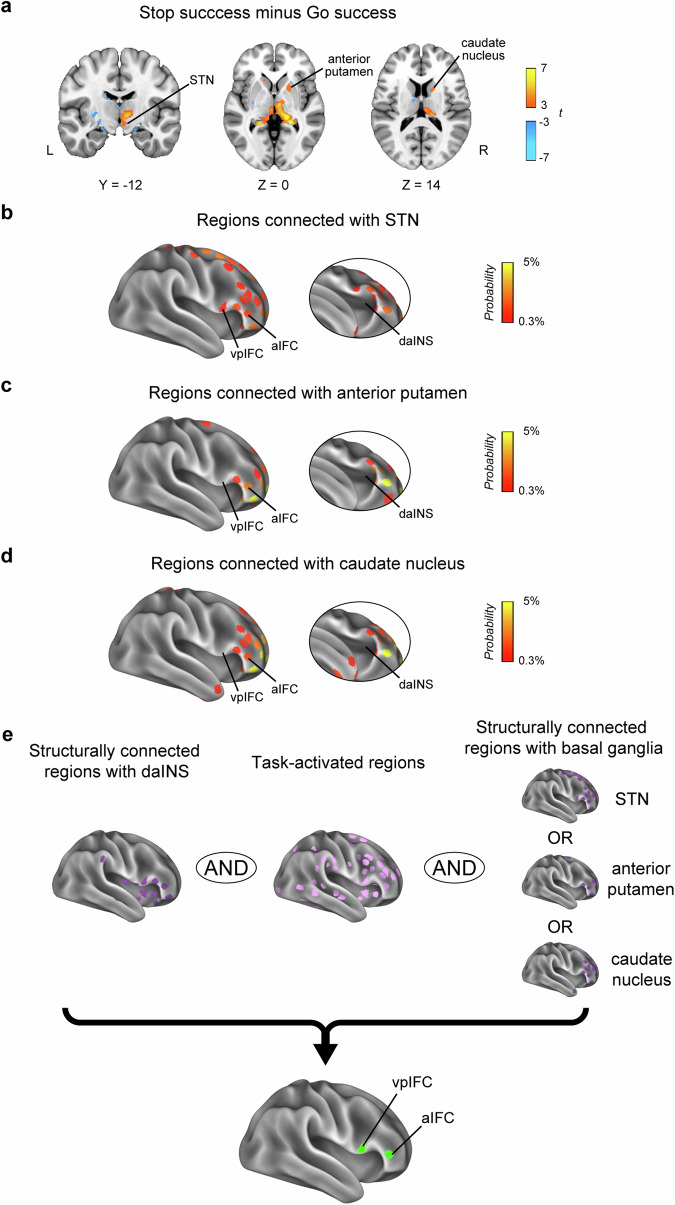
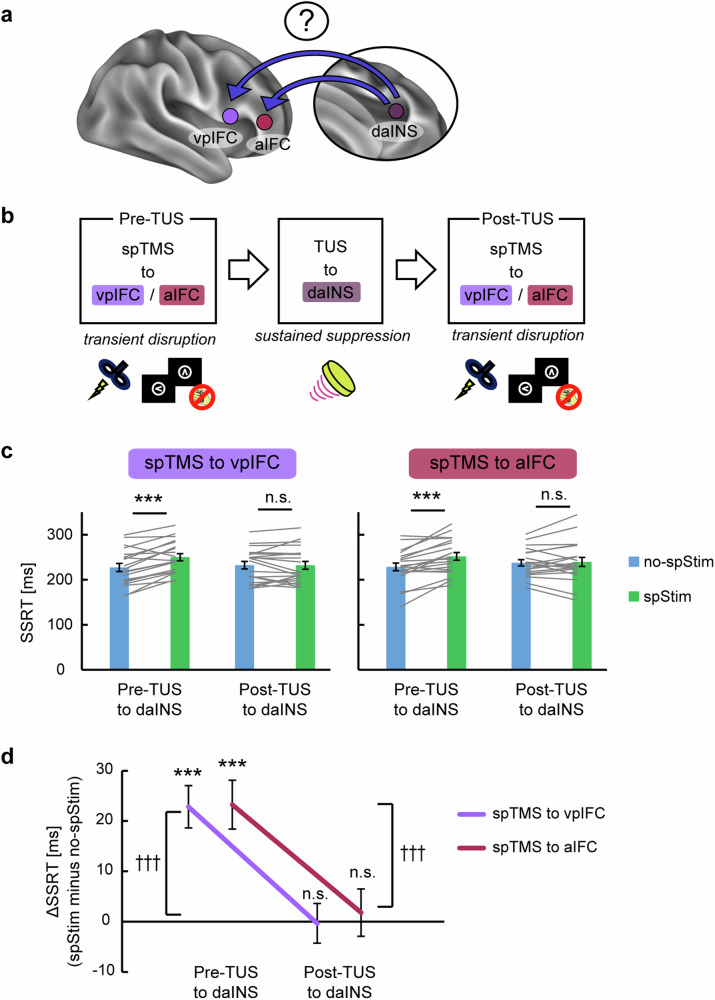
Inhibiting prepotent responses in the face of external stop signals requires complex information processing, from perceptual to control processing. However, the cerebral circuits underlying these processes remain elusive. In this study, we used neuroimaging and brain stimulation to investigate the interplay between human brain regions during response inhibition at the whole-brain level. Magnetic resonance imaging suggested a sequential four-step processing pathway: initiating from the primary visual cortex (V1), progressing to the dorsal anterior insula (daINS), then involving two essential regions in the inferior frontal cortex (IFC), namely the ventral posterior IFC (vpIFC) and anterior IFC (aIFC), and reaching the basal ganglia (BG)/primary motor cortex (M1). A combination of ultrasound stimulation and time-resolved magnetic stimulation elucidated the causal influence of daINS on vpIFC and the unidirectional dependence of aIFC on vpIFC. These results unveil asymmetric pathways in the insular-prefrontal cortex and outline the macroscopic cerebral circuits for response inhibition: V1→daINS→vpIFC/aIFC→BG/M1.
在面对外部停止信号时抑制优势反应需要复杂的信息处理,从感知处理到控制处理。然而,这些过程背后的大脑回路仍然难以捉摸。在本研究中,我们使用神经成像和脑刺激来研究全脑水平上反应抑制期间人类大脑区域之间的相互作用。磁共振成像显示了一个连续的四步处理途径:从初级视觉皮层(V1)开始,进展到背侧前岛叶(daINS),然后涉及额下回(IFC)的两个关键区域,即腹侧后额下回(vpIFC)和前额下回(aIFC),并到达基底神经节(BG)/初级运动皮层(M1)。超声刺激和时间分辨磁刺激的结合阐明了daINS对vpIFC的因果影响以及aIFC对vpIFC的单向依赖性。这些结果揭示了岛叶 - 前额叶皮层中的不对称通路,并勾勒出反应抑制的宏观大脑回路:V1→daINS→vpIFC/aIFC→BG/M1。