Saade Ursula, de Boer Jasper, Scandale Ivan, Altcheh Jaime, Pottel Hans, Chatelain Eric, Zrein Maan
InfYnity Biomarkers, Lyon, France.
Swiss Tropical and Public Health Institute, Department of Medical Parasitology and Infection Biology, 4123, Allschwil, Switzerland.
Nat Commun. 2024 Dec 3;15(1):10530. doi: 10.1038/s41467-024-54910-x.
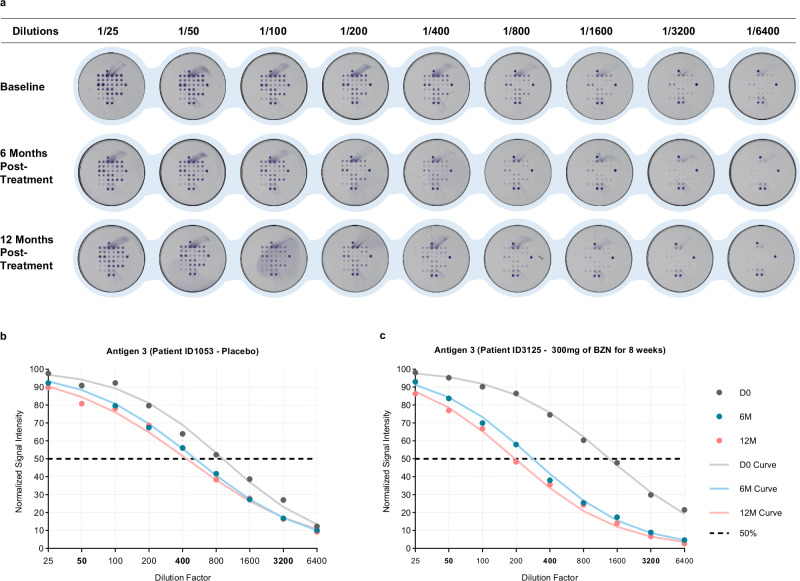
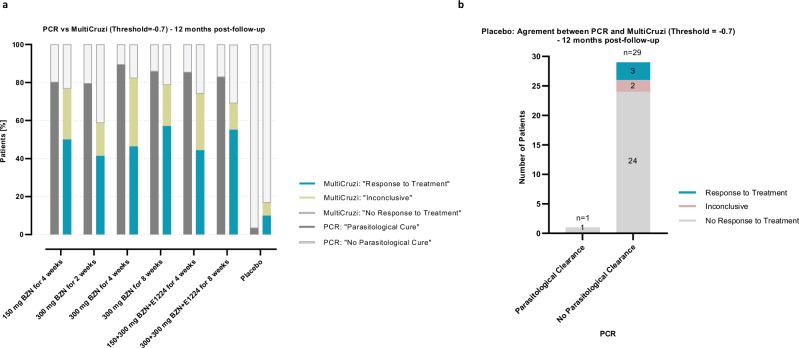
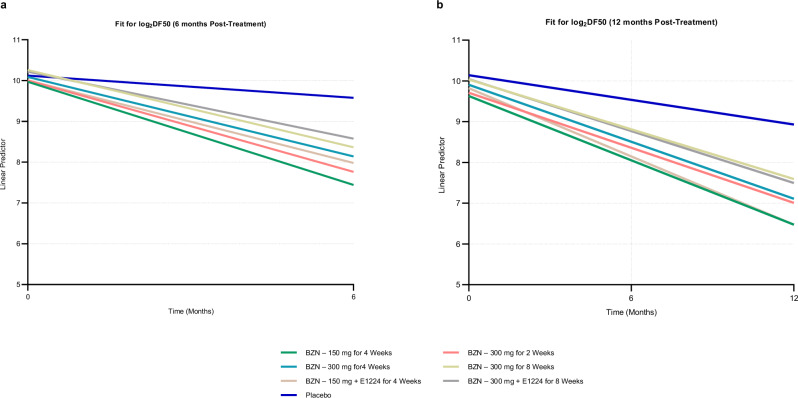
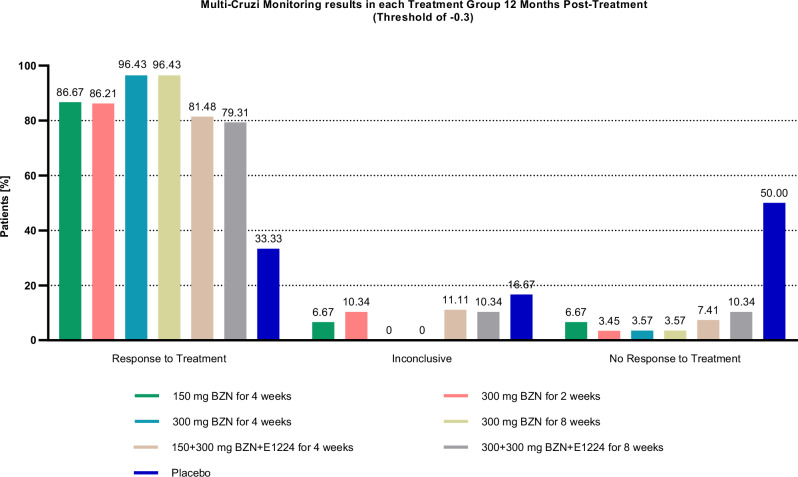
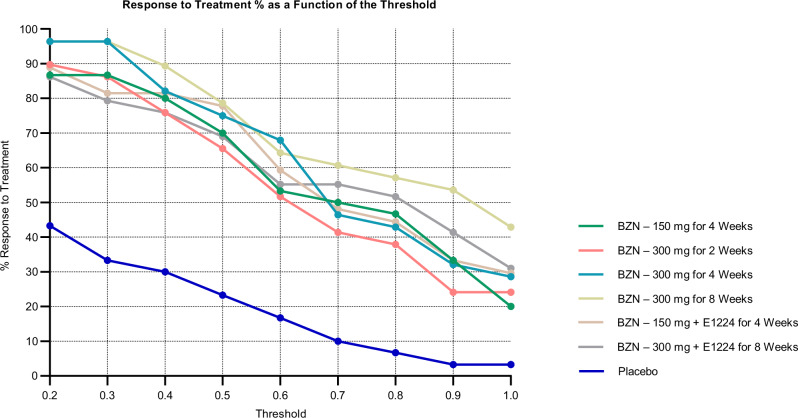
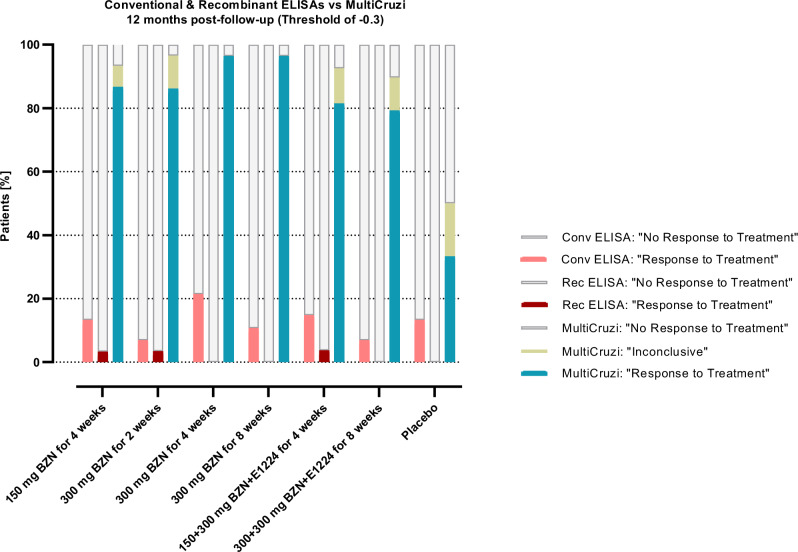
Chagas disease following infection with Trypanosoma cruzi is a major public health issue, with the disease spreading beyond endemic regions and becoming more global due to the migration of infected individuals. The currently available anti-parasitic drugs, nifurtimox and benznidazole, remain insufficiently evaluated for their efficacy in adult patients. A key challenge is the lack of markers for parasitological cure, which also precludes the development of new treatments. Consequently, there is a critical need for a practical method to assess drug performance within a short timeframe. In this retrospective analysis of the phase 2 randomized controlled BENDITA trial (ClinicalTrials.gov: NCT03378661), we report the potential of a serological multiplex method (MultiCruzi), combined with advanced statistical analytical methods, to measure the response to anti-parasitic treatment of adult Chagas patients. Applying this approach to serum samples from adult patients in the indeterminate chronic stage of Chagas disease, treated with different benznidazole regimens and combinations, we predict treatment efficacy after just 6 months of follow-up, in sharp contrast to data obtained with conventional and recombinant T. cruzi ELISA tests. The obtained results are also compared with the PCR data. We propose integrating MultiCruzi as a serological method endpoint in proof-of-concept clinical trials for Chagas disease.
感染克氏锥虫后引发的恰加斯病是一个重大的公共卫生问题,由于受感染个体的迁移,该病正蔓延至流行地区以外,且日益全球化。目前可用的抗寄生虫药物硝呋替莫和苯硝唑,在成年患者中的疗效仍未得到充分评估。一个关键挑战是缺乏寄生虫学治愈的标志物,这也阻碍了新疗法的开发。因此,迫切需要一种在短时间内评估药物性能的实用方法。在这项对2期随机对照BENDITA试验(ClinicalTrials.gov:NCT03378661)的回顾性分析中,我们报告了一种血清学多重检测方法(MultiCruzi)与先进的统计分析方法相结合,用于测量成年恰加斯病患者抗寄生虫治疗反应的潜力。将这种方法应用于恰加斯病不确定慢性期成年患者的血清样本,这些患者接受了不同的苯硝唑治疗方案和联合用药,我们在仅6个月的随访后就能预测治疗效果,这与传统和重组克氏锥虫ELISA检测所获得的数据形成鲜明对比。还将获得的结果与PCR数据进行了比较。我们建议在恰加斯病概念验证临床试验中,将MultiCruzi作为血清学方法终点进行整合。