Iakubivskyi Iaroslav, Seager Sara, Carr Christopher E, Petkowski Janusz J, Agrawal Rachana, Moreno M Regina A, Nellutla Snigdha
Department of Earth, Atmospheric, and Planetary Sciences, Massachusetts Institute of Technology, 77 Mass. Ave., Cambridge, MA, 02139, USA.
Tartu Observatory, University of Tartu, Observatooriumi 1, Tõravere, 61602, Estonia.
Sci Rep. 2024 Dec 3;14(1):30045. doi: 10.1038/s41598-024-80847-8.
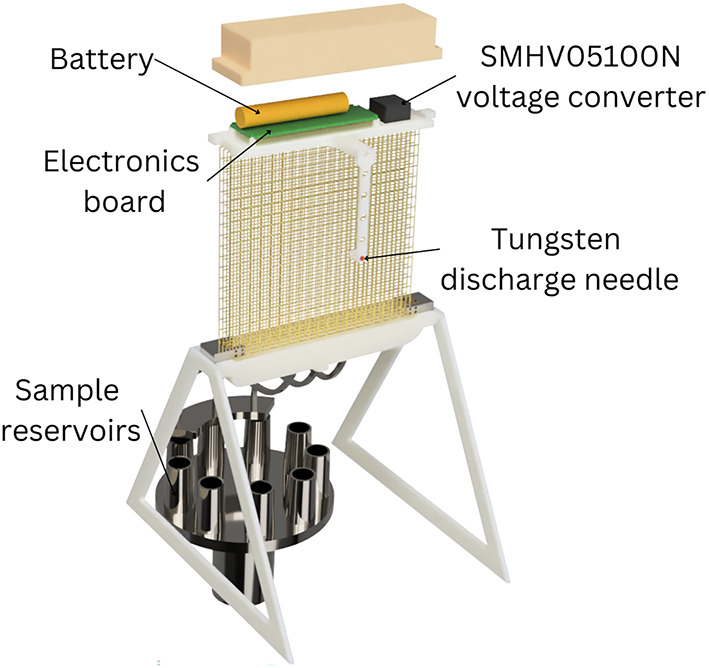
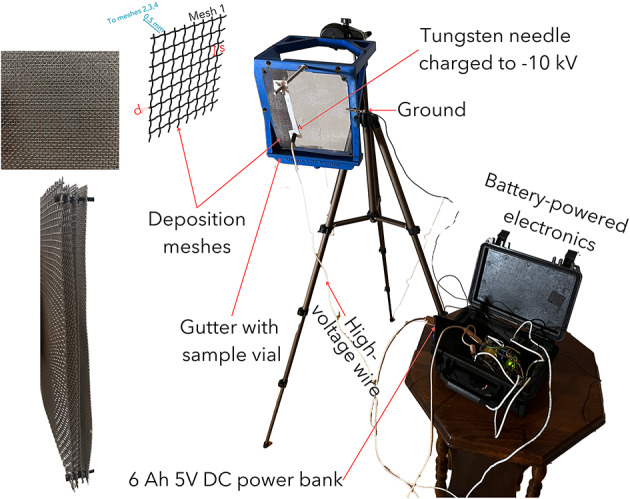
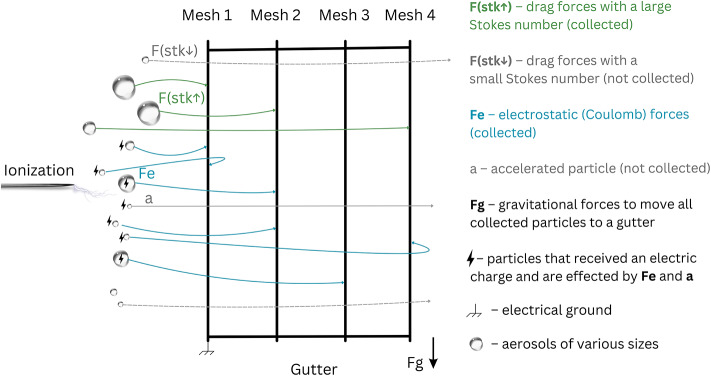
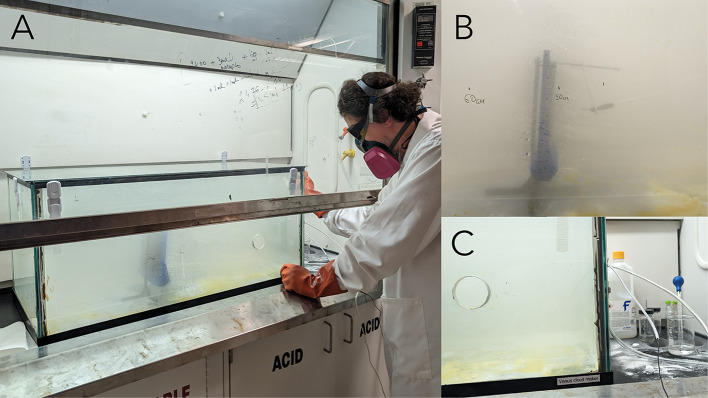
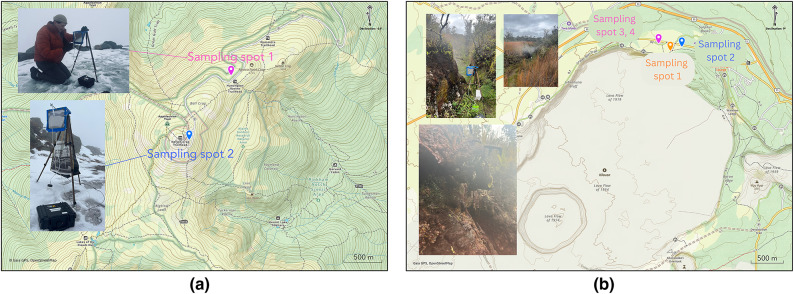
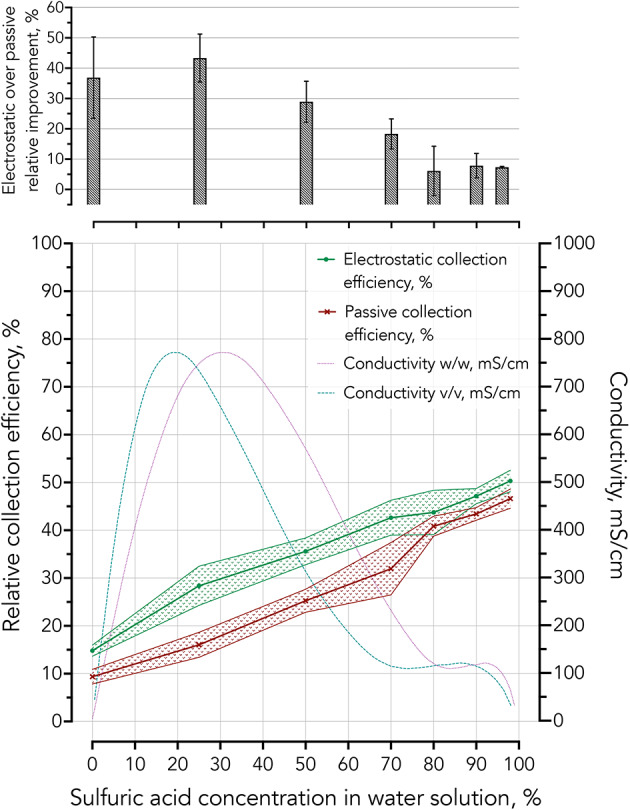
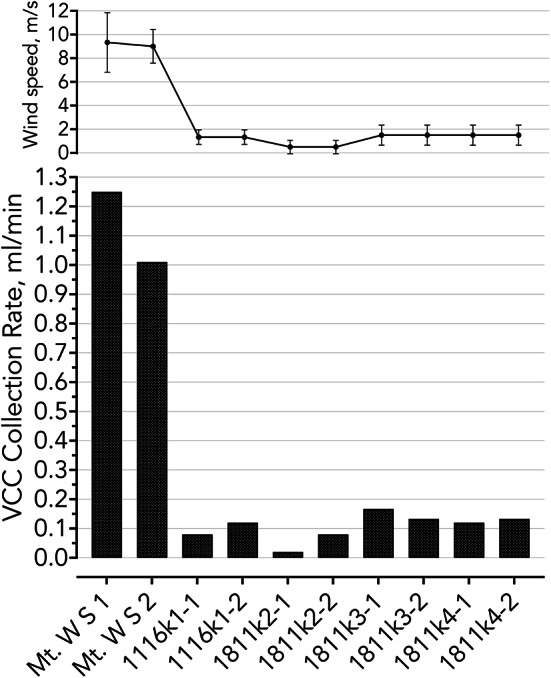
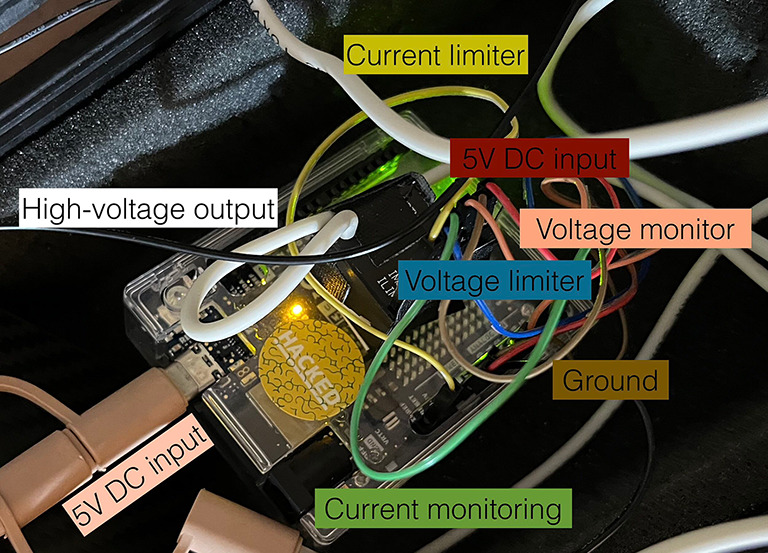
We report on the proof-of-concept of a low-mass, low-power method for collecting micron-sized sulfuric acid aerosols in bulk from the atmosphere of Venus. The collection method uses four wired meshes in a sandwich structure with a deposition area of 225 cm. It operates in two modes: passive and electrostatic. During passive operation, aerosols are gathered on the deposition surface by aerodynamic force. During electrostatic operation, a tungsten needle discharges a high voltage of - 10 kV at the front of the grounded mesh structure. The discharge ionizes aerosols and attracts them to the mesh by Coulomb forces, resulting in improved efficiency and tentative attraction of submicron aerosols. We describe the instrument construction and testing in the laboratory under controlled conditions with aerosols composed of 25%, 50%, 70%, 80%, 90% and 98%* concentration by volume of sulfuric acid, the rest water. We demonstrated the following: (i) both modes of operation can collect the entire range of sulfuric acid solutions; (ii) the collection efficiency increases steadily (from a few percent for water to over 40% for concentrated sulfuric acid) with the increased concentration of sulfuric acid solution in water in both modes; (iii) the relative improvement in the collection of the electrostatic mode decreases as the sulfuric acid concentration increases. We also demonstrated the operation of the instrument in the field, cloud particle collection on Mt. Washington, NH, and crater-rim fumaroles' particle collection on Kīlauea volcano, HI. The collection rate in the field is wind-speed dependent, and we observed collection rates around 0.1 ml[Formula: see text] in low wind environments (1-2 m[Formula: see text]), and around 1 ml[Formula: see text] in stronger wind (7-9 m[Formula: see text]).
我们报告了一种低质量、低功耗方法的概念验证,该方法用于从金星大气中批量收集微米级硫酸气溶胶。收集方法采用四层有线网筛组成的三明治结构,沉积面积为225平方厘米。它有两种运行模式:被动模式和静电模式。在被动运行期间,气溶胶通过空气动力聚集在沉积表面。在静电运行期间,一根钨针在接地网筛结构前端释放-10 kV的高电压。放电使气溶胶电离,并通过库仑力将它们吸引到网筛上,从而提高了效率,并初步吸引了亚微米级气溶胶。我们描述了该仪器在实验室可控条件下的构造和测试,所使用的气溶胶由体积分数为25%、50%、70%、80%、90%和98%的硫酸与其余的水组成。我们证明了以下几点:(i) 两种运行模式都能收集全范围的硫酸溶液;(ii) 在两种模式下,随着水中硫酸溶液浓度的增加,收集效率稳步提高(从水的百分之几提高到浓硫酸的40%以上);(iii) 随着硫酸浓度的增加,静电模式收集效率的相对提高幅度减小。我们还展示了该仪器在实地的运行情况,在新罕布什尔州华盛顿山收集云粒子,以及在夏威夷基拉韦厄火山的火山口边缘喷气孔收集粒子。实地的收集速率取决于风速,我们观察到在低风速环境(1-2米/秒)下收集速率约为0.1毫升/小时,在强风(7-9米/秒)下约为1毫升/小时。