Piredda Roberta, Martínez Luis G Rodríguez, Stamatakis Konstantinos, Martinez-Ortega Jorge, Ferráz Alejandro López, Almendral José M, Revilla Yolanda
Centro de Biología Molecular Severo Ochoa (CSIC-UAM), Universidad Autónoma de Madrid, Cantoblanco, Madrid, 28049, Spain.
Universidad de Sancti Spíritus, Sancti Spíritus, Cuba.
Sci Rep. 2024 Dec 3;14(1):30150. doi: 10.1038/s41598-024-81171-x.
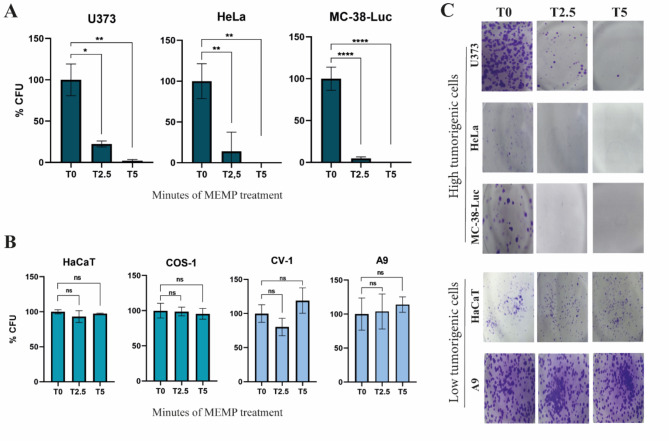
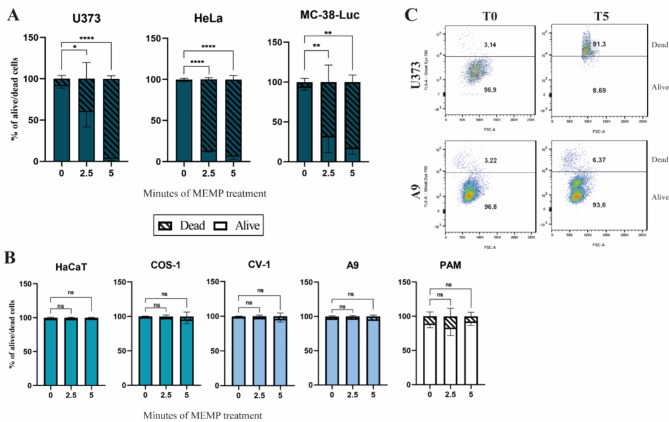
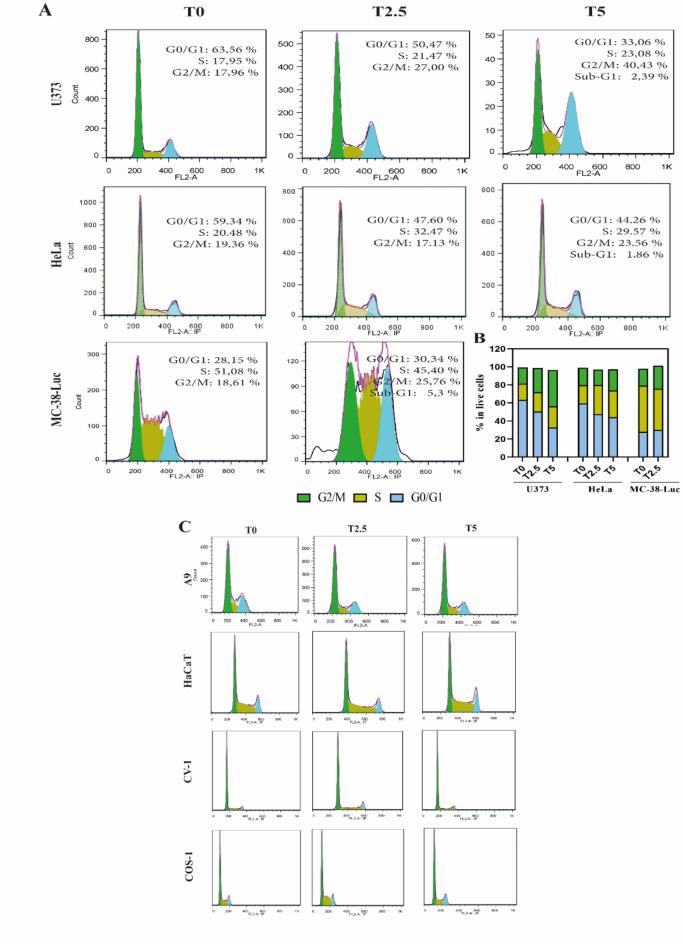
Physics methods of cancer therapy are extensively used in clinical practice, but they are invasive and often confront undesired side effects. A fully new equipment that allows sustained emission of intense and time-controlled non-ionizing multifrequency electromagnetic pulse (MEMP), has been applied to eukaryotic cells in culture. The equipment discriminates the overall electronegative charge of the cell cultures, and its subsequent proportional emission may thereby become higher and lethal to cancer cells of generally high metabolic activity. In contrast, low tumorigenic cells would be much less affected. We tested the specificity and efficacy of the equipment against a collection of (i) highly tumorigenic cells of human (glioblastoma, cervical carcinoma, and skin) and mouse (colon adenocarcinoma) origin; (ii) cell lines of much lower tumorigenicity (non-human primate kidney and mouse fibroblasts), and (iii) primary porcine macrophages lacking tumorigenicity. Time and intensity control of the MEMP allowed progressive decay of viability fairly correlating to cell tumorigenicity, which was provoked by a proportional alteration of the cytoplasmic membrane permeability, cell cycle arrest at G2, and general collapse of the actin cytoskeleton to the perinuclear region. Correspondingly, these effects drastically inhibited the proliferative capacity of the most tumorigenic cells in clonogenic assays. Moreover, MEMP suppressed in a dose-dependent manner the tumorigenicity of retrovirally transduced luciferase expressing colon adenocarcinoma cells in xenografted immune-competent mice, as determined by tumor growth in a bioluminescence imaging system. Our results support MEMP as an anti-cancer non-invasive physical treatment of substantial specificity for tumorigenic cells with promising therapeutic potential in oncology.
癌症治疗的物理方法在临床实践中被广泛应用,但它们具有侵入性,且常常伴随着不良副作用。一种全新的设备能够持续发射高强度且时间可控的非电离多频电磁脉冲(MEMP),已被应用于培养的真核细胞。该设备能够识别细胞培养物的整体负电荷,其随后按比例发射的电磁脉冲可能会更高,对代谢活性普遍较高的癌细胞具有致死性。相比之下,低致瘤性细胞受影响则要小得多。我们针对以下几类细胞测试了该设备的特异性和有效性:(i)源自人类(胶质母细胞瘤、宫颈癌和皮肤癌)和小鼠(结肠腺癌)的高致瘤性细胞;(ii)致瘤性低得多的细胞系(非人灵长类动物肾细胞和小鼠成纤维细胞),以及(iii)无致瘤性的原代猪巨噬细胞。MEMP的时间和强度控制使得细胞活力逐渐下降,这与细胞致瘤性相当相关,这是由细胞质膜通透性的比例性改变、细胞周期在G2期停滞以及肌动蛋白细胞骨架向核周区域的普遍塌陷所引发的。相应地,这些效应在克隆形成试验中极大地抑制了最具致瘤性细胞的增殖能力。此外,通过生物发光成像系统中肿瘤的生长情况测定,MEMP以剂量依赖性方式抑制了在异种移植免疫活性小鼠中逆转录病毒转导的表达荧光素酶的结肠腺癌细胞的致瘤性。我们的结果支持MEMP作为一种针对致瘤性细胞具有显著特异性的抗癌非侵入性物理治疗方法,在肿瘤学领域具有广阔的治疗潜力。