Yamada Sota, Sasaki Eita, Ohno Hisashi, Hanaoka Kenjiro
Faculty of Pharmacy and Graduate School of Pharmaceutical Sciences, Keio University, Tokyo, 105-8512, Japan.
Commun Chem. 2024 Dec 3;7(1):287. doi: 10.1038/s42004-024-01383-0.
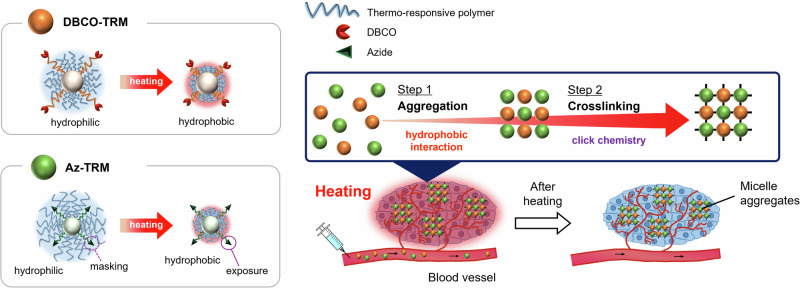
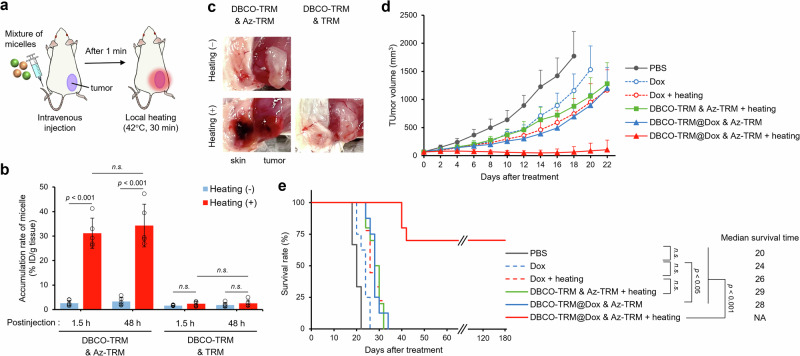
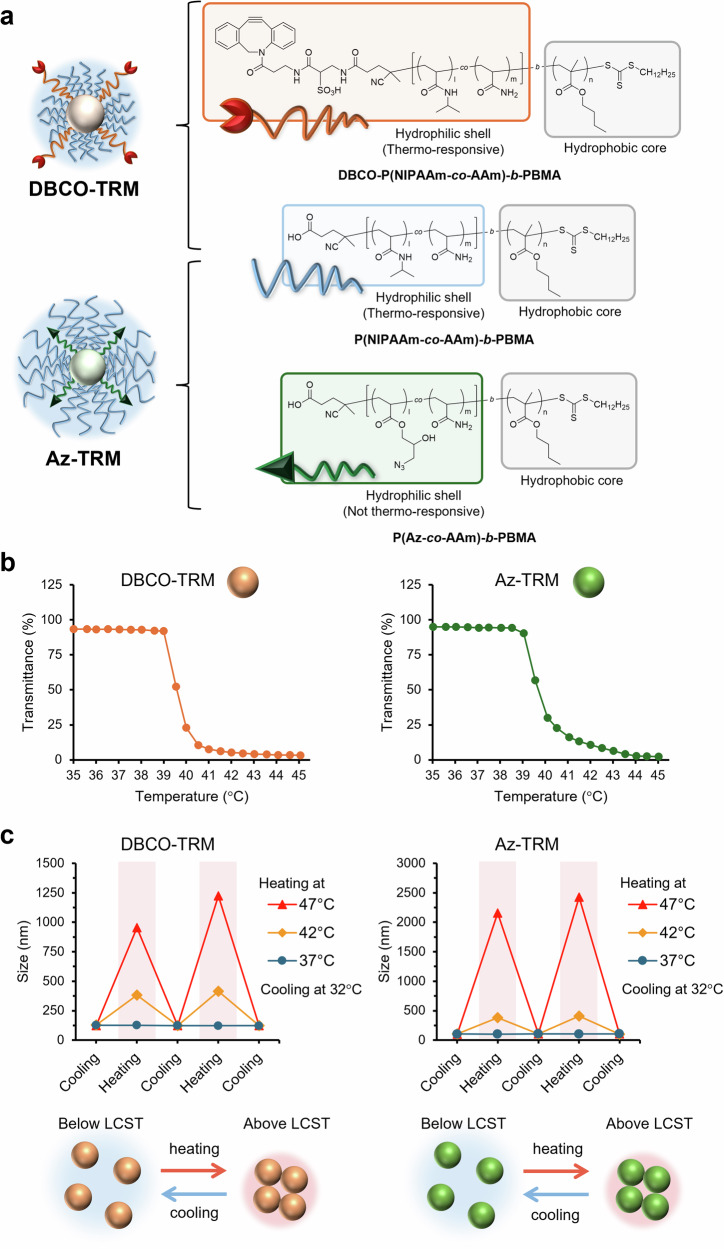
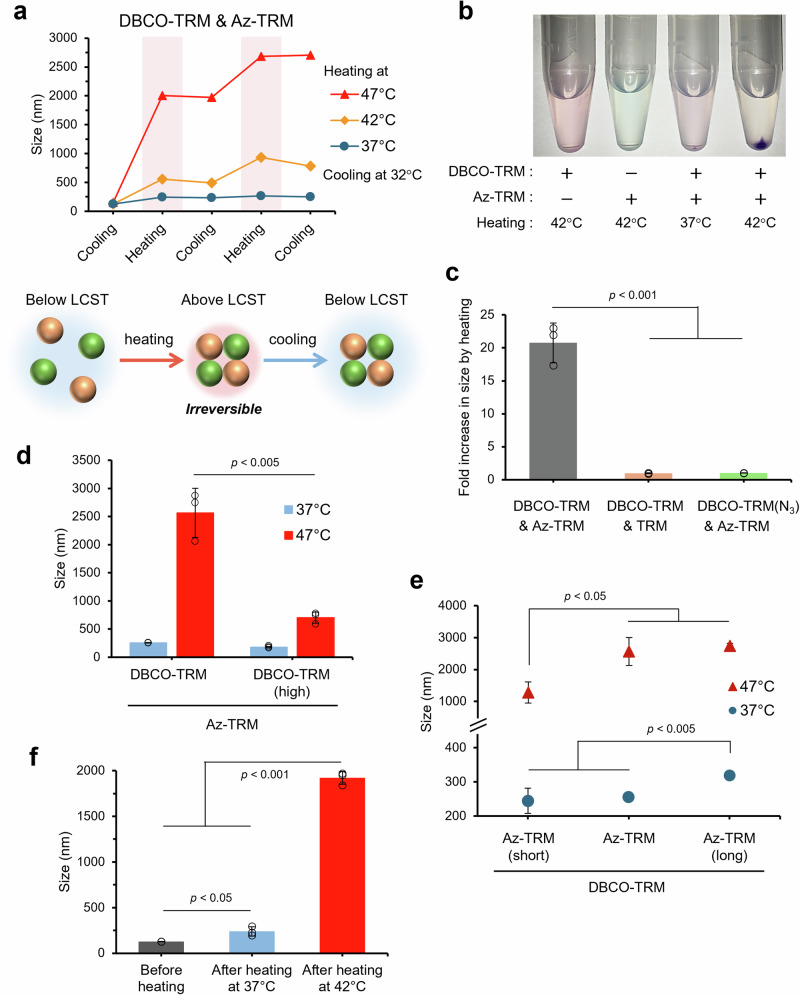
Targeted drug delivery in response to external stimuli is therapeutically desirable, but long-term drug retention at the target site after stimulation is turned off remains a challenge. Herein, we present a targeted-delivery strategy via irreversible aggregation of drug carriers in response to mild external heating. We constructed two types of polymeric micelles, DBCO-TRM and Az-TRM, having a thermo-responsive polymer shell based on N-isopropylacrylamide (NIPAAm) and incorporating alkyne and azide moieties, respectively. Upon heating at 42 °C, the micelles aggregated through hydrophobic interaction between their dehydrated shells. Further, the azide moieties of Az-TRM become exposed on the surface due to the thermally shrinkage of the shells, thereby enabling crosslinking between the two types of micelles via azide-alkyne click chemistry to form irreversible aggregates. These aggregates were efficiently accumulated at tumor sites in mice by local heating after intravenous administration of a mixture of the micelles, and were well retained after cessation of heating due to their increased size. As proof of concept, we show that delivery of doxorubicin in this heat-guided drug delivery system dramatically improved the anti-tumor effect in a mouse model after a single treatment. Our results suggest that this platform could be an efficient tool for on-demand drug delivery.
响应外部刺激的靶向药物递送在治疗上是理想的,但在刺激停止后药物在靶位点的长期保留仍然是一个挑战。在此,我们提出了一种通过药物载体在温和外部加热下不可逆聚集的靶向递送策略。我们构建了两种类型的聚合物胶束,DBCO-TRM和Az-TRM,它们具有基于N-异丙基丙烯酰胺(NIPAAm)的热响应聚合物壳,分别包含炔基和叠氮基部分。在42°C加热时,胶束通过其脱水壳之间的疏水相互作用而聚集。此外,由于壳的热收缩,Az-TRM的叠氮基部分暴露在表面,从而能够通过叠氮-炔点击化学在两种类型的胶束之间交联形成不可逆聚集体。在静脉注射胶束混合物后,通过局部加热,这些聚集体在小鼠肿瘤部位有效积累,并且由于其尺寸增加,在加热停止后能很好地保留。作为概念验证,我们表明在这种热引导药物递送系统中阿霉素的递送在单次治疗后显著提高了小鼠模型中的抗肿瘤效果。我们的结果表明,该平台可能是一种按需药物递送的有效工具。