Peter Cyril J, Agarwal Aman, Watanabe Risa, Kassim Bibi S, Wang Xuedi, Lambert Tova Y, Javidfar Behnam, Evans Viviana, Dawson Travis, Fridrikh Maya, Girdhar Kiran, Roussos Panos, Nageshwaran Sathiji K, Tsankova Nadejda M, Sebra Robert P, Vollger Mitchell R, Stergachis Andrew B, Hasson Dan, Akbarian Schahram
Department of Psychiatry, Icahn School of Medicine at Mount Sinai, New York, NY 10029, USA; Department of Neuroscience, Friedman Brain Institute, Icahn School of Medicine at Mount Sinai, New York, NY 10029, USA.
Tisch Cancer Institute Bioinformatics for Next Generation Sequencing (BiNGS) Core, Icahn School of Medicine at Mount Sinai, New York, NY 10029, USA.
Cell Rep Methods. 2024 Dec 16;4(12):100911. doi: 10.1016/j.crmeth.2024.100911. Epub 2024 Dec 3.
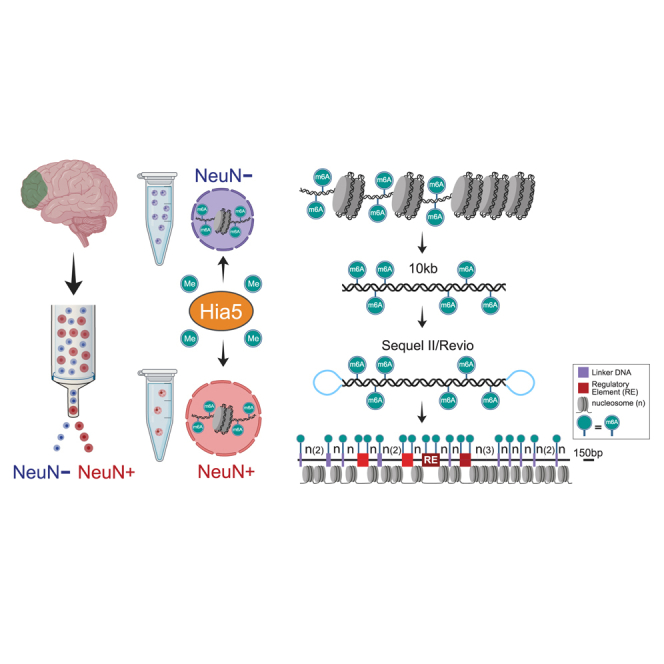
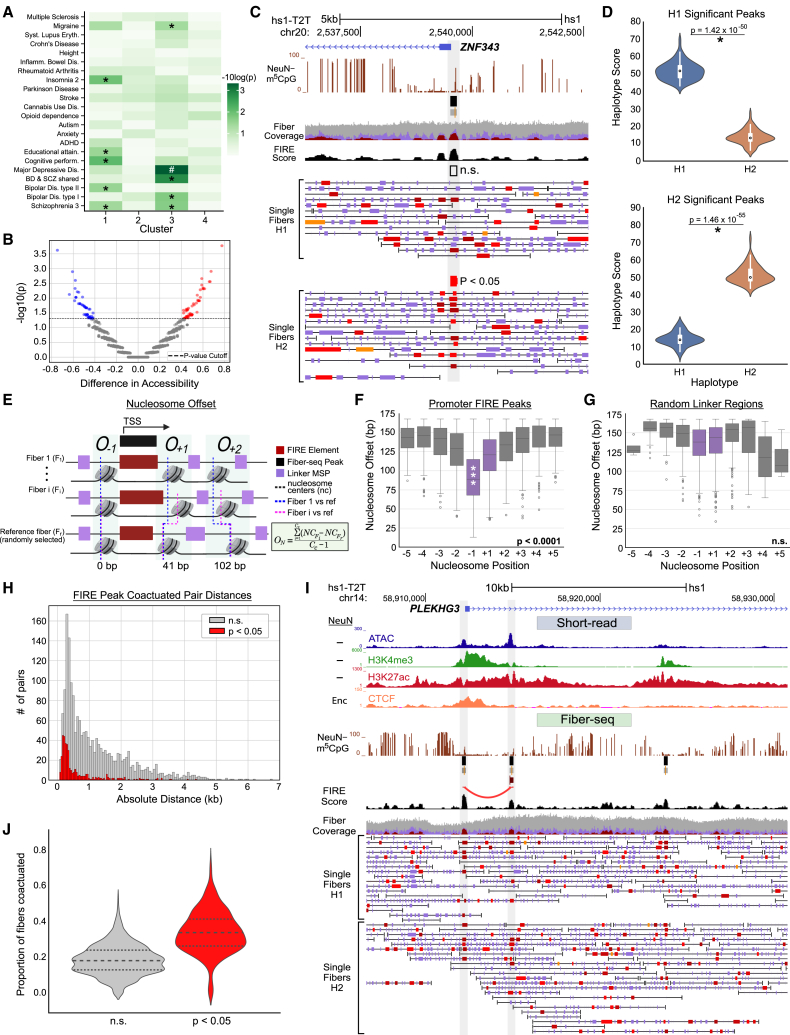
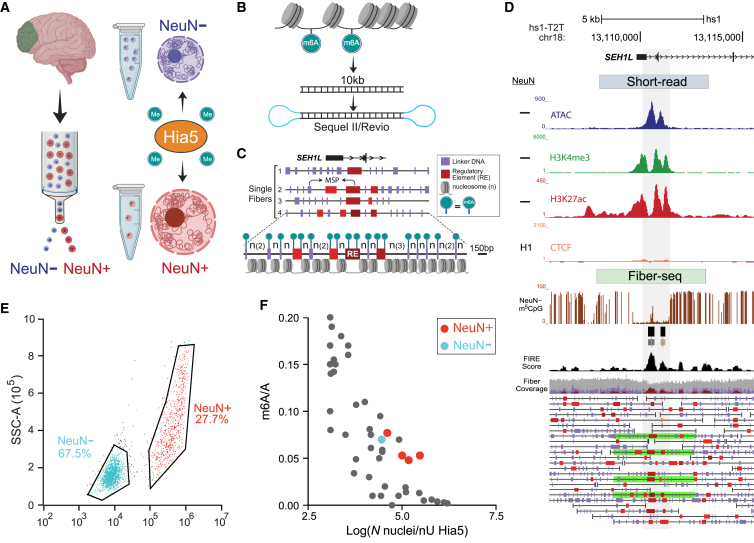
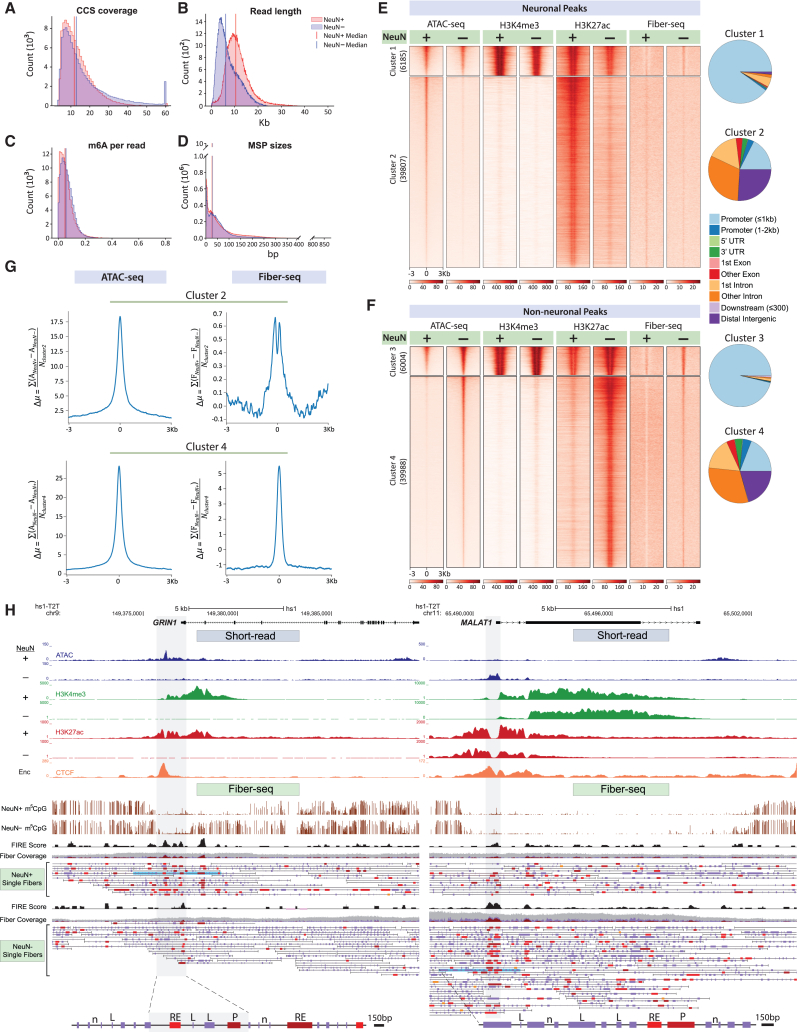
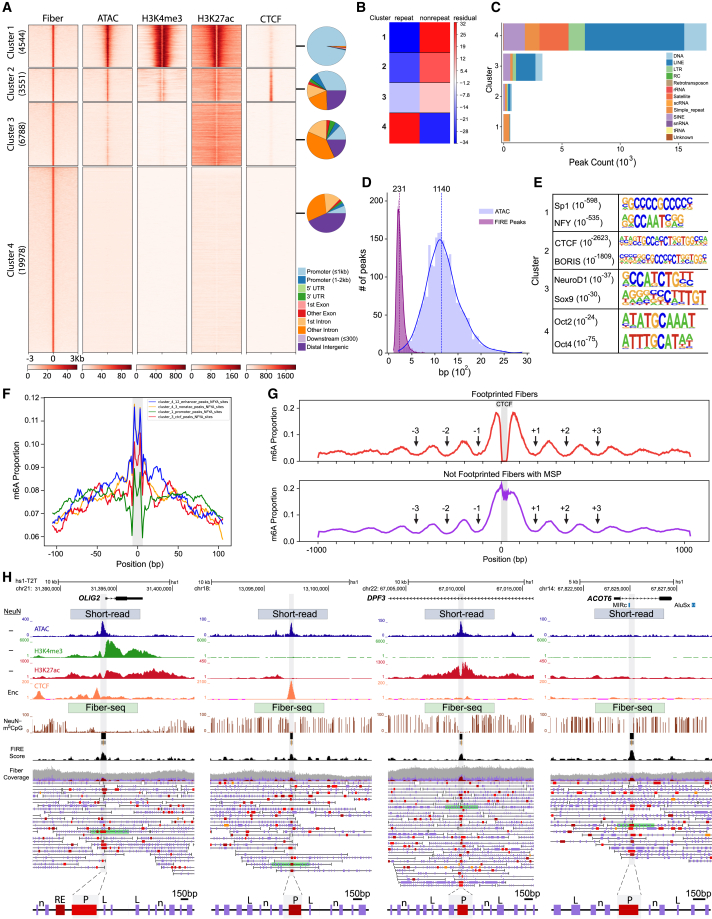
We apply a single-molecule chromatin fiber sequencing (Fiber-seq) protocol designed for amplification-free cell-type-specific mapping of the regulatory architecture at nucleosome resolution along extended ∼10-kb chromatin fibers to neuronal and non-neuronal nuclei sorted from human brain tissue. Specifically, application of this method enables the resolution of cell-selective promoter and enhancer architectures on single fibers, including transcription factor footprinting and position mapping, with sequence-specific fixation of nucleosome arrays flanking transcription start sites and regulatory motifs. We uncover haplotype-specific chromatin patterns, multiple regulatory elements cis-aligned on individual fibers, and accessible chromatin at 20,000 unique sites encompassing retrotransposons and other repeat sequences hitherto "unmappable" by short-read epigenomic sequencing. Overall, we show that Fiber-seq is applicable to human brain tissue, offering sharp demarcation of nucleosome-depleted regions at sites of open chromatin in conjunction with multi-kilobase nucleosomal positioning at single-fiber resolution on a genome-wide scale.
我们将一种单分子染色质纤维测序(Fiber-seq)方案应用于从人类脑组织中分离出的神经元和非神经元细胞核,该方案旨在以核小体分辨率对长达约10 kb的染色质纤维上的调控结构进行无扩增的细胞类型特异性图谱绘制。具体而言,这种方法的应用能够在单纤维上解析细胞选择性启动子和增强子结构,包括转录因子足迹分析和位置映射,同时对转录起始位点和调控基序两侧的核小体阵列进行序列特异性固定。我们发现了单倍型特异性染色质模式、单个纤维上顺式排列的多个调控元件,以及在20,000个独特位点处的可及染色质,这些位点包含逆转录转座子和其他迄今短读长表观基因组测序“无法映射”的重复序列。总体而言,我们表明Fiber-seq适用于人类脑组织,在全基因组范围内以单纤维分辨率提供开放染色质位点处核小体缺失区域的清晰界定以及数千碱基的核小体定位。