Wei Shi-Lin, Du Jun-Zhe, Zhai Ke-Rong, Yang Jian-Bao, Zhang Ran, Wu Xiang-Yang, Li Yongnan, Li Bin
Department of Thoracic Surgery, The Second Hospital & Clinical Medical School, Lanzhou University, Lanzhou, Gansu, China.
Gansu Province Key Laboratory of Environmental Oncology, Lanzhou, People's Republic of China.
BMJ Open Respir Res. 2024 Dec 4;11(1):e002394. doi: 10.1136/bmjresp-2024-002394.
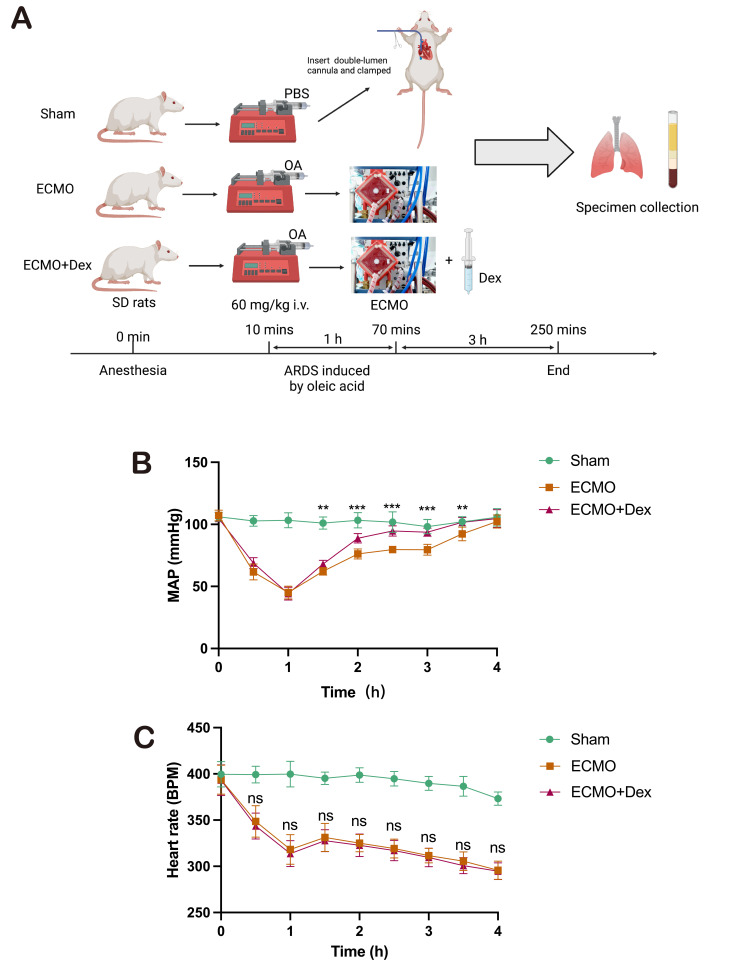
In recent years, dexamethasone (Dex) has been used to treat acute respiratory distress syndrome (ARDS) in patients with COVID-19 and achieved promising outcomes. Venovenous extracorporeal membrane oxygenation (VV ECMO) support for patients with ARDS has increased significantly worldwide. However, it remains unknown whether Dex could improve the efficiency of VV ECMO to reduce lung injury. Here, we investigate the combined efficiency of VV ECMO and Dex in rats with acute lung injury (ALI).
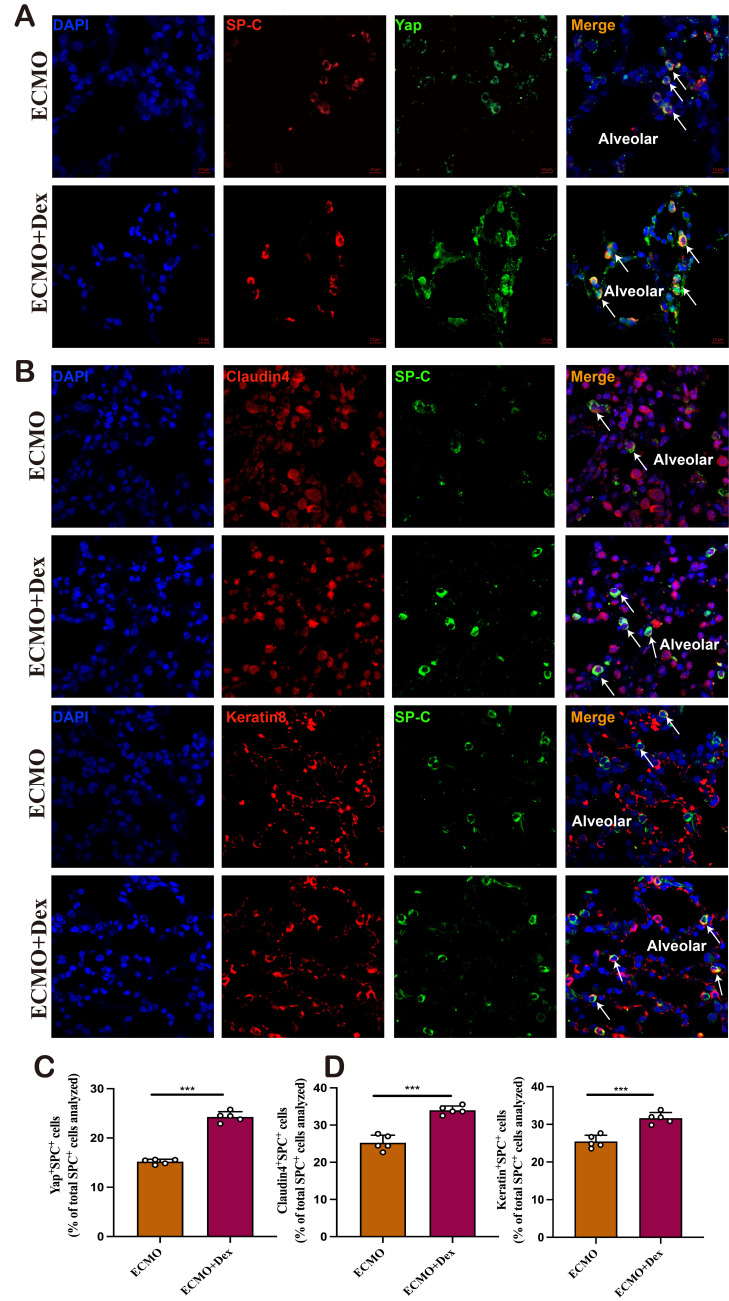
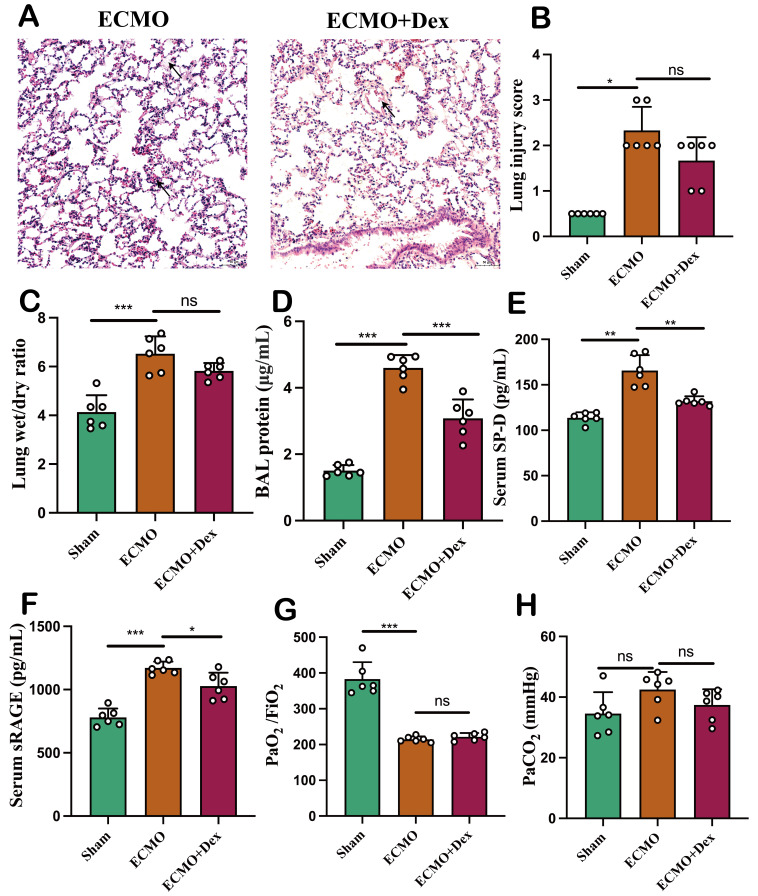
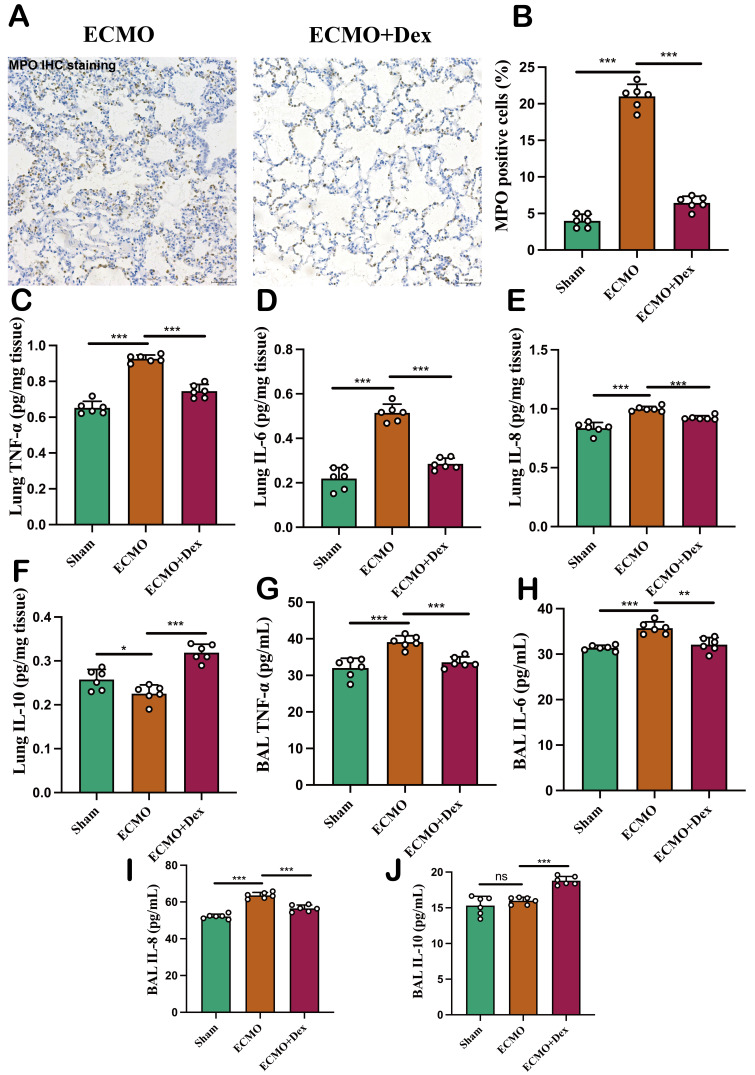
We established VV ECMO in oleic acid (OA)-treated ALI rats and administered Dex. We conducted HE staining and evaluated lung and bronchoalveolar lavage (BAL) fluid cytokines to assess lung injury and inflammation. Furthermore, we investigated the activation of Hippo/YAP signalling in alveolar epithelial type II cell (AT2)-mediated alveolar epithelial repair using quantitative PCR, Western blotting and immunofluorescence. In vitro, the human alveolar epithelial cell line A549 was used to investigate the key role of YAP in alveolar epithelial cell differentiation.
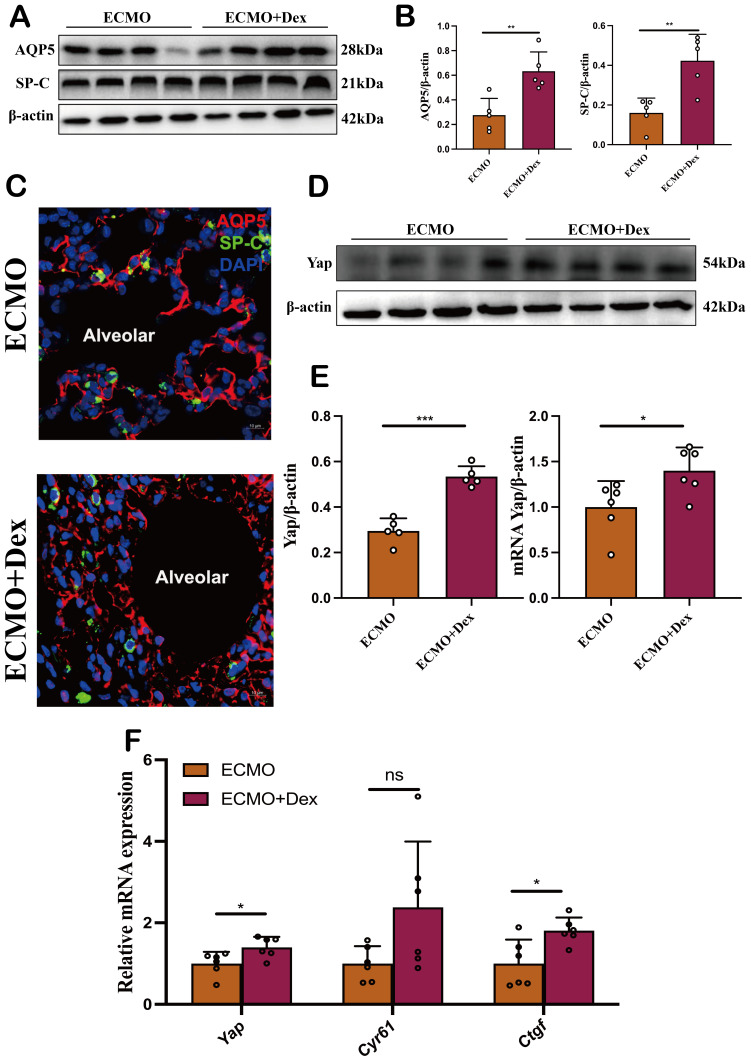
VV ECMO combined with Dex alleviated OA-induced lung injury and pulmonary inflammation. Pulmonary oedema and exudation were significantly alleviated, and the lung and BAL levels of IL-6, IL-8 and TNF-α were significantly reduced compared with those observed with ECMO alone. In addition, VV ECMO combined with Dex treatment protected alveolar epithelial cells by activating Hippo/YAP signalling. In vitro, Dex promoted YAP expression and alveolar epithelial cell differentiation, whereas YAP knockdown inhibited YAP-mediated differentiation.
Our findings suggest that adjuvant Dex treatment during VV ECMO could alleviate ALI and pulmonary inflammation by activating the Hippo/YAP signalling pathway, which promoted alveolar regeneration and AT2 differentiation.
近年来,地塞米松(Dex)已被用于治疗新型冠状病毒肺炎(COVID-19)患者的急性呼吸窘迫综合征(ARDS),并取得了良好的效果。在全球范围内,对ARDS患者进行静脉-静脉体外膜肺氧合(VV ECMO)支持的情况显著增加。然而,Dex是否能提高VV ECMO减轻肺损伤的效率仍不清楚。在此,我们研究了VV ECMO与Dex联合应用于急性肺损伤(ALI)大鼠的效果。
我们在油酸(OA)诱导的ALI大鼠中建立VV ECMO,并给予Dex。我们进行苏木精-伊红(HE)染色,并评估肺组织和支气管肺泡灌洗(BAL)液中的细胞因子,以评估肺损伤和炎症。此外,我们使用定量聚合酶链反应(PCR)、蛋白质免疫印迹法和免疫荧光法研究了在肺泡Ⅱ型上皮细胞(AT2)介导的肺泡上皮修复过程中Hippo/YAP信号通路的激活情况。在体外,使用人肺泡上皮细胞系A549研究YAP在肺泡上皮细胞分化中的关键作用。
VV ECMO联合Dex减轻了OA诱导的肺损伤和肺部炎症。与单纯使用ECMO相比,肺水肿和渗出明显减轻,肺组织和BAL液中白细胞介素-6(IL-6)、白细胞介素-8(IL-8)和肿瘤坏死因子-α(TNF-α)水平显著降低。此外,VV ECMO联合Dex治疗通过激活Hippo/YAP信号通路保护肺泡上皮细胞。在体外,Dex促进YAP表达和肺泡上皮细胞分化,而敲低YAP则抑制YAP介导的分化。
我们的研究结果表明,在VV ECMO期间辅助使用Dex治疗可通过激活Hippo/YAP信号通路减轻ALI和肺部炎症,促进肺泡再生和AT2分化。