Lim Zhe-Yu, Ong Lee-Yeng, Leow Meng-Chew
Faculty of Information Science and Technology, Multimedia University Melaka Campus, Jalan Ayer Keroh Lama, 75450 Melaka, Malaysia.
Data Brief. 2024 Nov 3;57:111101. doi: 10.1016/j.dib.2024.111101. eCollection 2024 Dec.
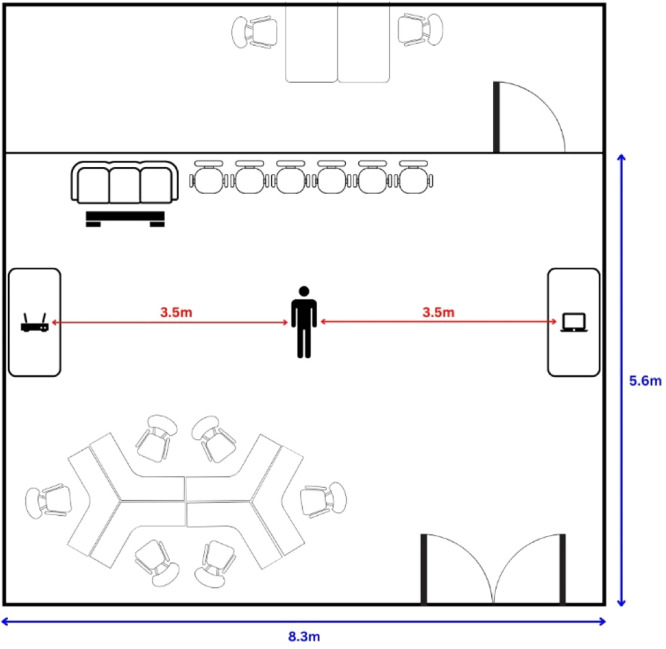
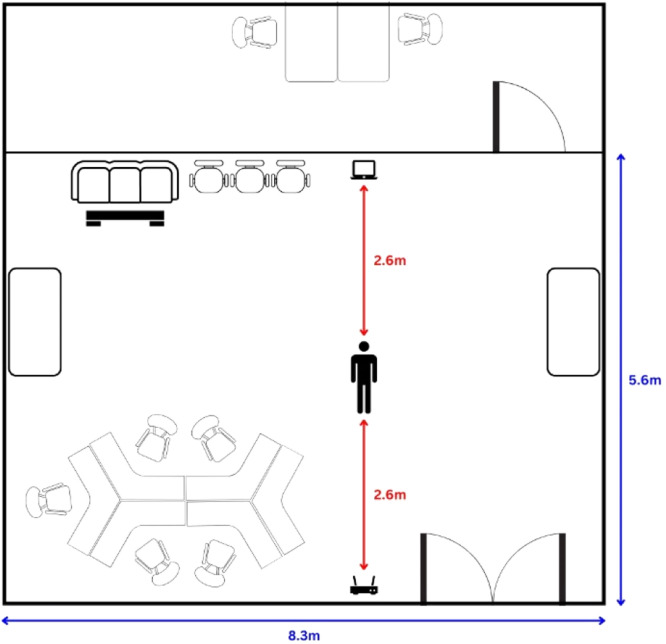
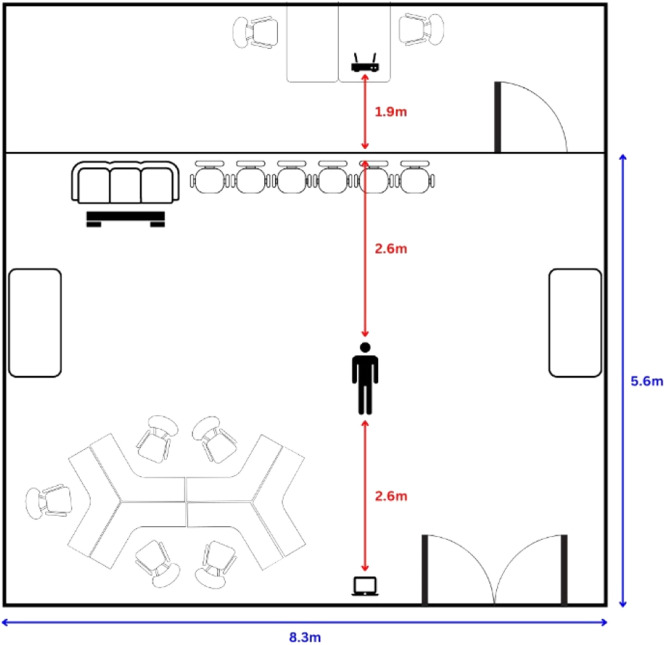
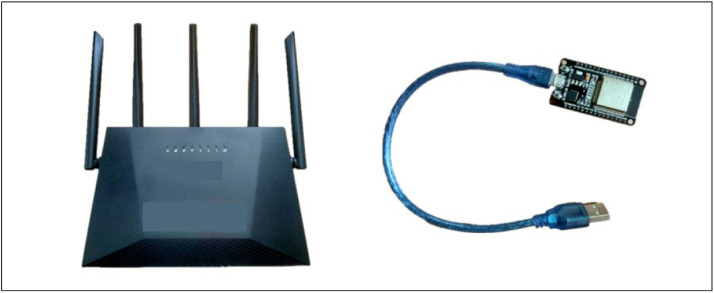
This study presents the "ESP32 Dataset," a dataset of radio frequency (RF) data intended for human activity detection. This dataset comprises 10 activities carried out by 8 volunteers in three different indoor floor plan experiment setups. Line-of-sight (LOS) scenarios are represented by the first two experiment setups, and non-line-of-sight (NLOS) scenarios are simulated in the third experiment setup. For every activity, the volunteers performed 20 trials, hence there were 1,600 recorded trials overall per experiment setup in the sample (8 people × 10 activities × 20 trials) . In order to obtain the Received Signal Strength Indicator (RSSI) and Channel State Information (CSI) values from the recorded transmissions, the D-Link AX3000 router and ESP32 microcontroller were used as the transmitter (Tx) and receiver (Rx) in the data collection process. This collection is an invaluable resource for academics and practitioners in the field of human activity detection since it offers rich and diversified RF data across a wide range of experiment setups and activities. In contrast to other datasets with different hardware configurations, this dataset records one RSSI value and fifty-two CSI subcarriers using the ESP-CSI Tool RF data capture tool. The number of RSSI and CSI signals, specific to the ESP32 hardware, allows for the exploration of resource-efficient activity detection algorithms, which is crucial for Internet of Things (IoT) applications where low-power and cost-effective solutions are required. This dataset is particularly valuable because it reflects the constraints and capabilities of the widely used ESP32 microcontrollers, making it highly relevant for developing and testing new algorithms tailored to IoT environments. The availability of this dataset enables the development and evaluation of activity detection algorithms and methodologies, enhancing the potential for improved experimental setups in IoT applications.
本研究展示了“ESP32数据集”,这是一个用于人类活动检测的射频(RF)数据集。该数据集包含8名志愿者在三种不同室内平面图实验设置中进行的10项活动。前两种实验设置代表视距(LOS)场景,第三种实验设置模拟非视距(NLOS)场景。对于每项活动,志愿者进行了20次试验,因此在样本中每个实验设置总共记录了1600次试验(8人×10项活动×20次试验)。为了从记录的传输中获取接收信号强度指示符(RSSI)和信道状态信息(CSI)值,在数据收集过程中使用D-Link AX3000路由器和ESP32微控制器作为发射器(Tx)和接收器(Rx)。该数据集对于人类活动检测领域的学者和从业者来说是一项宝贵的资源,因为它在广泛的实验设置和活动中提供了丰富多样的RF数据。与具有不同硬件配置的其他数据集相比,该数据集使用ESP-CSI工具RF数据捕获工具记录一个RSSI值和52个CSI子载波。特定于ESP32硬件的RSSI和CSI信号数量,有助于探索资源高效的活动检测算法,这对于需要低功耗和高性价比解决方案的物联网(IoT)应用至关重要。该数据集特别有价值,因为它反映了广泛使用的ESP32微控制器的限制和能力,使其与开发和测试针对物联网环境量身定制的新算法高度相关。该数据集的可用性能够开发和评估活动检测算法和方法,增强物联网应用中改进实验设置的潜力。