Crousillat Daniela, Sarma Amy, Wood Malissa, Naderi Sahar, Leon Katherine, Gibson C Michael, Aday Aaron, Grodzinsky Anna, Izard Kathy, Kovacic Jason C, Lindsay Mark E, Phelan Dermot, Rodriguez-Lozano Patricia F, Scott Nandita S, Scherer Markus, Sharma Aditya, Sweis Ranya, Sumner Jennifer A, Kim Esther S H
Division of Cardiovascular Sciences, Department of Medicine and Obstetrics and Gynecology, University of South Florida Morsani College of Medicine, Tampa General Hospital Heart and Vascular Institute, Tampa, Florida, USA.
Division of Cardiology, Massachusetts General Hospital, Boston, Massachusetts, USA.
JACC Adv. 2024 Nov 20;3(12):101385. doi: 10.1016/j.jacadv.2024.101385. eCollection 2024 Dec.
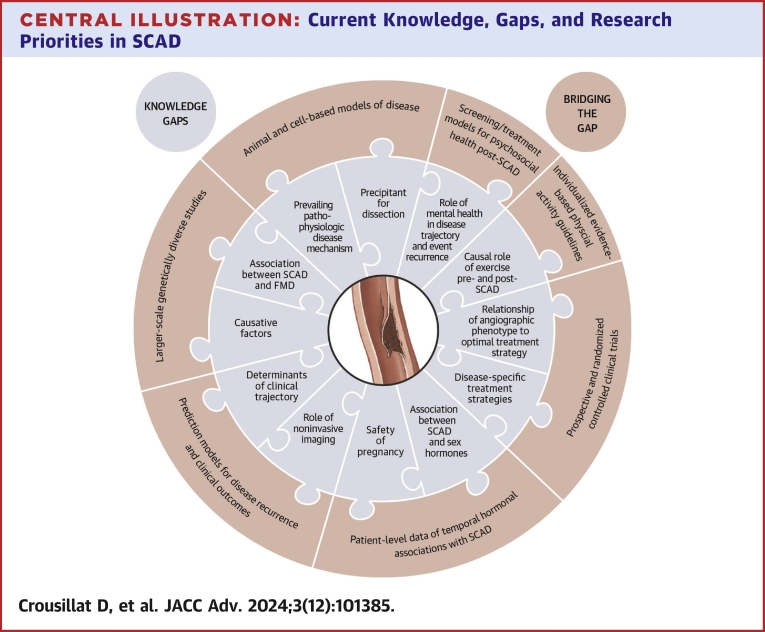
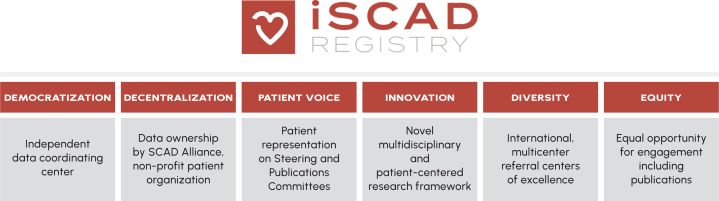
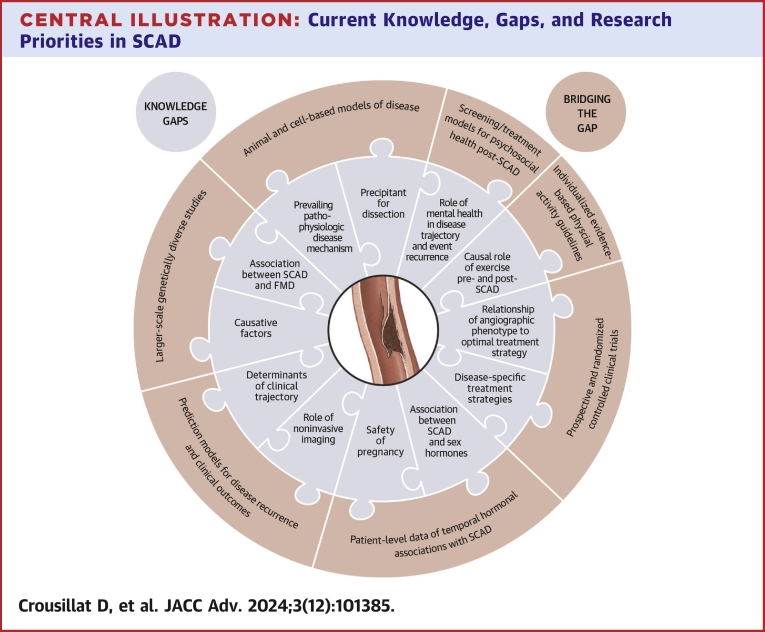
Despite marked advancements in the recognition and diagnosis of spontaneous coronary artery dissection (SCAD) over the past decade, knowledge of the basic pathophysiologic mechanisms of disease, contributing factors, and treatment continue to be poorly understood. We describe significant research gaps in our knowledge of SCAD and introduce strategies including the role of patient advocacy, independent registries, and creation of diverse centers of excellence to bridge the gap in clinical care, research, and outcomes. Lastly, we introduce an innovative patient-centered clinical care and research framework established through the SCAD Alliance and International Spontaneous Coronary Artery Dissection registry as a model for advancing knowledge of SCAD.
尽管在过去十年中,自发性冠状动脉夹层(SCAD)的识别和诊断取得了显著进展,但对于该疾病的基本病理生理机制、促成因素及治疗方法的了解仍然有限。我们阐述了目前在SCAD认知方面存在的重大研究空白,并介绍了一些策略,包括患者权益倡导的作用、独立登记处以及创建多元化卓越中心,以弥合临床护理、研究和治疗结果方面的差距。最后,我们介绍了一个通过SCAD联盟和国际自发性冠状动脉夹层登记处建立的以患者为中心的创新临床护理和研究框架,作为推进SCAD知识的模型。