Katta Nurina M, Blampied Neville M, Eggleston Matt, Rucklidge Julia J
School of Psychology, Speech and Hearing, Te Whare Wānanga o Waitaha, University of Canterbury, Christchurch, New Zealand.
Mental Health Division, Te Whatu Ora Canterbury, Christchurch, New Zealand.
PLoS One. 2024 Dec 5;19(12):e0311794. doi: 10.1371/journal.pone.0311794. eCollection 2024.
Previous evidence has established that micronutrient capsules can improve emotion regulation in children. This three-phased randomized open-label waitlist-controlled study investigated the safety of a micronutrient powder absorbed by the oral mucosa and its effects on emotion dysregulation in 5-to-10-year-old children. The primary outcome measures were the Revised Clinician-rated Temper and Irritability Scale (CL-ARI) and the Clinical Global Impressions-Improvement Scale (CGI-I).
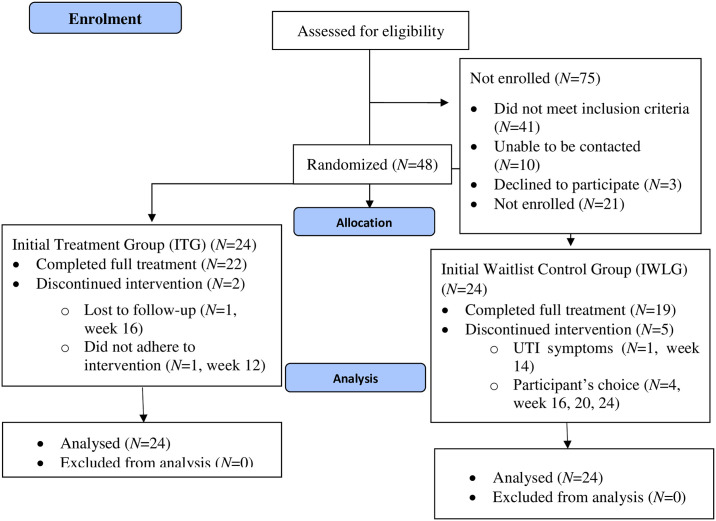
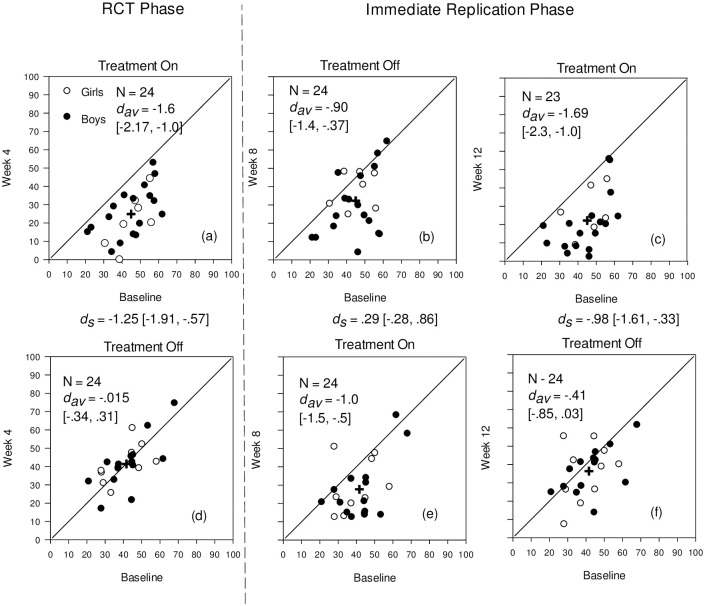
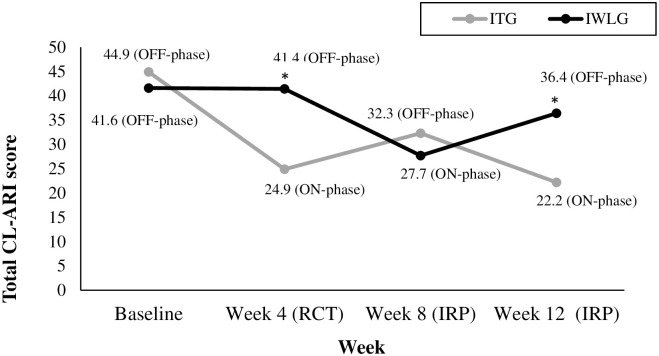
Forty-eight children with moderate-to-severe symptoms of irritability were randomized to an initial treatment group (ITG) or waitlist control group (IWLG) (four-week delayed start), followed by the two groups alternating between taking the micronutrients for four weeks or having a four-week break. For the last three months of the trial, both groups took the micronutrients continuously.
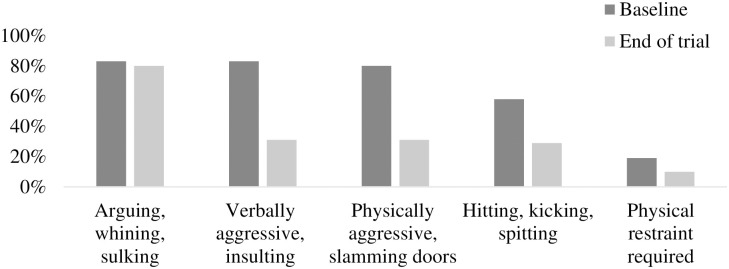
Overall adherence rates were high (93%). At the end of RCT phase, there were large group differences (CL-ARI; d = 1.25, p < .001), and 67% in the ITG and 8% in the IWLG were 'much' or 'very much' improved (CGI-I). Further, the ITG displayed a clinically meaningful reduction in Attention Deficit/Hyperactivity Impulsivity Disorder (ADHD) and Oppositional Defiant Disorder (ODD) symptoms as measured with the Child Swanson, Nolan, and Pelham-IV Questionnaire 26 (SNAP-IV) compared to IWLG. The treatment effect regressed when participants stopped taking the micronutrients and was reinstated when participants were taking the micronutrients. The observed benefits were maintained over a sustained time period. The IWLG reported significantly more headaches (p = .040) and sweating (p = .037) at the end of RCT. By the end of the study, seven participants (14.5%) dropped out non-differentially by group (p = .22).
The findings showed that micronutrients absorbed by the oral mucosa are a safe intervention that can effectively improve emotion dysregulation in children. Future double-blinded, randomized, placebo-controlled trials are needed to support these findings.
先前的证据已证实微量营养素胶囊可改善儿童的情绪调节能力。这项分三个阶段的随机开放标签等待列表对照研究,调查了一种可通过口腔黏膜吸收的微量营养素粉末的安全性,及其对5至10岁儿童情绪失调的影响。主要结局指标为修订版临床医生评定的脾气和易怒量表(CL-ARI)及临床总体印象改善量表(CGI-I)。
48名有中度至重度易怒症状的儿童被随机分为初始治疗组(ITG)或等待列表对照组(IWLG)(延迟四周开始),随后两组交替进行为期四周的微量营养素服用期或为期四周的休息期。在试验的最后三个月,两组均持续服用微量营养素。
总体依从率很高(93%)。在随机对照试验阶段结束时,两组间存在较大差异(CL-ARI;d = 1.25,p <.001),ITG组中67%的儿童和IWLG组中8%的儿童有“很大”或“非常大”的改善(CGI-I)。此外,与IWLG组相比,通过儿童斯旺森、诺兰和佩勒姆-IV问卷26(SNAP-IV)测量,ITG组在注意力缺陷/多动冲动障碍(ADHD)和对立违抗障碍(ODD)症状方面有具有临床意义的减轻。当参与者停止服用微量营养素时,治疗效果消退,而当参与者重新服用微量营养素时,治疗效果恢复。观察到的益处持续了一段时间。在随机对照试验结束时,IWLG组报告的头痛(p = .040)和出汗(p = .037)明显更多。到研究结束时,七名参与者(14.5%)无分组差异地退出(p = .22)。
研究结果表明,通过口腔黏膜吸收的微量营养素是一种安全的干预措施,可有效改善儿童的情绪失调。未来需要进行双盲、随机、安慰剂对照试验来支持这些发现。