Parikh Priti, Kwami Corina S, Khanna Rajesh, Lall Marie, Reddy Hanimi, Benton Lorna, Sharma Sanjay, Vijay Virendra K, Manikam Logan, Lakhanpaul Monica
Engineering for International Development Centre, Bartlett School of Sustainable Construction, University College London, London WC1E 7HB, UK.
Civil, Environment and Geomatic Engineering, University College London, London WC1E6BT, UK.
J Water Sanit Hyg Dev. 2021 Aug 16;11:902-915. doi: 10.2166/washdev.2021.005.
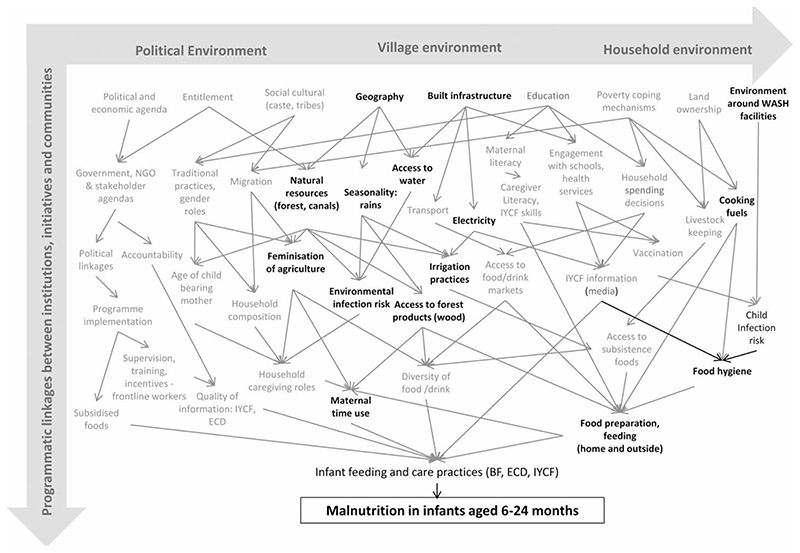
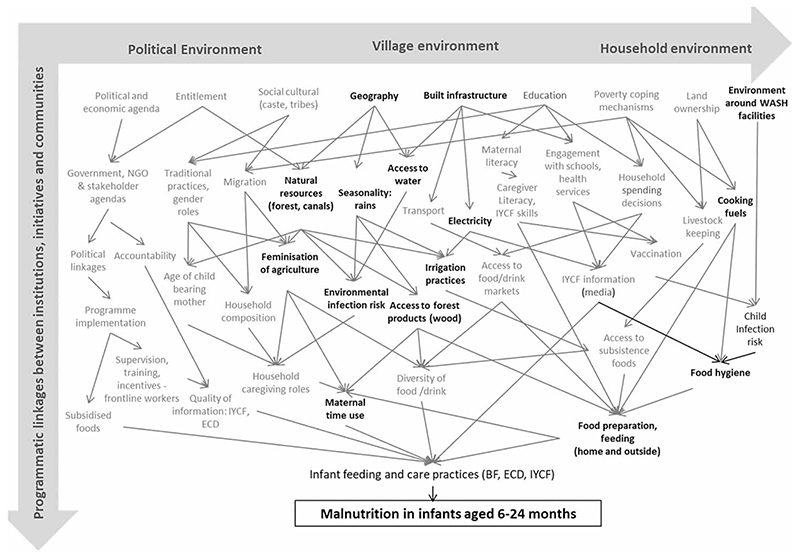
As factors influencing the health and well-being of children are complex and cross-sectoral, integrated interventions are required to improve child health and hence address the Sustainable Development Goals. This paper explores linkages between environmental factors, feeding practices and potential infection pathways in India. The PANChSHEEEL project is a participatory interdisciplinary study, designed to explore HEEE (Health, Education, Engineering and Environment) factors influencing Infant and Young Child Feeding practices. This study uses data from observational transect walks and 445 household interviews from nine villages in Banswara district in India. Using the socio-ecological model, this study demonstrates how the lack of access to and quality of water resources, poor access to sanitation and hygiene practices, access to cooking fuels and flooding can influence feeding practices. The study finds that access to water, sanitation and cooking fuels can affect the preparation of food, contaminate water and food and place added time burden on caregivers. For infants, insufficient and contaminated water can lead to a higher risk of infection, diarrhoea and ultimately malnutrition. Recommendations include efforts to address waterlogging, promote safe storage of water, establish a water quality regime with stakeholders and develop appropriate, affordable and acceptable sanitation solutions.
由于影响儿童健康和福祉的因素复杂且具有跨部门性,因此需要采取综合干预措施来改善儿童健康,从而实现可持续发展目标。本文探讨了印度环境因素、喂养方式与潜在感染途径之间的联系。PANChSHEEEL项目是一项参与式跨学科研究,旨在探究影响婴幼儿喂养方式的健康、教育、工程和环境因素。本研究使用了来自印度班斯瓦拉地区九个村庄的观察性横断面行走数据和445户家庭访谈数据。本研究运用社会生态模型,展示了水资源获取困难和质量不佳、卫生设施和卫生习惯普及不足、烹饪燃料获取情况以及洪水如何影响喂养方式。研究发现,水资源、卫生设施和烹饪燃料的获取情况会影响食物的制备、污染水和食物,并给照料者增加额外的时间负担。对于婴儿来说,水供应不足和受到污染会导致更高的感染、腹泻风险,并最终导致营养不良。建议包括努力解决内涝问题、促进安全储水、与利益相关者建立水质管理制度,以及开发合适、经济且可接受的卫生解决方案。