Yambayamba Marc K, Kazadi Eric K, Ayumuna Belinda M, Kapepula Paulin M, Kalemayi Mathieu N, Kangudie Didier M, Masumu Justin, Marcel Boka O, Nzietchueng Serge T, Astbury Chloe Clifford, Penney Tarra L, Ngombe Nadège K, Rüegg Simon R
Section of Epidemiology, Vetsuisse Faculty, University of Zurich, Zurich, Switzerland.
Department of Epidemiology and Biostatistics, University of Kinshasa School of Public Health, Kinshasa, DR Congo.
One Health. 2024 Nov 15;19:100934. doi: 10.1016/j.onehlt.2024.100934. eCollection 2024 Dec.
The Democratic Republic of Congo (DRC) has faced emerging infectious diseases such as Ebola, Mpox and Yellow fever, and antimicrobial resistance is a growing concern. To address these issues, in 2011 the country embarked on implementing the One Health (OH) approach at the national and provincial levels. This study investigates OH institutionalization and implementation in the DRC, describes the process of OH decentralization, and identifies the opportunities and challenges of sustaining these efforts.
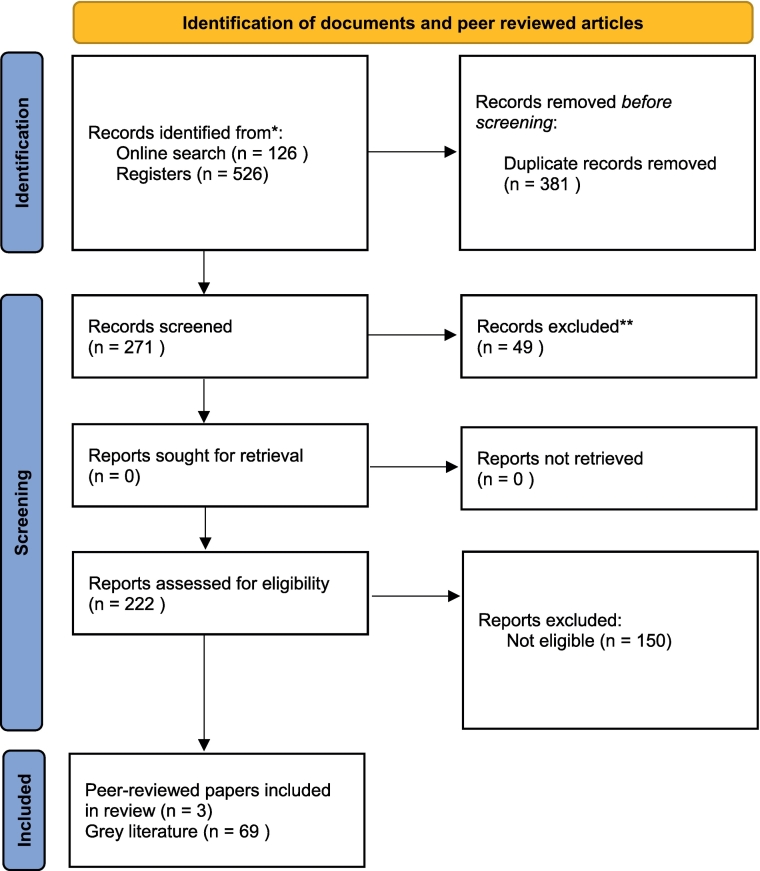
We conducted a qualitative study based on literature, document review and key informant interviews. The literature search targeted PubMed, Google Scholar and the document depository of the national One Health platform (NOHP). Key informant identified at the national level included ministry representatives, OH platform members and donors supporting OH implementation. These interviews were conducted in-person and online, recorded, transcribed, and imported into Dedoose software (version 9.2.006) for coding. Content analysis was performed to identify activities, processes, and achievements during the implementation of OH in DRC.
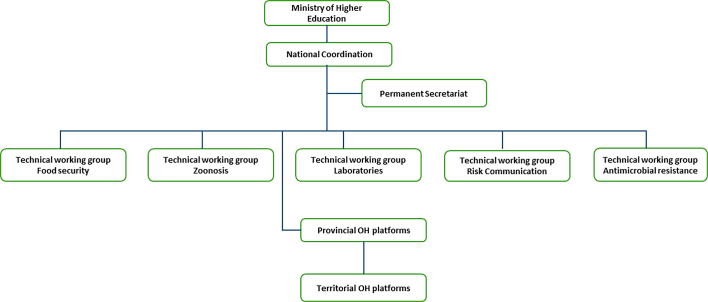
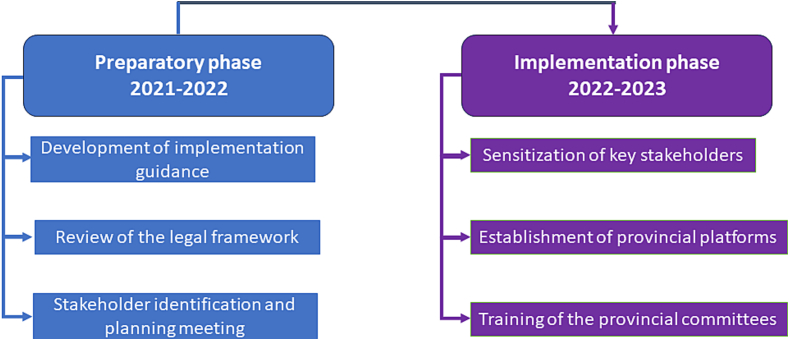
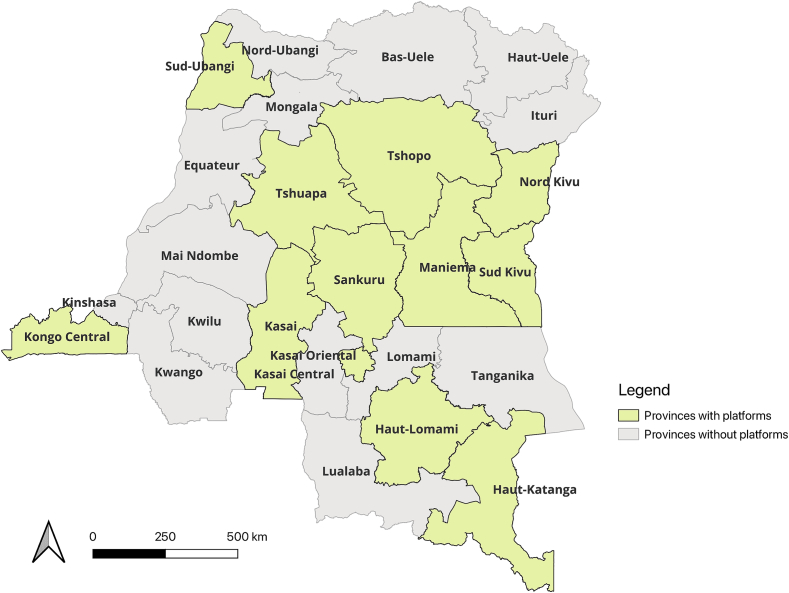
Results of the literature and document review ( = 72) and analysis of stakeholder interviews ( = 24) indicate that a national OH platform, initiated in 2011, is hosted at the Ministry of Higher Education and coordinates other sectors. It comprises governmental departments, academic institutions, and civil society organizations working at the human, animal, and environment sectors. The governance structure includes a national coordinator, a permanent secretariat, technical working groups, and subnational entities at provincial and territorial levels. Following the establishment of the national OH platform, a structured process foresees to facilitate OH implementation at the provincial and territorial levels. Achievements up to today include the development of training programs, establishment of OH committees in some provinces, assessments of workforce needs, formulation of a national strategy, development of governance manuals, and support to the Mpox response coordination.Nevertheless, OH implementation in the DRC faces challenges, including leadership tensions at the national level, inadequate domestic funding, limited training and capacity building for professionals, and insufficient infrastructure for data collection and sharing. Strengthening leadership and coordination, advocating for domestic resource mobilization, and strengthening infrastructure for data collection and sharing while ensuring equity across sectors is essential for advancing the OH agenda and ensuring its efficacy.
刚果民主共和国(DRC)面临着埃博拉、猴痘和黄热病等新出现的传染病,抗菌药物耐药性问题也日益受到关注。为解决这些问题,该国于2011年开始在国家和省级层面实施“同一健康”(OH)方法。本研究调查了刚果民主共和国OH的制度化和实施情况,描述了OH权力下放的过程,并确定了维持这些努力的机遇和挑战。
我们基于文献、文件审查和关键信息访谈进行了一项定性研究。文献检索的目标数据库包括PubMed、谷歌学术和国家同一健康平台(NOHP)的文件库。在国家层面确定的关键信息提供者包括部委代表、OH平台成员以及支持OH实施的捐助者。这些访谈通过面对面和在线方式进行,进行了录音、转录,并导入到Dedoose软件(版本9.2.006)中进行编码。进行内容分析以确定刚果民主共和国实施OH期间的活动、过程和成就。
文献和文件审查(n = 72)以及利益相关者访谈分析(n = 24)的结果表明,2011年启动的国家OH平台设在高等教育部,负责协调其他部门。它由在人类、动物和环境领域工作的政府部门、学术机构和民间社会组织组成。治理结构包括一名国家协调员、一个常设秘书处、技术工作组以及省级和地区级的地方实体。在国家OH平台建立之后,一个结构化的流程旨在促进省级和地区级的OH实施。截至目前取得的成就包括制定培训计划、在一些省份设立OH委员会、评估劳动力需求、制定国家战略、编写治理手册以及支持猴痘应对协调工作。尽管如此,刚果民主共和国的OH实施仍面临挑战,包括国家层面的领导紧张关系、国内资金不足、专业人员培训和能力建设有限以及数据收集和共享的基础设施不足。加强领导与协调、倡导国内资源调动、加强数据收集和共享的基础设施,同时确保各部门之间的公平性,对于推进OH议程并确保其有效性至关重要。