Richardson C M, Crowley J J, Gredler-Grandl B, Amer P R
AbacusBio International Ltd., Edinburgh, UK, EH25 9RG.
AbacusBio Ltd., Dunedin, New Zealand, 9016.
JDS Commun. 2024 Mar 29;5(6):751-755. doi: 10.3168/jdsc.2023-0461. eCollection 2024 Nov.
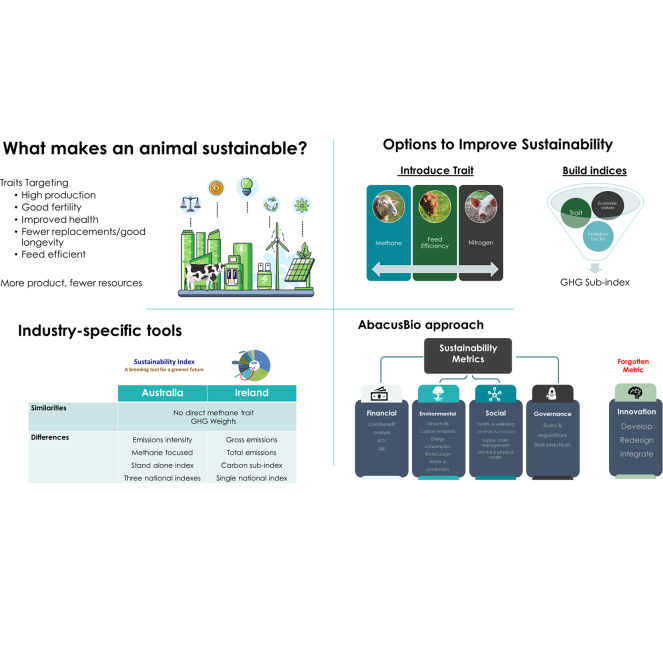
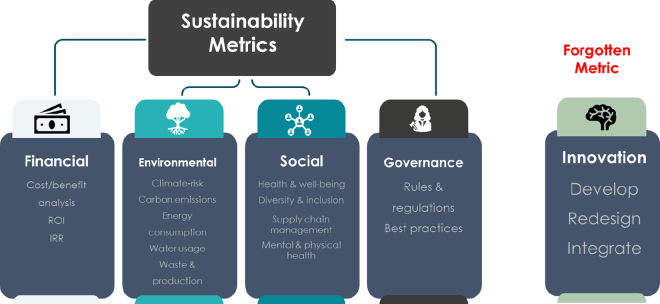
Reducing emissions is vital to improve sustainability, and industry leaders have set emission goals to reduce gross emissions, lower emissions intensity, or reach net zero. However, additional traits should also be measured and compared in terms of their impact on the broader definition of sustainability. In addition to environmental impact, a sustainable breeding objective must consider profit, animal welfare, farmer well-being, and social responsibility. Traits to be considered include direct emissions (e.g., nitrogen and methane), production efficiency (e.g., feed efficiency), health (e.g., calf and transition cow health), and welfare traits (e.g., polled). Many of these novel traits require labor- and cost-intensive phenotyping procedures. Consequently, this results in relatively modest data sets and estimated breeding values with limited reliability. Opportunities exist to overcome this limitation by developing cost-effective and easily quantifiable proxy traits and utilizing international collaboration to expand novel phenotype reference populations. Furthermore, noneconomic values can be estimated to quantify the impact of a trait on societal perspective (e.g., farmer preference) or environmental impact (methane emissions), and combined with economic weights to calculate aggregate weights for each trait. Although validation techniques are still uncertain, the United Nations Sustainable Development Goals may be applied to determine the improvement in sustainability due to genetic selection. This approach provides the flexibility to accommodate diverse sustainability perspectives, encompassing the disparities between developed and developing countries. Currently, the number and quality of relevant phenotypes are the main limiting factor. However, as confidence grows in the opportunity to improve sustainability through genetic selection, substantial new investment will be required in both refining phenotyping methodologies and conceptualizing novel breeding designs.
减少排放对于提高可持续性至关重要,行业领导者已设定排放目标,以减少总排放量、降低排放强度或实现净零排放。然而,还应根据其对更广泛的可持续性定义的影响来衡量和比较其他特征。除了环境影响外,可持续育种目标还必须考虑利润、动物福利、农民福祉和社会责任。需要考虑的特征包括直接排放(如氮和甲烷)、生产效率(如饲料效率)、健康(如犊牛和围产母牛健康)以及福利特征(如无角)。许多这些新特征需要耗费劳动力和成本的表型分析程序。因此,这导致数据集相对较小,估计育种值的可靠性有限。通过开发具有成本效益且易于量化的替代特征,并利用国际合作扩大新表型参考群体,存在克服这一限制的机会。此外,可以估计非经济价值,以量化一个特征对社会视角(如农民偏好)或环境影响(甲烷排放)的影响,并结合经济权重来计算每个特征的综合权重。尽管验证技术仍不确定,但联合国可持续发展目标可用于确定遗传选择对可持续性的改善。这种方法提供了灵活性,以适应不同的可持续性观点,包括发达国家和发展中国家之间的差异。目前,相关表型的数量和质量是主要限制因素。然而,随着通过遗传选择改善可持续性的机会的信心增强,在完善表型分析方法和构思新的育种设计方面都将需要大量新的投资。