Alberta Agriculture and Rural Development, Lacombe Research Centre, 6000 C & E Trail, Lacombe, AB, Canada.
Animal. 2013 Jun;7 Suppl 2(Suppl 2):303-15. doi: 10.1017/S1751731113000888.
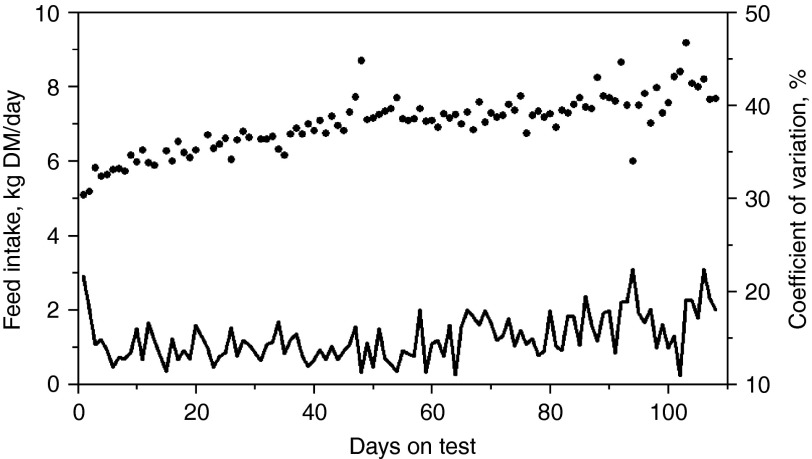
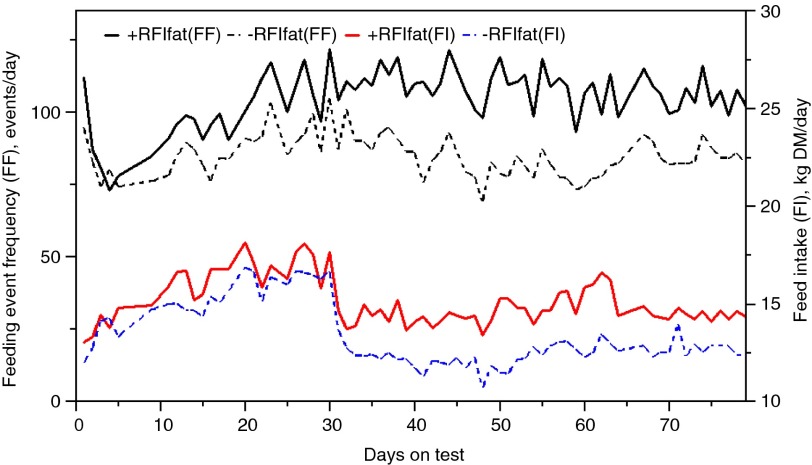
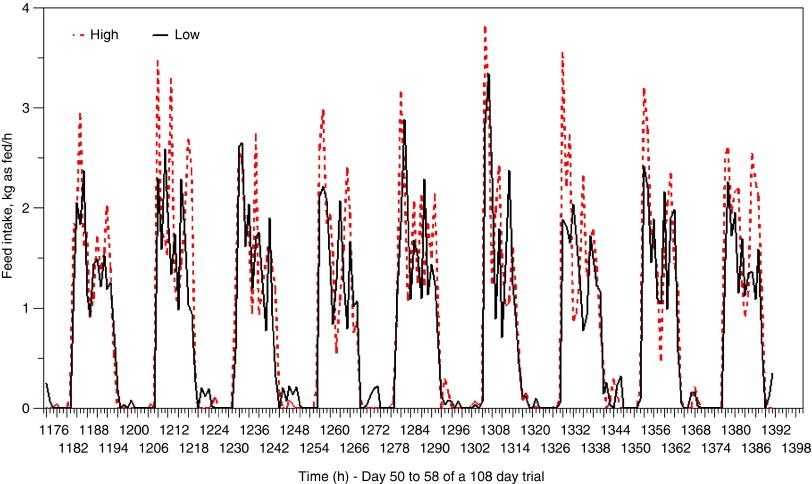
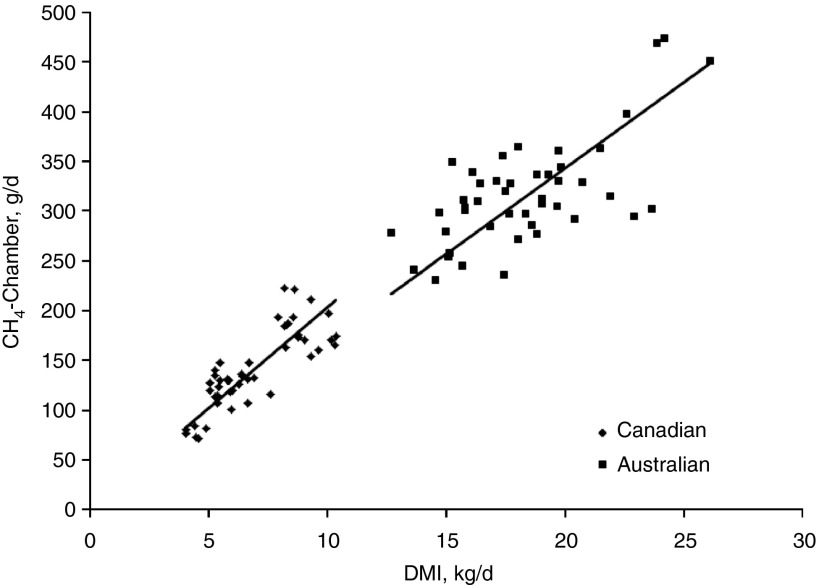
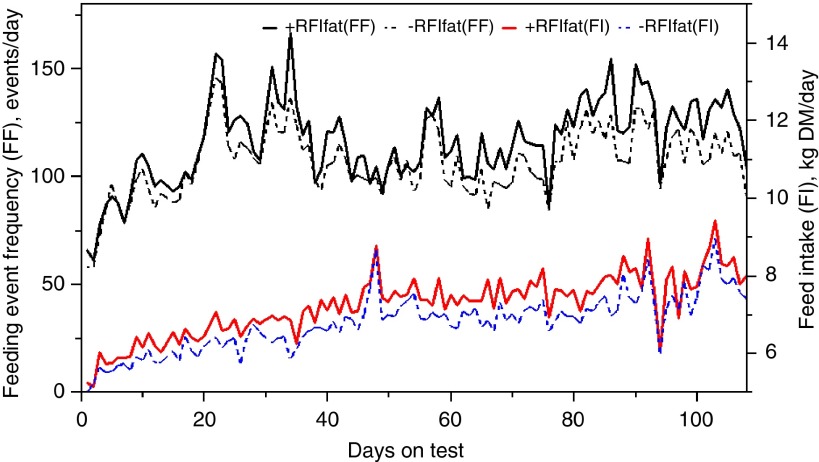
Genetic selection for residual feed intake (RFI) is an indirect approach for reducing enteric methane (CH4) emissions in beef and dairy cattle. RFI is moderately heritable (0.26 to 0.43), moderately repeatable across diets (0.33 to 0.67) and independent of body size and production, and when adjusted for off-test ultrasound backfat thickness (RFI fat) is also independent of body fatness in growing animals. It is highly dependent on accurate measurement of individual animal feed intake. Within-animal repeatability of feed intake is moderate (0.29 to 0.49) with distinctive diurnal patterns associated with cattle type, diet and genotype, necessitating the recording of feed intake for at least 35 days. In addition, direct measurement of enteric CH4 production will likely be more variable and expensive than measuring feed intake and if conducted should be expressed as CH4 production (g/animal per day) adjusted for body size, growth, body composition and dry matter intake (DMI) or as residual CH4 production. A further disadvantage of a direct CH4 phenotype is that the relationships of enteric CH4 production on other economically important traits are largely unknown. Selection for low RFI fat (efficient, -RFI fat) will result in cattle that consume less dry matter (DMI) and have an improved feed conversion ratio (FCR) compared with high RFI fat cattle (inefficient; +RFI fat). Few antagonistic effects have been reported for the relationships of RFI fat on carcass and meat quality, fertility, cow lifetime productivity and adaptability to stress or extensive grazing conditions. Low RFI fat cattle also produce 15% to 25% less enteric CH4 than +RFI fat cattle, since DMI is positively related to enteric methane (CH4) production. In addition, lower DMI and feeding duration and frequency, and a different rumen bacterial profile that improves rumen fermentation in -RFI fat cattle may favor a 1% to 2% improvement in dry matter and CP digestibility compared with +RFI fat cattle. Rate of genetic change using this approach is expected to improve feed efficiency and reduce enteric CH4 emissions from cattle by 0.75% to 1.0% per year at equal levels of body size, growth and body fatness compared with cattle not selected for RFI fat.
遗传选择残余采食量(RFI)是减少牛肉和奶牛肠道甲烷(CH4)排放的间接方法。RFI 具有中度遗传力(0.26 至 0.43),在不同饮食中具有中度可重复性(0.33 至 0.67),并且与体型和生产无关,当调整为测试后超声背膘厚度(RFI 脂肪)时,在生长动物中也与体脂肪无关。它高度依赖于个体动物采食量的准确测量。动物内采食量的重复性中等(0.29 至 0.49),具有与牛类型、饮食和基因型相关的独特昼夜模式,需要至少 35 天记录采食量。此外,肠道 CH4 产量的直接测量可能比测量采食量更具变异性和成本更高,如果进行测量,应表示为调整体型、生长、身体成分和干物质摄入量(DMI)后的 CH4 产量(动物每天 g)或为残余 CH4 产量。直接 CH4 表型的另一个缺点是,肠道 CH4 产量与其他经济上重要性状的关系在很大程度上尚不清楚。选择低 RFI 脂肪(高效,-RFI 脂肪)将导致牛消耗较少的干物质(DMI),并且与高 RFI 脂肪牛相比具有改善的饲料转化率(FCR)(低效;+RFI 脂肪)。据报道,RFI 脂肪与胴体和肉质、繁殖力、牛终身生产力以及对压力或广泛放牧条件的适应性之间的关系几乎没有拮抗作用。低 RFI 脂肪牛比+RFI 脂肪牛产生的肠道 CH4 少 15%至 25%,因为 DMI 与肠道甲烷(CH4)产量呈正相关。此外,较低的 DMI 和喂养持续时间和频率,以及 -RFI 脂肪牛中不同的瘤胃细菌谱,可改善瘤胃发酵,可能使干物质和 CP 消化率提高 1%至 2%,与+RFI 脂肪牛相比。使用这种方法的遗传变化速度预计将提高饲料效率,并减少肠道 CH4 排放,与未选择 RFI 脂肪的牛相比,每年降低 0.75%至 1.0%,在相同的体型、生长和体脂肪水平下。