Rabbani Hasnain, Shahid Muhammad Farrukh, Khanzada Tariq Jamil Saifullah, Siddiqui Shahbaz, Jamjoom Mona Mamdouh, Ashari Rehab Bahaaddin, Ullah Zahid, Mukati Muhammad Umair, Nooruddin Mustafa
Computer Science, FAST School of Computing, FAST-NUCES, Karachi, Sindh, Pakistan.
Computer Systems Engineering Department, Mehran UET, Hyderabad, Sindh, Pakistan.
PeerJ Comput Sci. 2024 Sep 23;10:e2280. doi: 10.7717/peerj-cs.2280. eCollection 2024.
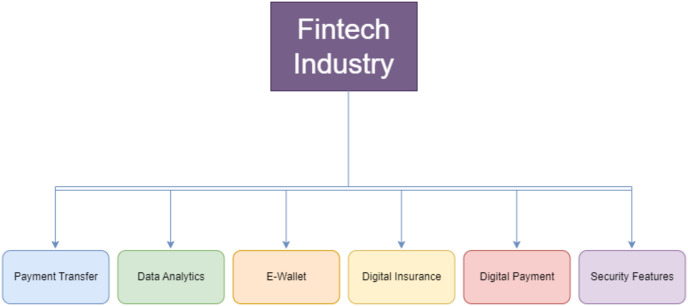
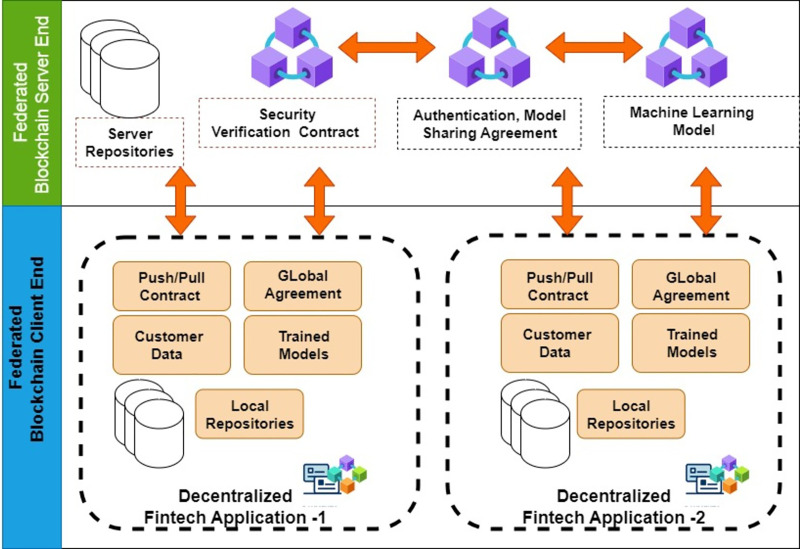
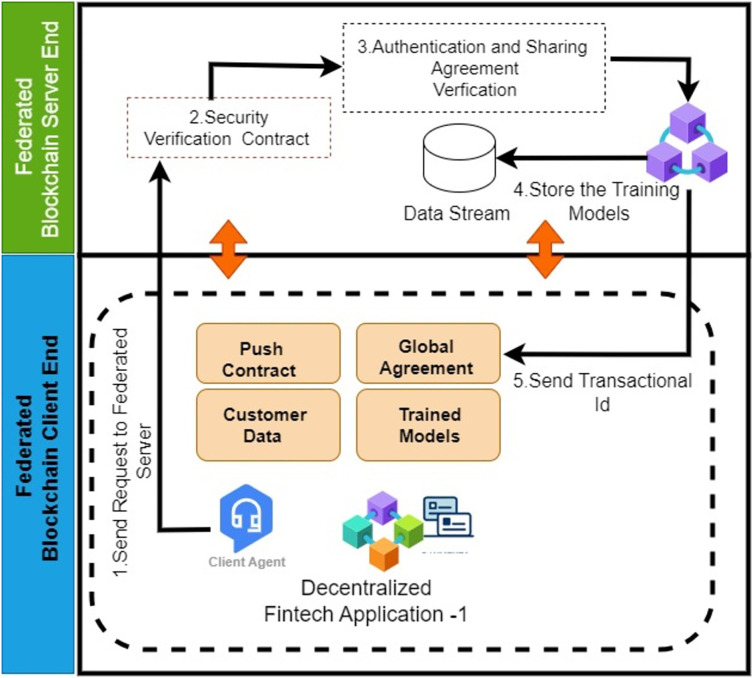
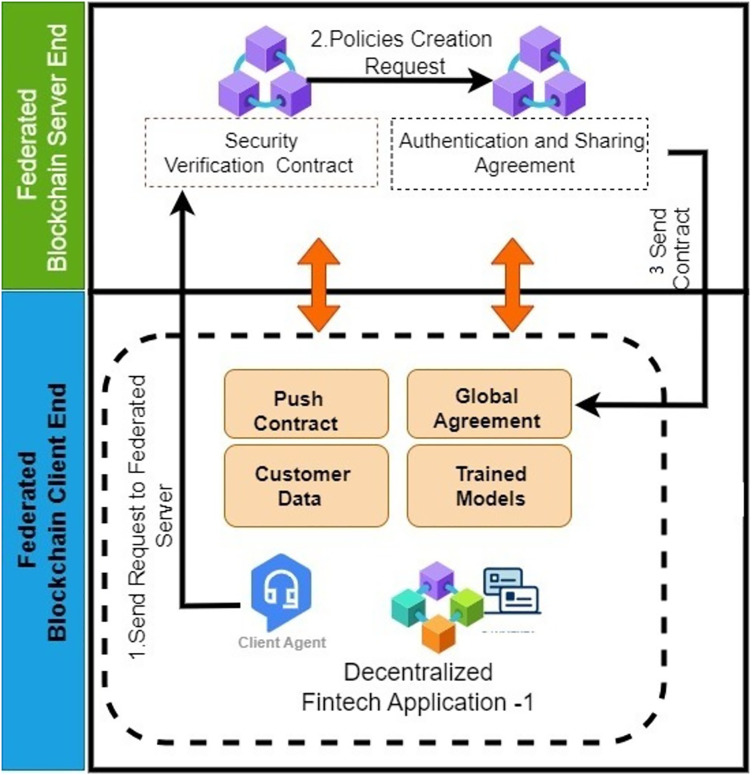
Fintech is an industry that uses technology to enhance and automate financial services. Fintech firms use software, mobile apps, and digital technologies to provide financial services that are faster, more efficient, and more accessible than those provided by traditional banks and financial institutions. Fintech companies take care of processes such as lending, payment processing, personal finance, and insurance, among other financial services. A data breach refers to a security liability when unapproved individuals gain access to or pilfer susceptible data. Data breaches pose a significant financial, reputational, and legal liability for companies. In 2017, Equifax suffered a data breach that revealed the personal information of over 143 million customers. Combining federated learning (FL) and blockchain can provide financial institutions with additional insurance and safeguards. Blockchain technology can provide a transparent and secure platform for FL, allowing financial institutions to collaborate on machine learning (ML) models while maintaining the confidentiality and integrity of their data. Utilizing blockchain technology, FL can provide an immutable and auditable record of all transactions and data exchanges. This can ensure that all parties adhere to the protocols and standards agreed upon for data sharing and collaboration. We propose the implementation of an FL framework that uses multiple ML models to protect consumers against fraudulent transactions through blockchain. The framework is intended to preserve customer privacy because it does not mandate the exchange of private customer data between participating institutions. Each bank trains its local models using data from its consumers, which are then combined on a centralised federated server to produce a unified global model. Data is neither stored nor exchanged between institutions, while models are trained on each institution's data.
金融科技是一个利用技术来增强和自动化金融服务的行业。金融科技公司使用软件、移动应用程序和数字技术来提供比传统银行和金融机构更快、更高效、更易获取的金融服务。金融科技公司负责诸如贷款、支付处理、个人理财和保险等流程以及其他金融服务。数据泄露是指未经批准的个人获取或窃取敏感数据时的安全责任。数据泄露给公司带来重大的财务、声誉和法律责任。2017年,益百利公司遭受数据泄露,导致超过1.43亿客户的个人信息被曝光。将联邦学习(FL)和区块链相结合可以为金融机构提供额外的保障措施。区块链技术可以为联邦学习提供一个透明且安全的平台,使金融机构能够在机器学习(ML)模型上进行协作,同时保持其数据的保密性和完整性。利用区块链技术,联邦学习可以提供所有交易和数据交换的不可变且可审计的记录。这可以确保所有各方遵守为数据共享和协作商定的协议和标准。我们提议实施一个联邦学习框架,该框架使用多个机器学习模型通过区块链保护消费者免受欺诈交易的侵害。该框架旨在保护客户隐私,因为它不要求参与机构之间交换客户私人数据。每个银行使用其消费者的数据训练其本地模型,然后在中央联邦服务器上进行合并以生成统一的全局模型。机构之间既不存储也不交换数据,而模型是在每个机构的数据上进行训练的。