Joanneum Research, DIGITAL-Institute for Information and Communication Technologies, A-8010 Graz, Austria.
Fraunhofer Institute for High-Speed Dynamics, Ernst-Mach-Institut, EMI, D-79588 Efringen-Kirchen, Germany.
Sensors (Basel). 2021 Feb 25;21(5):1594. doi: 10.3390/s21051594.
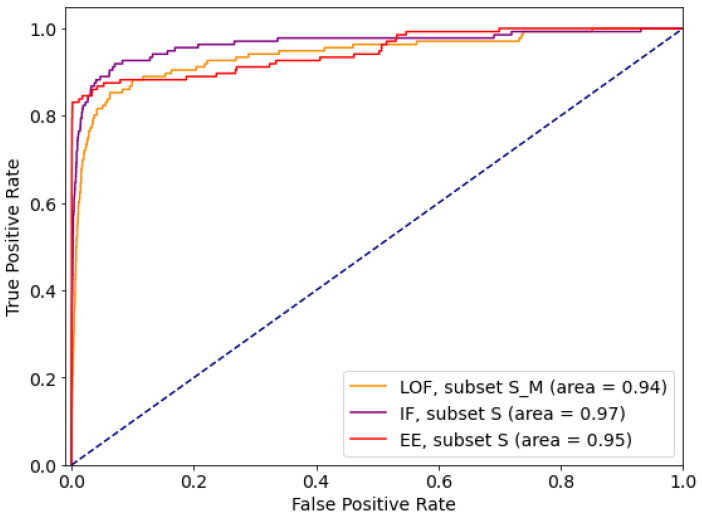
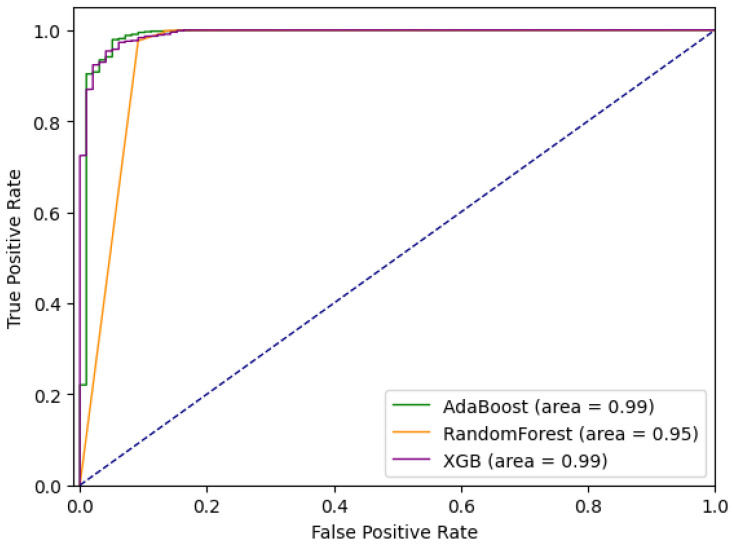
Financial technology, or Fintech, represents an emerging industry on the global market. With online transactions on the rise, the use of IT for automation of financial services is of increasing importance. Fintech enables institutions to deliver services to customers worldwide on a 24/7 basis. Its services are often easy to access and enable customers to perform transactions in real-time. In fact, advantages such as these make Fintech increasingly popular among clients. However, since Fintech transactions are made up of information, ensuring security becomes a critical issue. Vulnerabilities in such systems leave them exposed to fraudulent acts, which cause severe damage to clients and providers alike. For this reason, techniques from the area of Machine Learning (ML) are applied to identify anomalies in Fintech applications. They target suspicious activity in financial datasets and generate models in order to anticipate future frauds. We contribute to this important issue and provide an evaluation on anomaly detection methods for this matter. Experiments were conducted on several fraudulent datasets from real-world and synthetic databases, respectively. The obtained results confirm that ML methods contribute to fraud detection with varying success. Therefore, we discuss the effectiveness of the individual methods with regard to the detection rate. In addition, we provide an analysis on the influence of selected features on their performance. Finally, we discuss the impact of the observed results for the security of Fintech applications in the future.
金融科技,简称 Fintech,是全球市场上一个新兴的行业。随着在线交易的兴起,将信息技术用于金融服务自动化变得越来越重要。金融科技使机构能够在全球范围内为客户提供 24/7 的服务。其服务通常易于访问,使用户能够实时进行交易。事实上,这些优势使得金融科技在客户中越来越受欢迎。然而,由于金融科技交易由信息组成,因此确保安全成为一个关键问题。此类系统中的漏洞使它们容易受到欺诈行为的影响,这对客户和提供商都会造成严重的损害。出于这个原因,机器学习 (ML) 领域的技术被应用于识别金融科技应用中的异常情况。它们针对金融数据集中的可疑活动,并生成模型以预测未来的欺诈行为。我们为这个重要问题做出了贡献,并对该问题的异常检测方法进行了评估。在来自真实和合成数据库的几个欺诈性数据集上进行了实验。获得的结果证实,机器学习方法在欺诈检测方面的成功率不同。因此,我们根据检测率讨论了各个方法的有效性。此外,我们还分析了选定特征对其性能的影响。最后,我们讨论了观察结果对未来金融科技应用安全性的影响。