Wei Tian-Jiao, Li Guang, Cui Yan-Ru, Xie Jiao, Teng Xing, Wang Yan-Jing, Li Zhong-He, Guan Fa-Chun, Liang Zheng-Wei
Jilin Academy of Agricultural Sciences, China Agricultural Science and Technology Northeast Innovation Center, Changchun, China.
Northeast Institute of Geography and Agroecology, Chinese Academy of Sciences, Changchun, China.
Front Microbiol. 2024 Nov 22;15:1502536. doi: 10.3389/fmicb.2024.1502536. eCollection 2024.
Composting is one of the effective environmental protection and sustainable measures for improving soil quality and increasing crop yield. However, due to the special physical and chemical properties of saline-sodic soil and the complex rhizosphere microecological environment, the potential mechanism of regulating plant growth after applying compost in saline-sodic soil remains elusive.
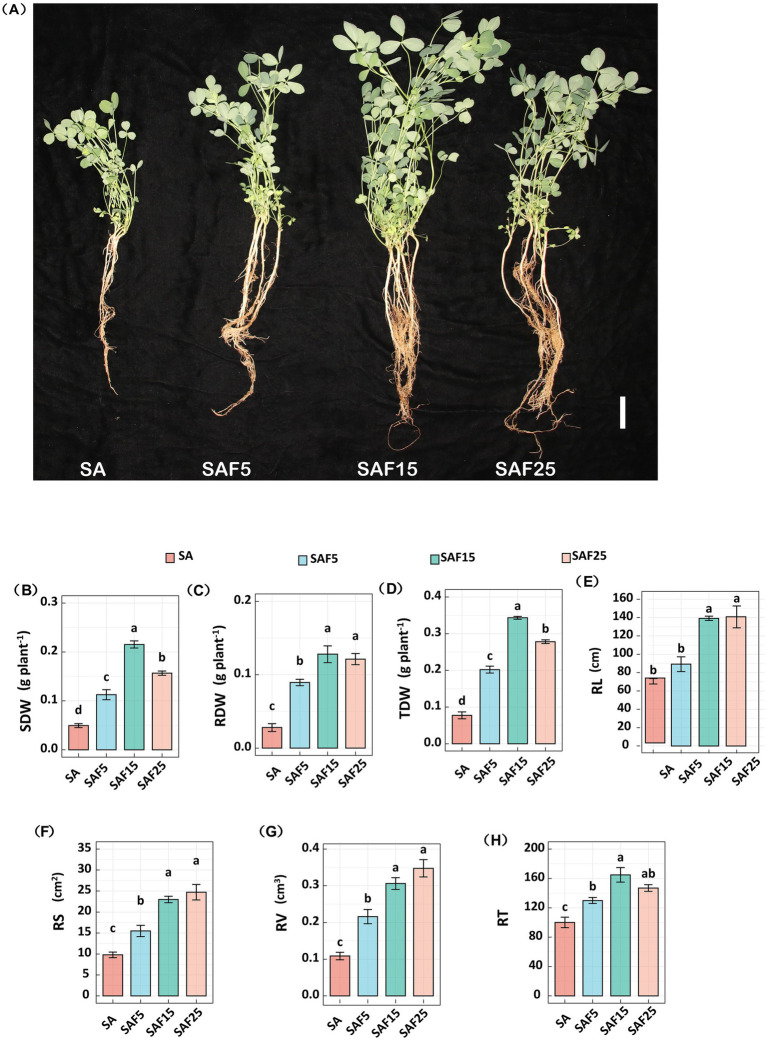
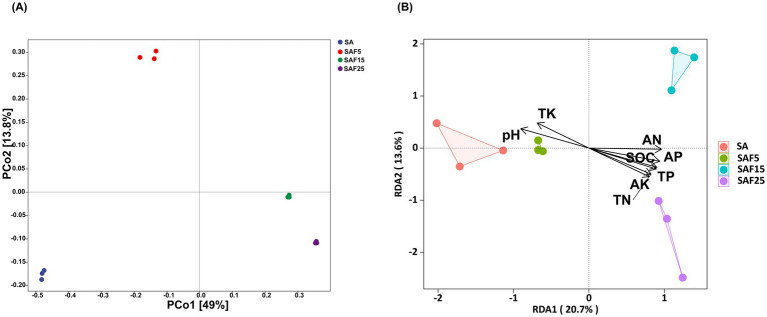
Here, we investigated the effects of different compost addition rates (0, 5, 15, 25%) on plant growth traits, soil chemical properties, and rhizosphere bacterial community structure.
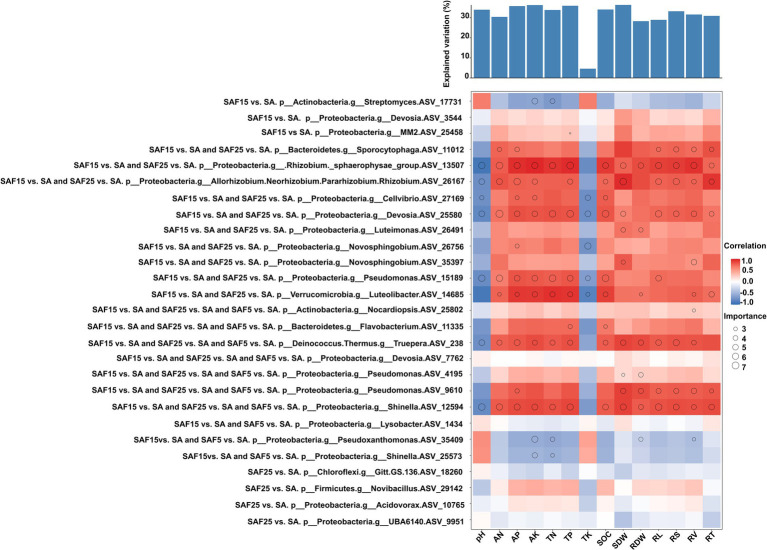
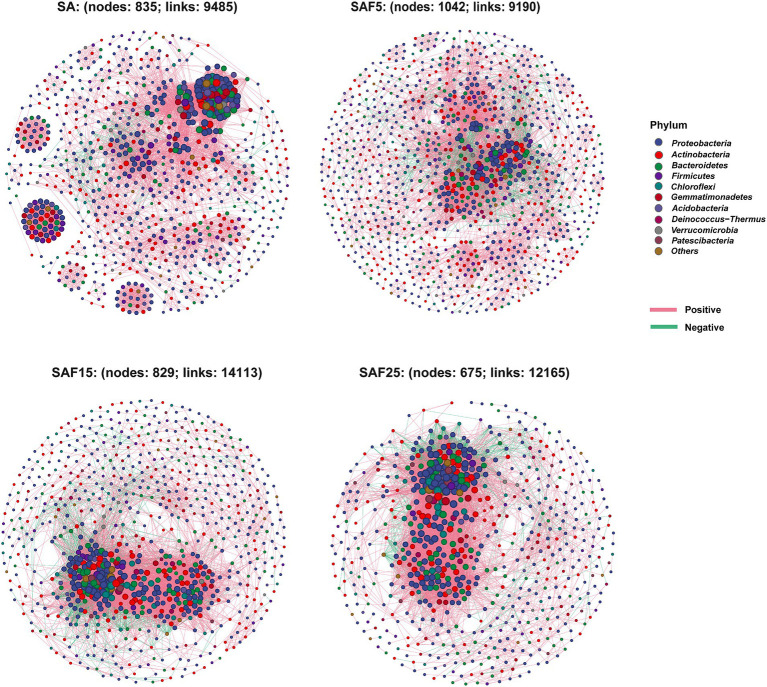
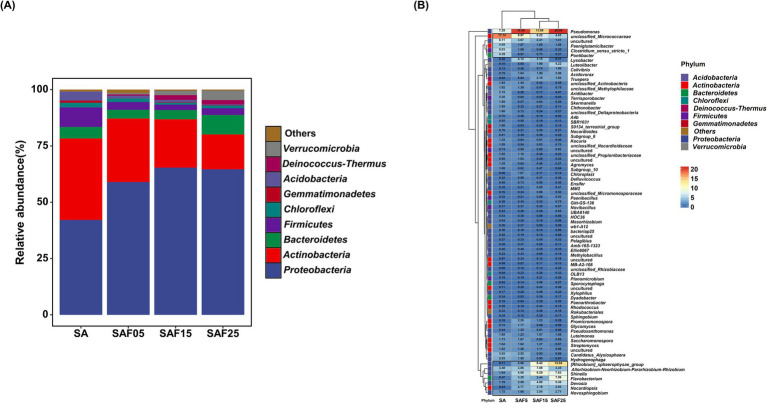
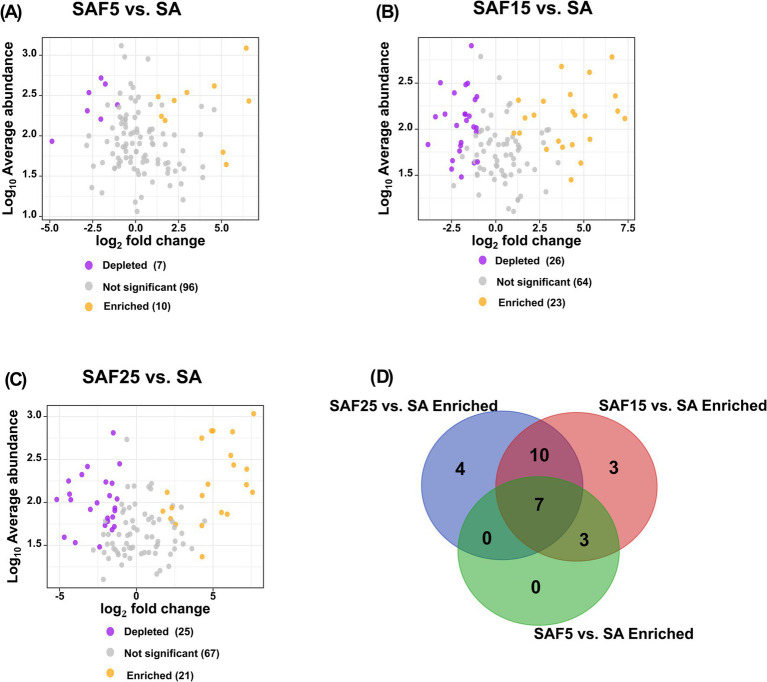
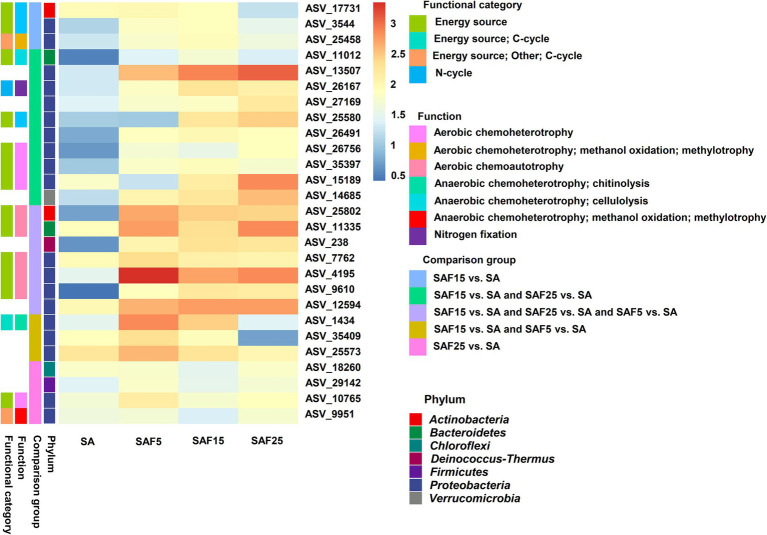
The results showed that compost promoted the accumulation of plant biomass and root growth, increased soil nutrients, and enhanced the diversity and complexity of the rhizosphere bacterial communities. Moreover, the enriched core bacterial ASVs (Amplicon Sequence Variants) in compost treatment could be reshaped, mainly including dominant genera, such as , , , , and . The functions of these ASVs were energy resources and nitrogen cycle functions, suggesting the roles of these ASVs in improving plant root nutrient resource acquisition for alfalfa growth. The contents of available potassium, available phosphorus, total nitrogen, and organic carbon of the soil surrounding the roots, the root length, root surface area, root volume, and root tips affected the abundance of the core bacterial ASVs, and the soil chemical properties contributed more to the effect of plant biomass.
Overall, our study strengthens the understanding of the potentially important taxa structure and function of plant rhizosphere bacteria communities, and provides an important reference for developing agricultural microbiome engineering techniques to improve root nutrient uptake and increase plant productivity in saline-sodic soils.
堆肥是改善土壤质量和提高作物产量的有效环境保护和可持续措施之一。然而,由于盐碱土特殊的理化性质和复杂的根际微生态环境,在盐碱土中施用堆肥后调节植物生长的潜在机制仍不清楚。
在此,我们研究了不同堆肥添加比例(0%、5%、15%、25%)对植物生长性状、土壤化学性质和根际细菌群落结构的影响。
结果表明,堆肥促进了植物生物量的积累和根系生长,增加了土壤养分,并增强了根际细菌群落的多样性和复杂性。此外,堆肥处理中富集的核心细菌扩增子序列变异(ASVs)可被重塑,主要包括优势属,如 、 、 、 和 。这些ASVs的功能是能源和氮循环功能,表明这些ASVs在改善苜蓿生长的植物根系养分资源获取中的作用。根际土壤有效钾、有效磷、全氮和有机碳含量、根长、根表面积、根体积和根尖影响核心细菌ASVs的丰度,土壤化学性质对植物生物量的影响更大。
总体而言,我们的研究加强了对植物根际细菌群落潜在重要分类群结构和功能的理解,并为开发农业微生物组工程技术以提高盐碱土中根系养分吸收和提高植物生产力提供了重要参考。