Nencheva Mira L, Schwab Jessica F, Lew-Williams Casey, Fausey Caitlin M
Department of Psychology, Princeton University.
Center for Teaching and Learning, Stanford University.
Open Mind (Camb). 2024 Nov 22;8:1330-1347. doi: 10.1162/opmi_a_00172. eCollection 2024.
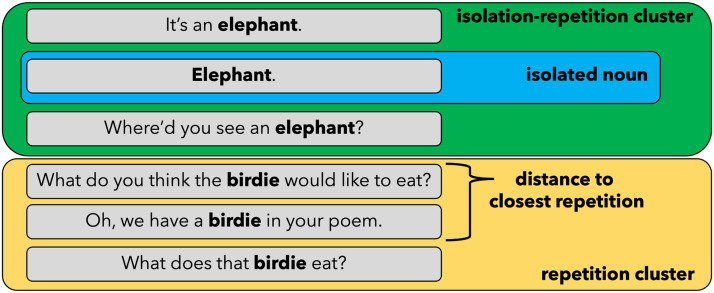
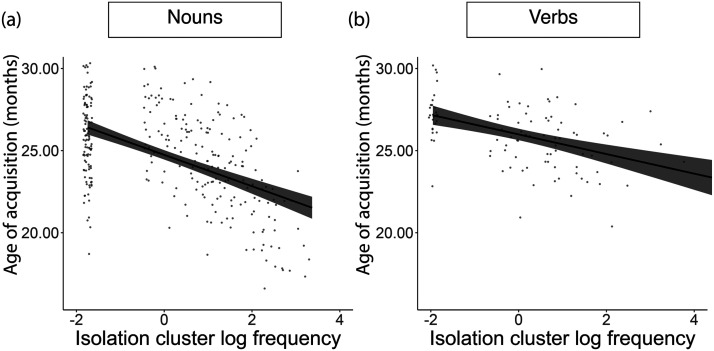
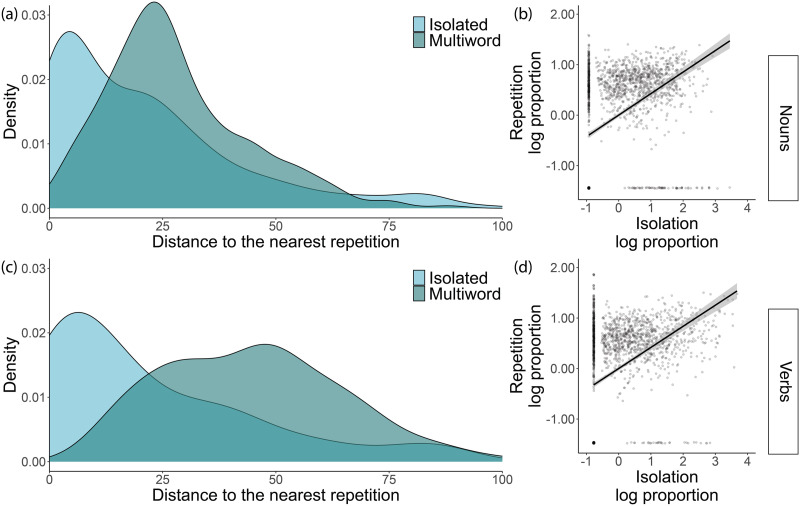
Infants experience language in the context of a dynamic environment in which many cues co-occur. However, experimenters often reduce language input to individual cues without considering how children themselves may experience incoming information, leading to potentially inaccurate conclusions about how learning works outside of the lab. Here, we examined the shared temporal dynamics of two historically separated cues that are thought to support word learning: repetition of the same word in nearby utterances, and isolation of individual word tokens (i.e., single-word utterances). In a large database of North American English, we found that word repetition and isolation frequently co-occurred in children's natural language experiences, and the extent to which they did so was linked to words' earlier age of acquisition. This investigation emphasizes children's experiences in time as a way to understand the learning cues in the language environment, which may help researchers build learning theories that are grounded in real-world structure.
婴儿在一个充满动态环境的情境中体验语言,在这个环境中有许多线索同时出现。然而,实验者常常将语言输入简化为单个线索,而不考虑儿童自身可能如何体验传入的信息,这就导致了关于学习在实验室之外如何运作的结论可能不准确。在这里,我们研究了两个在历史上被分开考虑的线索的共同时间动态,这两个线索被认为有助于词汇学习:在相邻话语中重复相同的单词,以及单个单词标记的孤立(即单个单词的话语)。在一个北美英语的大型数据库中,我们发现单词重复和孤立在儿童的自然语言体验中经常同时出现,而且它们同时出现的程度与单词的较早习得年龄有关。这项研究强调了儿童在时间上的体验,以此作为理解语言环境中学习线索的一种方式,这可能有助于研究人员构建基于现实世界结构的学习理论。