Zhang Zexin, Zhao Wenjie, Lv Chang, Wu Zexia, Liu Wenhao, Chang Xuesong, Yu Yaya, Xiao Zhenzhen, He Yihan, Zhang Haibo
The Second Clinical School of Guangzhou University of Chinese Medicine, Guangzhou, China.
Clinical Medical College of Acupuncture Moxibustion and Rehabilitation, Guangzhou University of Chinese Medicine, Guangzhou, China.
Front Immunol. 2024 Nov 25;15:1456150. doi: 10.3389/fimmu.2024.1456150. eCollection 2024.
Pain is a prevalent discomfort symptom associated with cancer, yet the correlations and potential mechanisms between pain and the efficacy of cancer immunotherapy remain uncertain.
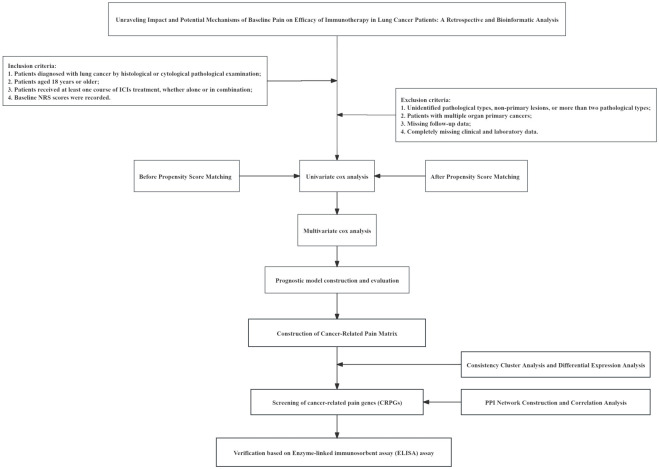
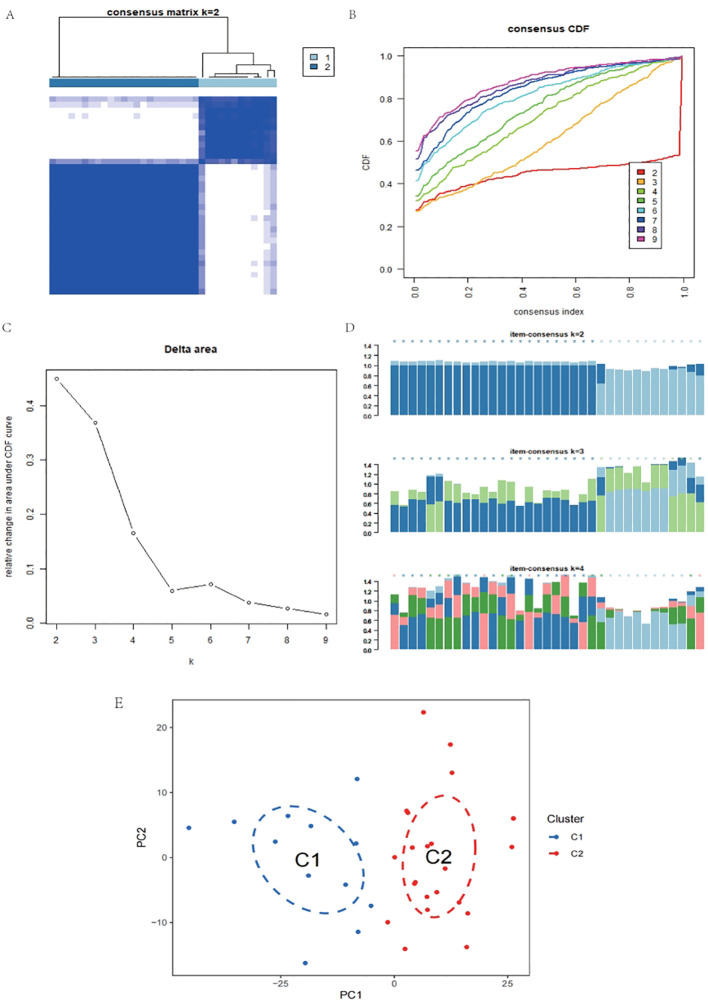
Non-small cell lung cancer (NSCLC) patients who received immune checkpoint inhibitors (ICIs) in the inpatient department of Guangdong Provincial Hospital of Chinese Medicine from January 1, 2018, to December 31, 2021, were retrospectively enrolled. Through cox regression analysis, prognostic factors and independent prognostic factors affecting the efficacy of ICIs were identified, and a nomogram model was constructed. Hub cancer-related pain genes (CRPGs) were identified through bioinformatic analysis. Finally, the expression levels of hub CRPGs were detected using an enzyme-linked immunosorbent assay (ELISA).
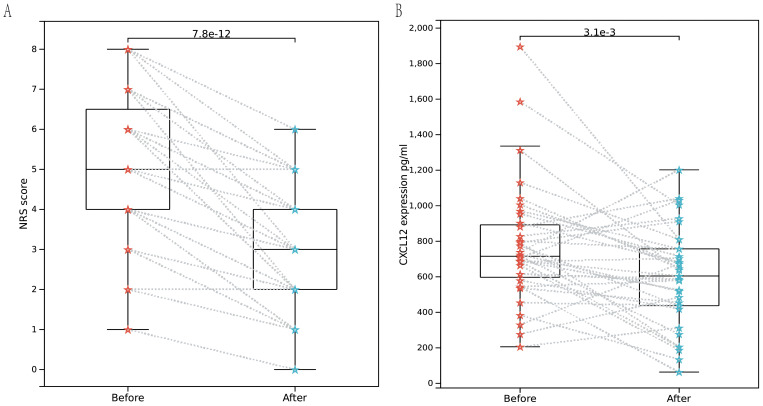
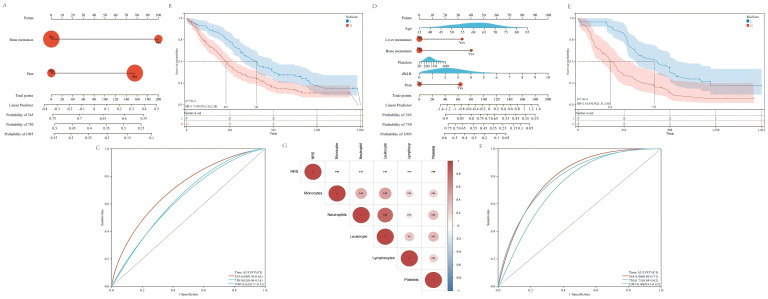
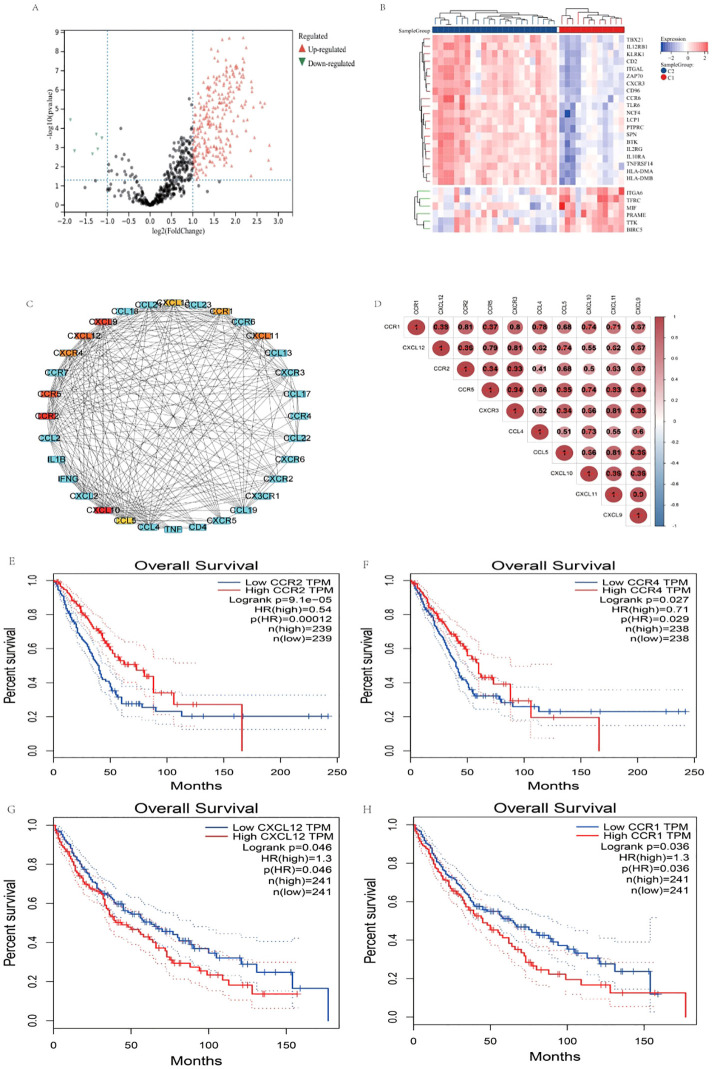
Before PSM, a total of 222 patients were enrolled in this study. Univariate and multivariate cox analysis indicated that bone metastasis and NRS scores were independent prognostic factors for the efficacy of ICIs. After PSM, a total of 94 people were enrolled in this study. Univariate cox analysis and multivariate cox analysis indicated that age, platelets, Dnlr, liver metastasis, bone metastasis, and NRS scores were independent prognostic factors for the efficacy of ICIs. A nomogram was constructed based on 6 independent prognostic factors with AUC values of 0.80 for 1-year, 0.73 for 2-year, and 0.80 for 3-year survival. ELISA assay results indicated that the level of CXCL12 significantly decreased compared to baseline after pain was relieved.
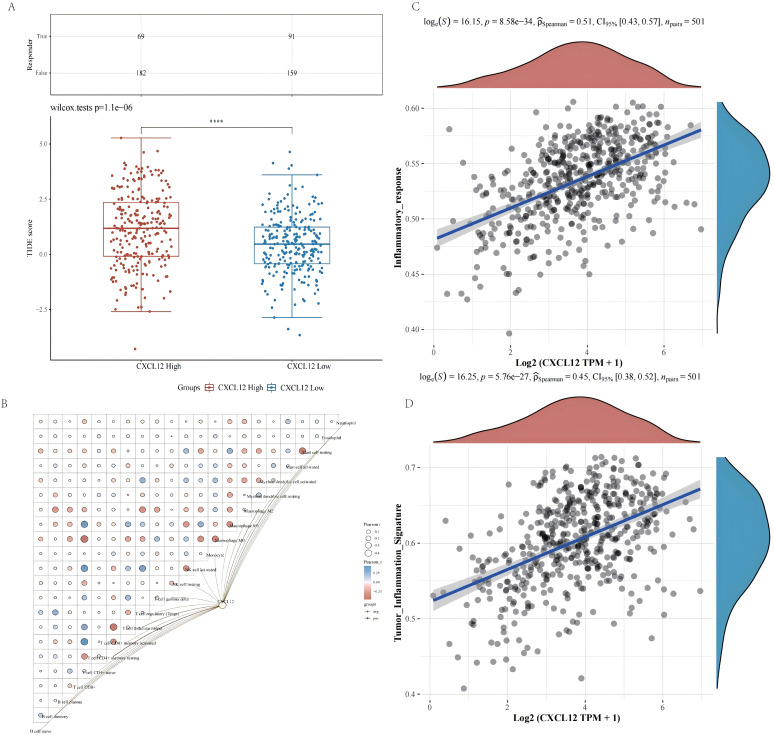
Baseline pain is an independent prognostic factor affecting the efficacy of ICIs in lung cancer, potentially through CXCL12-mediated inflammation promotion and immunosuppression.
疼痛是一种与癌症相关的常见不适症状,但疼痛与癌症免疫治疗疗效之间的相关性及潜在机制仍不明确。
回顾性纳入2018年1月1日至2021年12月31日在广东省中医院住院部接受免疫检查点抑制剂(ICI)治疗的非小细胞肺癌(NSCLC)患者。通过cox回归分析确定影响ICI疗效的预后因素和独立预后因素,并构建列线图模型。通过生物信息学分析确定核心癌症相关疼痛基因(CRPG)。最后,采用酶联免疫吸附测定(ELISA)检测核心CRPG的表达水平。
倾向评分匹配(PSM)前,本研究共纳入222例患者。单因素和多因素cox分析表明,骨转移和数字评定量表(NRS)评分是ICI疗效的独立预后因素。PSM后,本研究共纳入94例患者。单因素cox分析和多因素cox分析表明,年龄、血小板、Dnlr、肝转移、骨转移和NRS评分是ICI疗效的独立预后因素。基于6个独立预后因素构建列线图,1年、2年和3年生存率的曲线下面积(AUC)值分别为0.80、0.73和0.80。ELISA检测结果表明,疼痛缓解后,与基线相比,CXC趋化因子配体12(CXCL12)水平显著降低。
基线疼痛是影响肺癌患者ICI疗效的独立预后因素,可能是通过CXCL12介导的炎症促进和免疫抑制作用。