Dou Lei, Fang Yu, Yang Huiyuan, Ai Guo, Shen Na
Department of Geriatrics, Tongji Hospital, Tongji Medical College, Huazhong University of Science and Technology, Wuhan, China.
Department of Surgery, Tongji Hospital, Tongji Medical College, Huazhong University of Science and Technology, Wuhan, China.
Hum Vaccin Immunother. 2024 Dec 31;20(1):2437918. doi: 10.1080/21645515.2024.2437918. Epub 2024 Dec 10.
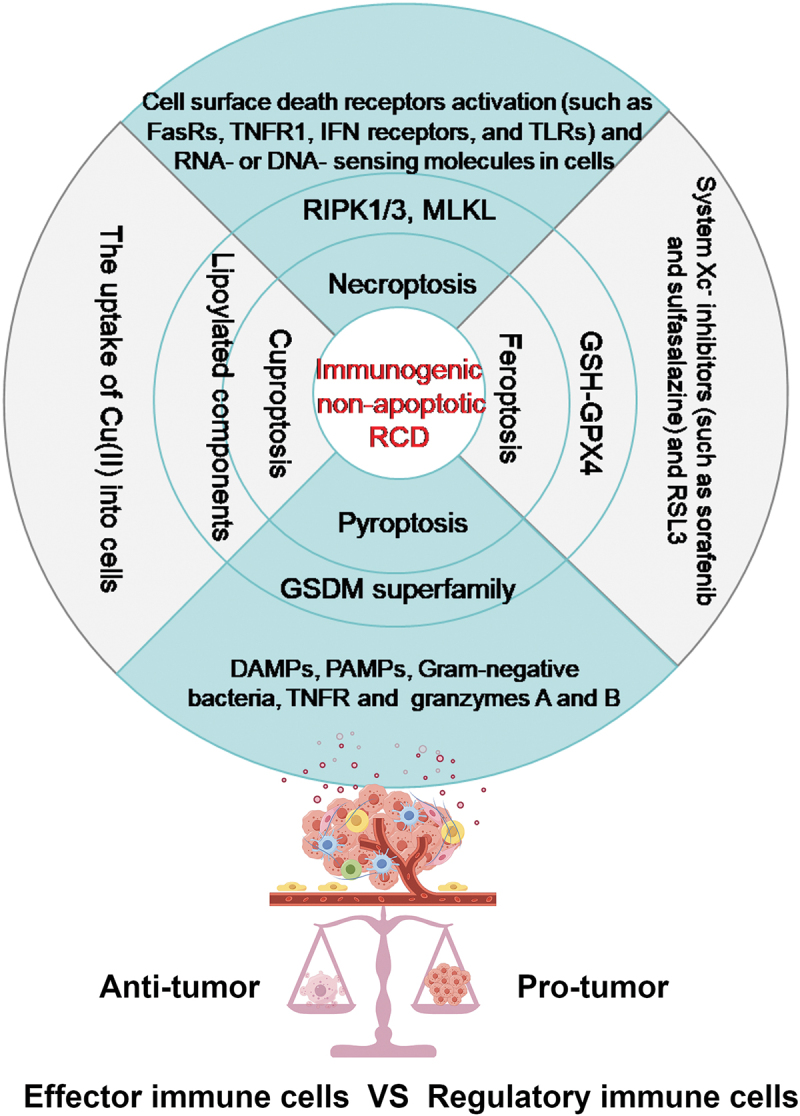
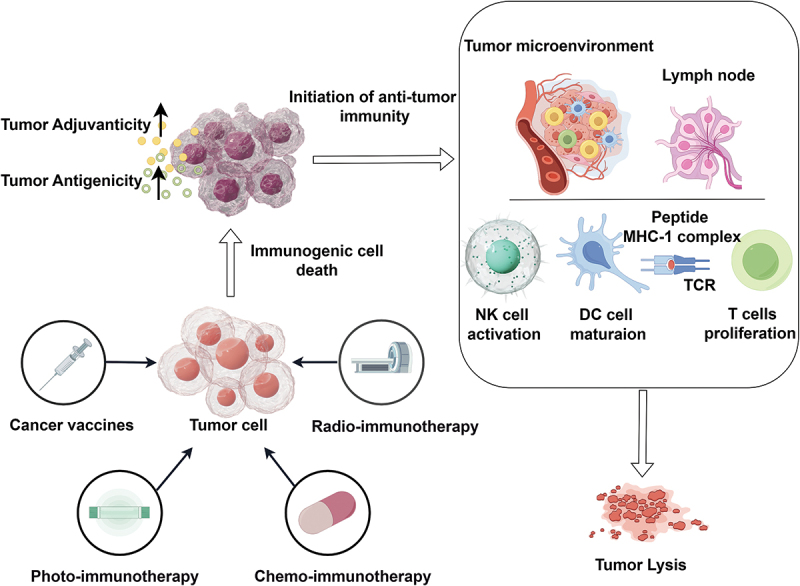
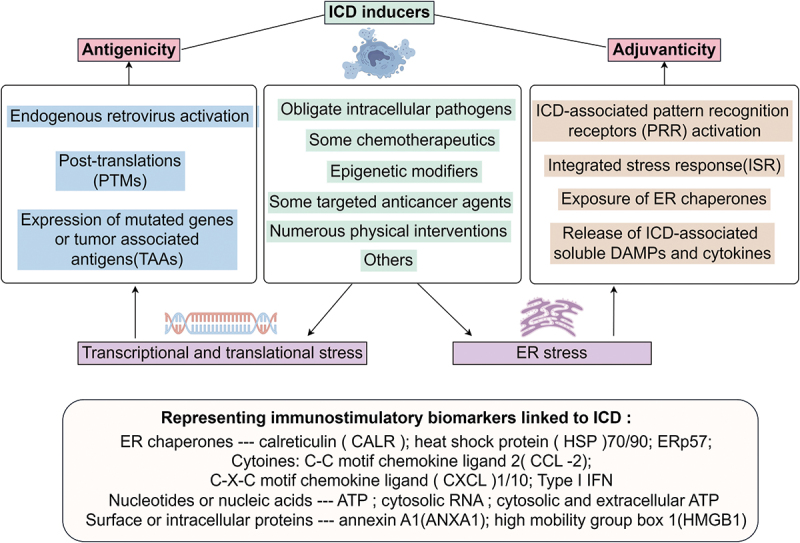
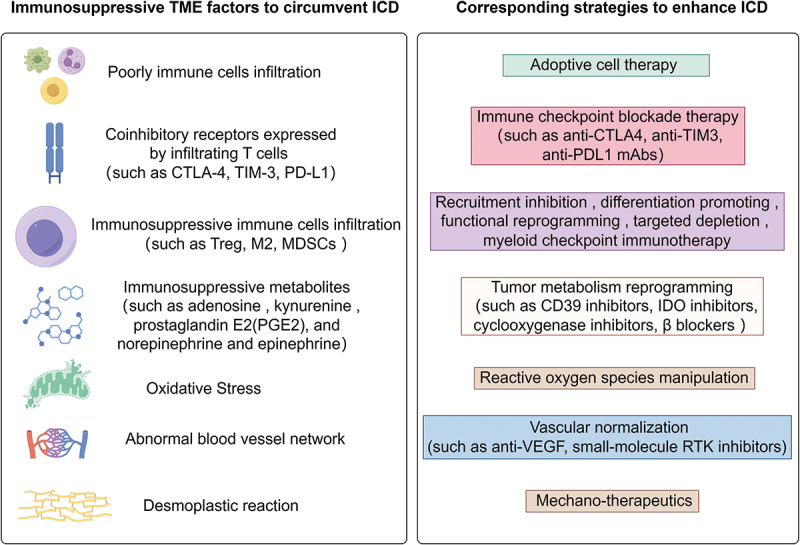
Immunogenic cell death (ICD) is a distinct type of stress-induced regulated cell death that can lead to adaptive immune responses and the establishment of immunological memory. ICD exhibits both similarities and differences when compared to apoptosis and other non-apoptotic forms of regulated cell death (RCD). The interplay between ICD-mediated immunosurveillance against cancer and the ability of cancer cells to evade ICD influences the host-tumor immunological interaction. Consequently, the restoration of ICD and the development of effective strategies to induce ICD have emerged as crucial considerations in the treatment of cancer within the context of immunotherapy. To enhance comprehension of ICD in the setting of cancer, this paper examines the interconnected responsive pathways associated with ICD, the corresponding biomarkers indicative of ICD, and the mechanisms through which tumors subvert ICD. Additionally, this review explores strategies for reinstating ICD and the therapeutic potential of harnessing ICD in cancer immunotherapy.
免疫原性细胞死亡(ICD)是一种由应激诱导的独特的程序性细胞死亡,可导致适应性免疫反应并建立免疫记忆。与细胞凋亡和其他非凋亡形式的程序性细胞死亡(RCD)相比,ICD既有相似之处,也有不同之处。ICD介导的针对癌症的免疫监视与癌细胞逃避ICD的能力之间的相互作用影响宿主-肿瘤免疫相互作用。因此,恢复ICD以及开发诱导ICD的有效策略已成为免疫治疗背景下癌症治疗的关键考虑因素。为了增强对癌症背景下ICD的理解,本文研究了与ICD相关的相互关联的反应途径、指示ICD的相应生物标志物以及肿瘤颠覆ICD的机制。此外,本综述探讨了恢复ICD的策略以及在癌症免疫治疗中利用ICD的治疗潜力。