
给药途径和给药频率对小鼠模型中SARS-CoV-2 mRNA疫苗毒理学的影响。
Impact of administration routes and dose frequency on the toxicology of SARS-CoV-2 mRNA vaccines in mice model.
作者信息
Ahn Jae-Hun, Lee Jisun, Roh Gahyun, Lee Na-Young, Bae Hee-Jin, Kwon Euna, Han Kang-Min, Kim Ji-Eun, Park Hyo-Jung, Yoo Soyeon, Kwon Sung Pil, Bang Eun-Kyoung, Keum Gyochang, Nam Jae-Hwan, Kang Byeong-Cheol
机构信息
Department of Experiment Animal Research, Biomedical Research Institute, Seoul National University Hospital, Seoul, Republic of Korea.
Department of Medical and Biological Sciences, The Catholic University of Korea, Bucheon, Republic of Korea.
出版信息
Arch Toxicol. 2025 Feb;99(2):755-773. doi: 10.1007/s00204-024-03912-1. Epub 2024 Dec 10.
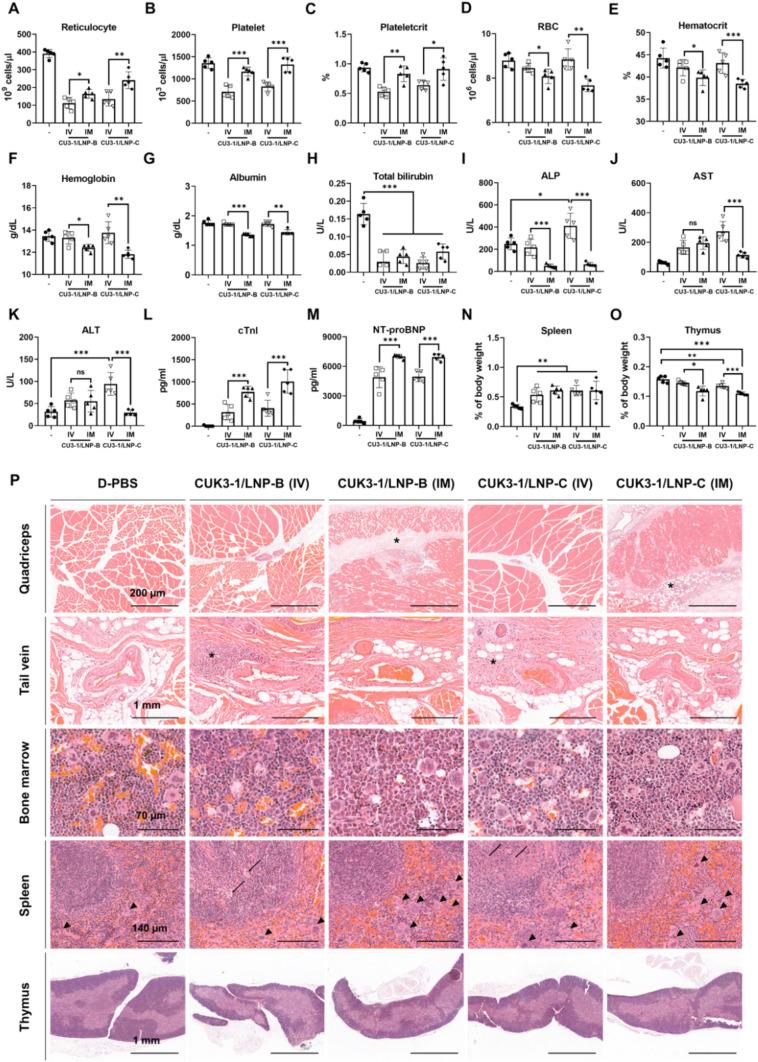
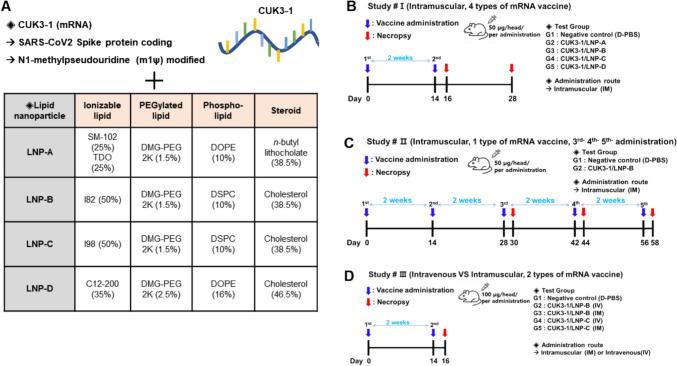
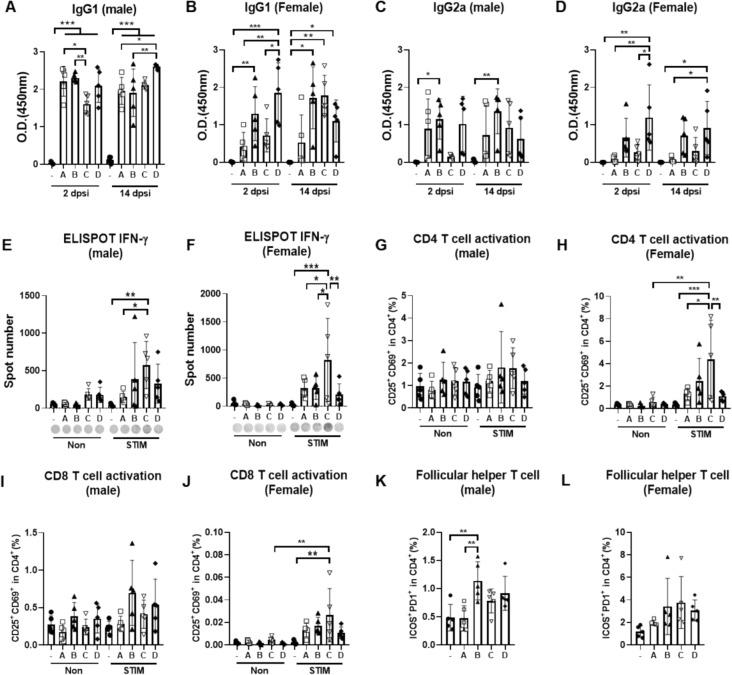
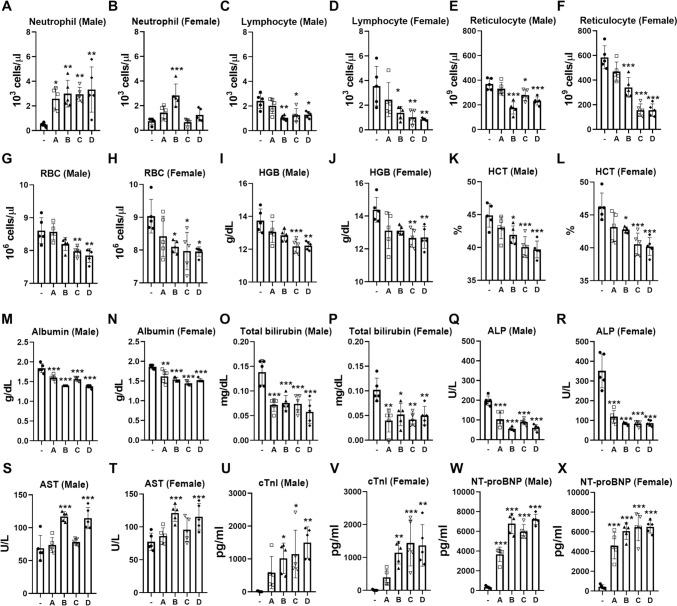
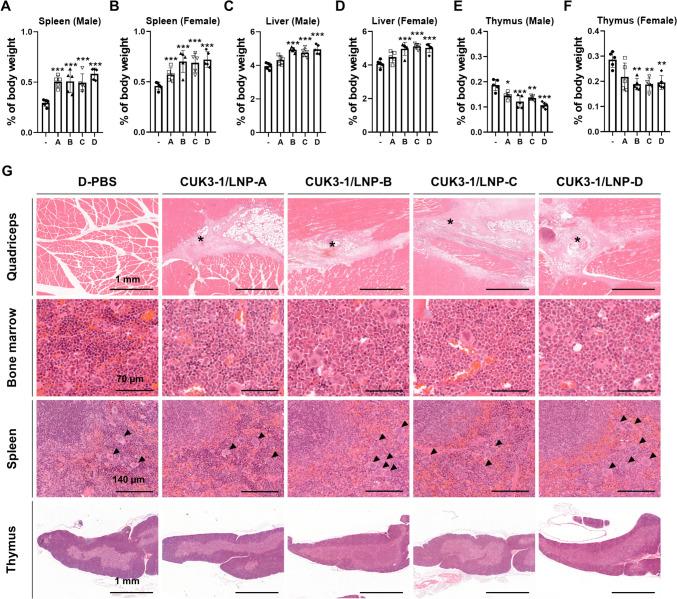
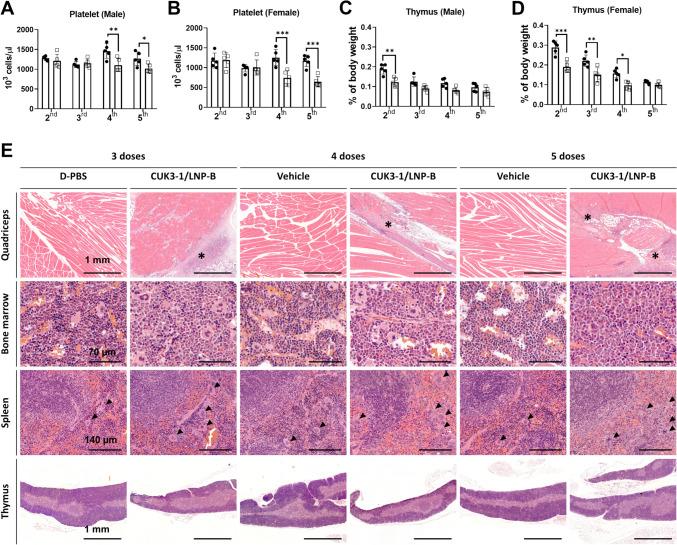
The increasing use of SARS-CoV-2 mRNA vaccines has raised concerns about their potential toxicological effects, necessitating further investigation to ensure their safety. To address this issue, we aimed to evaluate the toxicological effects of SARS-CoV-2 mRNA vaccine candidates formulated with four different types of lipid nanoparticles in ICR mice, focusing on repeated doses and administration routes. We conducted an extensive analysis in which mice received the mRNA vaccine candidates intramuscularly (50 μg/head) twice at 2-week intervals, followed by necropsy at 2 and 14 dpsi (days post-secondary injection). In addition, we performed a repeated dose toxicity test involving three, four, or five doses and compared the toxicological outcomes between intravenous and intramuscular routes. Our findings revealed that all vaccine candidates significantly induced SARS-CoV-2 spike protein-specific IgG and T cell responses. However, at 2 dpsi, there was a notable temporary decrease in lymphocyte and reticulocyte counts, anemia-related parameters, and significant increases in cardiac damage markers, troponin-I and NT-proBNP. Histopathological analysis revealed severe inflammation and necrosis at the injection site, decreased erythroid cells in bone marrow, cortical atrophy of the thymus, and increased spleen cellularity. While most toxicological changes observed at 2 dpsi had resolved by 14 dpsi, spleen enlargement and injection site damage persisted. Furthermore, repeated doses led to the accumulation of toxicity, and different administration routes resulted in distinct toxicological phenotypes. These findings highlight the potential toxicological risks associated with mRNA vaccines, emphasizing the necessity to carefully consider administration routes and dosage regimens in vaccine safety evaluations, particularly given the presence of bone marrow and immune organ toxicity, which, though eventually reversible, remains a serious concern.
严重急性呼吸综合征冠状病毒2(SARS-CoV-2)信使核糖核酸(mRNA)疫苗使用的增加引发了对其潜在毒理学影响的担忧,因此有必要进一步研究以确保其安全性。为解决这一问题,我们旨在评估用四种不同类型脂质纳米颗粒配制的SARS-CoV-2 mRNA候选疫苗在ICR小鼠中的毒理学影响,重点关注重复剂量和给药途径。我们进行了广泛的分析,让小鼠每隔2周肌肉注射(50μg/只)两次候选mRNA疫苗,然后在第二次注射后2天和14天进行尸检。此外,我们进行了涉及三剂、四剂或五剂的重复剂量毒性试验,并比较了静脉内和肌肉内给药途径的毒理学结果。我们的研究结果表明,所有候选疫苗均显著诱导了SARS-CoV-2刺突蛋白特异性免疫球蛋白G(IgG)和T细胞反应。然而,在第二次注射后2天,淋巴细胞和网织红细胞计数、贫血相关参数出现明显的暂时下降,心脏损伤标志物肌钙蛋白-I和N末端脑钠肽前体(NT-proBNP)显著增加。组织病理学分析显示注射部位有严重炎症和坏死,骨髓中红细胞减少,胸腺皮质萎缩,脾细胞增多。虽然在第二次注射后2天观察到的大多数毒理学变化在第二次注射后14天已得到缓解,但脾肿大和注射部位损伤仍然存在。此外,重复剂量导致毒性积累,不同给药途径导致不同的毒理学表型。这些发现突出了与mRNA疫苗相关的潜在毒理学风险,强调在疫苗安全性评估中仔细考虑给药途径和剂量方案的必要性,特别是考虑到存在骨髓和免疫器官毒性,尽管最终是可逆的,但仍然是一个严重问题。
 Zotero 插件