Hajjo Rima, Momani Ensaf, Sabbah Dima A, Baker Nancy, Tropsha Alexander
Department of Pharmacy, Faculty of Pharmacy, Al-Zaytoonah University of Jordan, P.O. Box 130, Amman, 11733, Jordan.
Laboratory for Molecular Modeling, Division of Chemical Biology and Medicinal Chemistry, Eshelman School of Pharmacy, The University of North Carolina at Chapel Hill, Chapel Hill, NC, USA.
NPJ Vaccines. 2023 Sep 1;8(1):129. doi: 10.1038/s41541-023-00719-6.
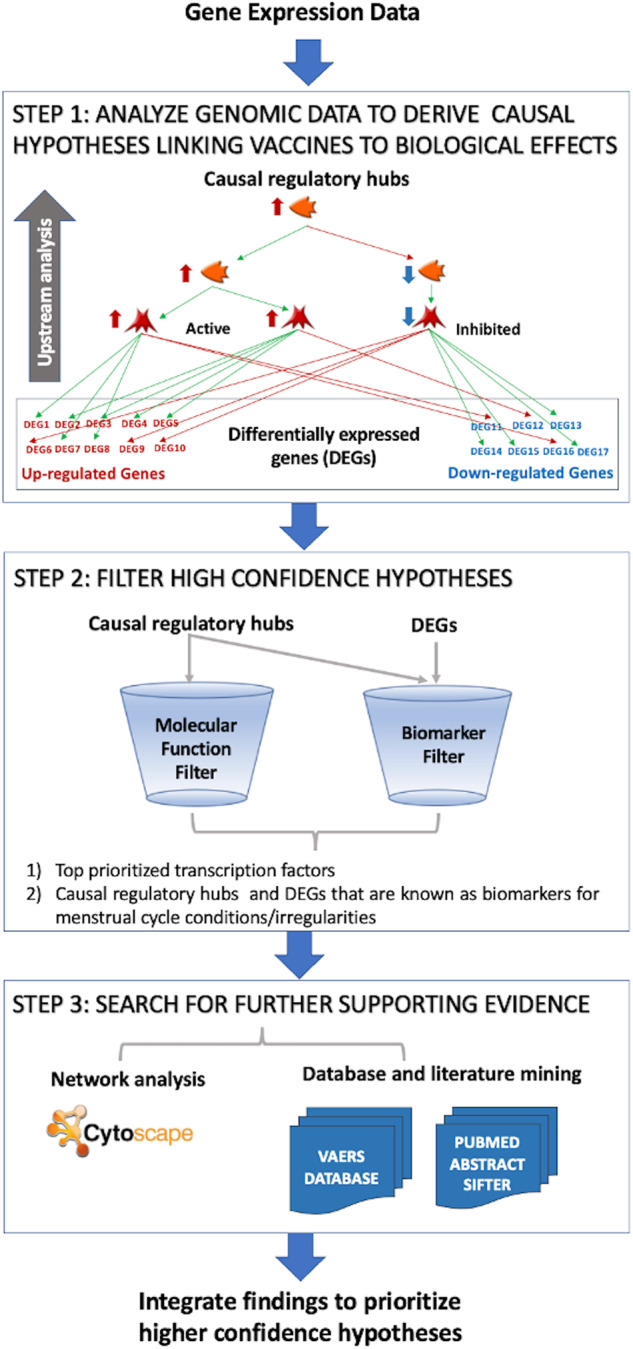
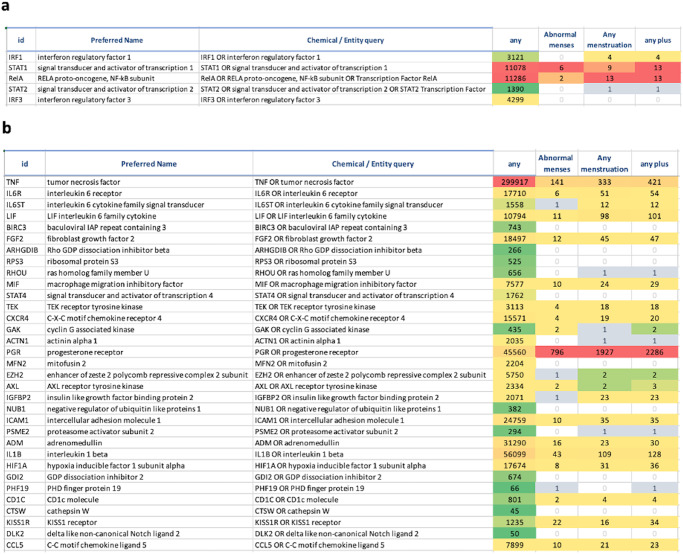
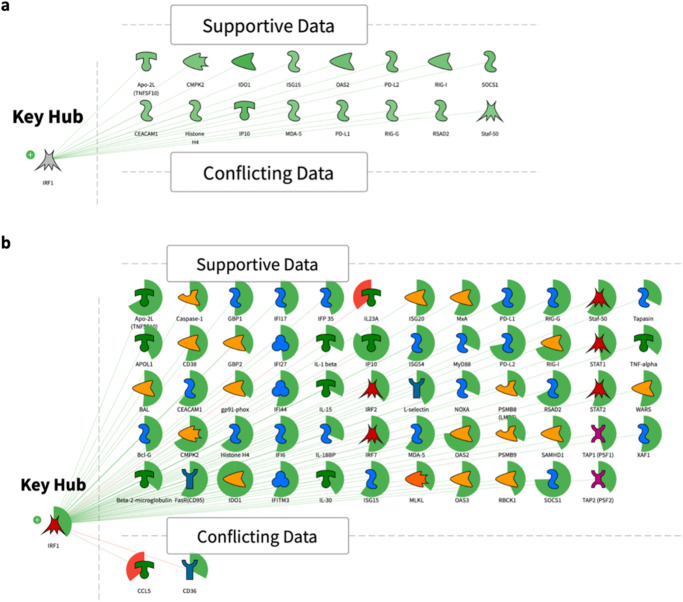
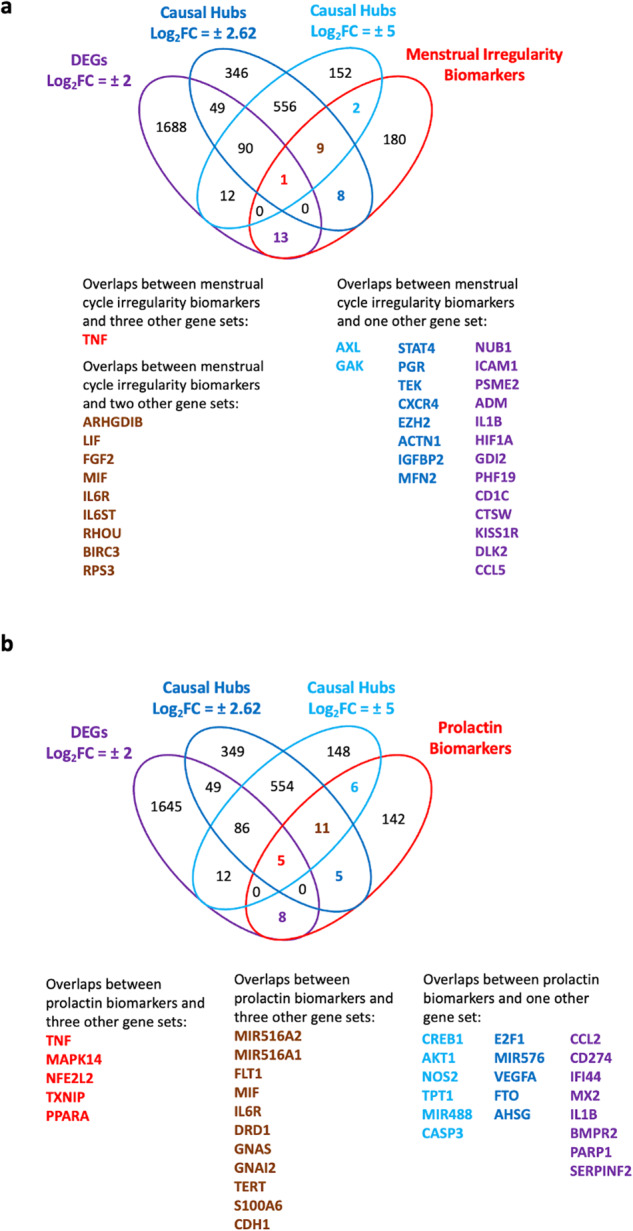
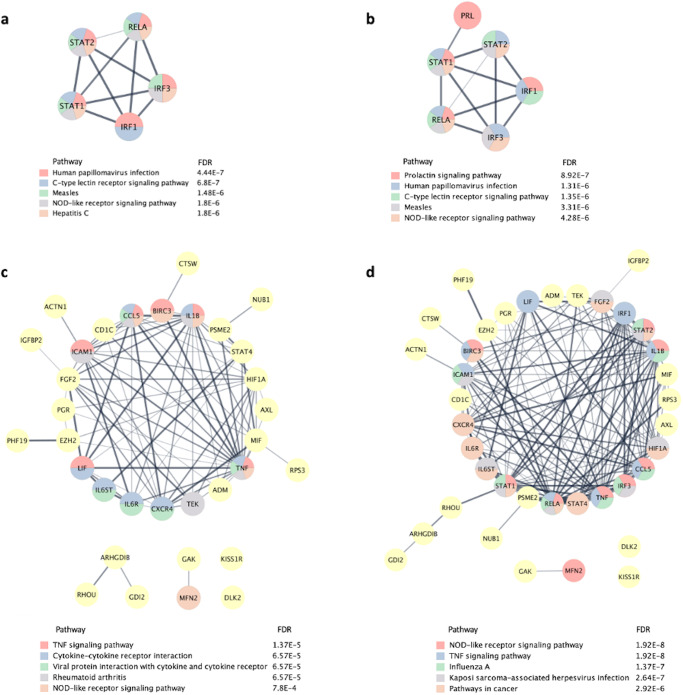
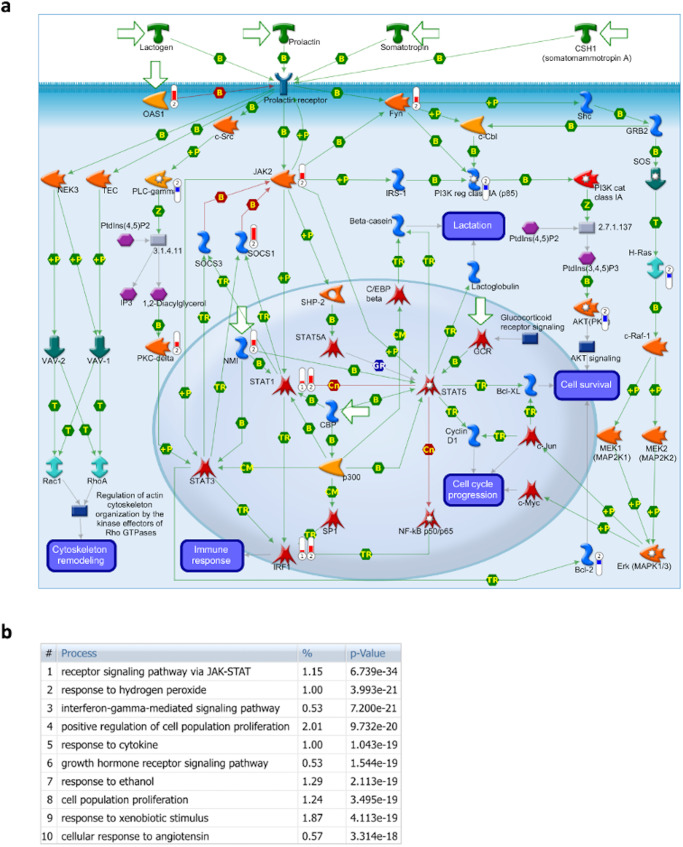
COVID-19 vaccines have been instrumental tools in the fight against SARS-CoV-2 helping to reduce disease severity and mortality. At the same time, just like any other therapeutic, COVID-19 vaccines were associated with adverse events. Women have reported menstrual cycle irregularity after receiving COVID-19 vaccines, and this led to renewed fears concerning COVID-19 vaccines and their effects on fertility. Herein we devised an informatics workflow to explore the causal drivers of menstrual cycle irregularity in response to vaccination with mRNA COVID-19 vaccine BNT162b2. Our methods relied on gene expression analysis in response to vaccination, followed by network biology analysis to derive testable hypotheses regarding the causal links between BNT162b2 and menstrual cycle irregularity. Five high-confidence transcription factors were identified as causal drivers of BNT162b2-induced menstrual irregularity, namely: IRF1, STAT1, RelA (p65 NF-kB subunit), STAT2 and IRF3. Furthermore, some biomarkers of menstrual irregularity, including TNF, IL6R, IL6ST, LIF, BIRC3, FGF2, ARHGDIB, RPS3, RHOU, MIF, were identified as topological genes and predicted as causal drivers of menstrual irregularity. Our network-based mechanism reconstruction results indicated that BNT162b2 exerted biological effects similar to those resulting from prolactin signaling. However, these effects were short-lived and didn't raise concerns about long-term infertility issues. This approach can be applied to interrogate the functional links between drugs/vaccines and other side effects.
新冠病毒疫苗是抗击严重急性呼吸综合征冠状病毒2(SARS-CoV-2)的重要工具,有助于降低疾病严重程度和死亡率。与此同时,与任何其他治疗方法一样,新冠病毒疫苗也会引发不良事件。有女性报告称在接种新冠病毒疫苗后月经周期出现紊乱,这引发了人们对新冠病毒疫苗及其对生育能力影响的新担忧。在此,我们设计了一种信息学工作流程,以探究接种信使核糖核酸(mRNA)新冠病毒疫苗BNT162b2后月经周期紊乱的因果驱动因素。我们的方法依赖于接种疫苗后的基因表达分析,随后进行网络生物学分析,以得出关于BNT162b2与月经周期紊乱之间因果联系的可检验假设。我们确定了五个高可信度转录因子为BNT162b2诱导月经紊乱的因果驱动因素,即:干扰素调节因子1(IRF1)、信号转导和转录激活因子1(STAT1)、RelA(核因子κB亚基p65)、信号转导和转录激活因子2(STAT2)以及干扰素调节因子3(IRF3)。此外,一些月经紊乱的生物标志物,包括肿瘤坏死因子(TNF)、白细胞介素6受体(IL6R)、白细胞介素6信号转导子(IL6ST)、白血病抑制因子(LIF)、杆状病毒IAP重复序列包含蛋白3(BIRC3)、成纤维细胞生长因子2(FGF2)、Rho GDP解离抑制因子β(ARHGDIB)、Ras同源家族成员U(RHOU)、巨噬细胞移动抑制因子(MIF),被确定为拓扑基因,并被预测为月经紊乱的因果驱动因素。我们基于网络的机制重建结果表明,BNT162b2产生的生物学效应与催乳素信号传导产生的效应相似。然而,这些效应是短暂的,并未引发对长期不孕问题的担忧。这种方法可用于探究药物/疫苗与其他副作用之间的功能联系。