Islam T M Tawabul, Mahat Nirmal Chandra, Shaker Ivvala Anand, Rahman Sheikh Arafat, Kabir Md Humayan, Shohel Mustakin Ahmed, Kamruzzaman Md, Tang Abul Kashem
Department of Food and Nutrition, Faculty of Applied Science, Parul University, Vadodara, IND.
Department of Applied Nutrition and Food Technology, Islamic University, Kushtia, BGD.
Cureus. 2024 Nov 9;16(11):e73351. doi: 10.7759/cureus.73351. eCollection 2024 Nov.
Azo dyes featuring one (monoazo) or several intramolecular NQN bonds are utilized in the food, pharmaceutical, and textile industries. The food azo dye chocolate brown HT (E155) adversely affects hepatic and renal function upon prolonged consumption. This study aimed to assess the carcinogenic potential of E155 in the development of mammary tumors and breast cancer.
A total of 20 female Long-Evans rats (eight to nine weeks old) were randomly assigned to five groups, each consisting of four rats. The control (female control) group received a regular diet, whereas the positive control (female positive control) group received 7,12-dimethylbenz(a)anthracene. The remaining three groups received 200, 400, or 600 mg/kg body weight (BW)/day E155 for 40 weeks. Tumor development, BW, and biochemical, hematological, and histological data were monitored.
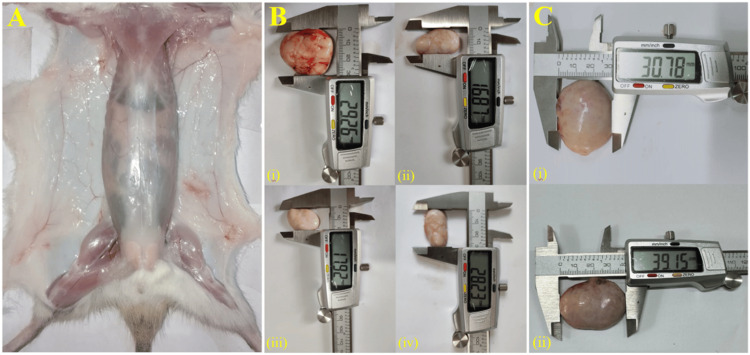
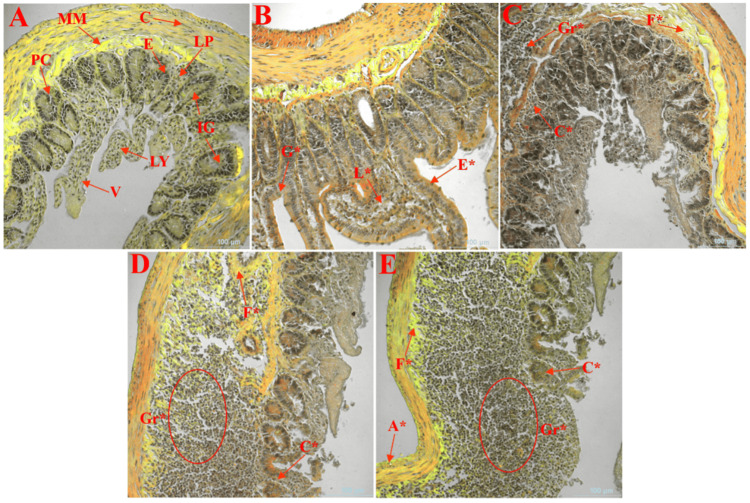
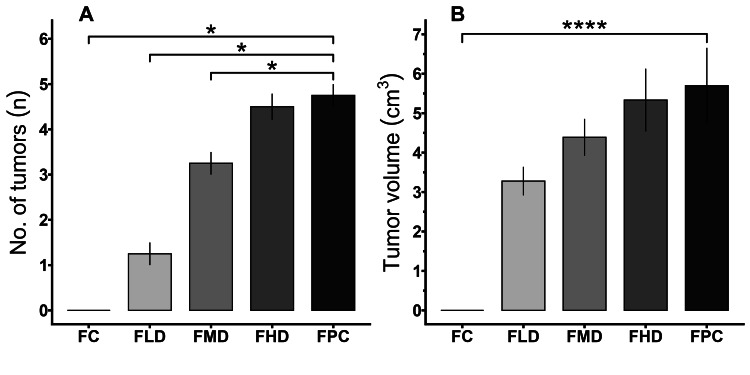
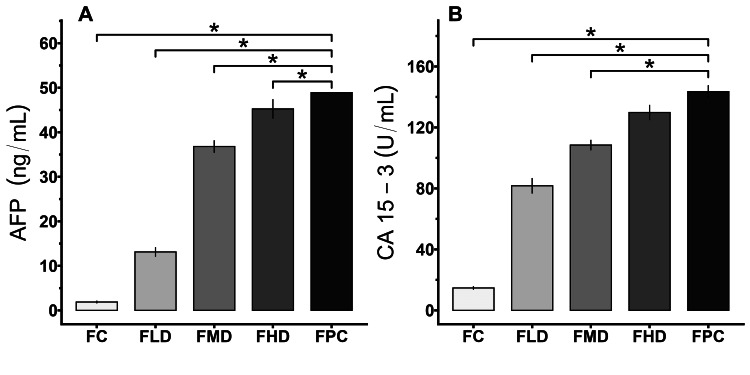
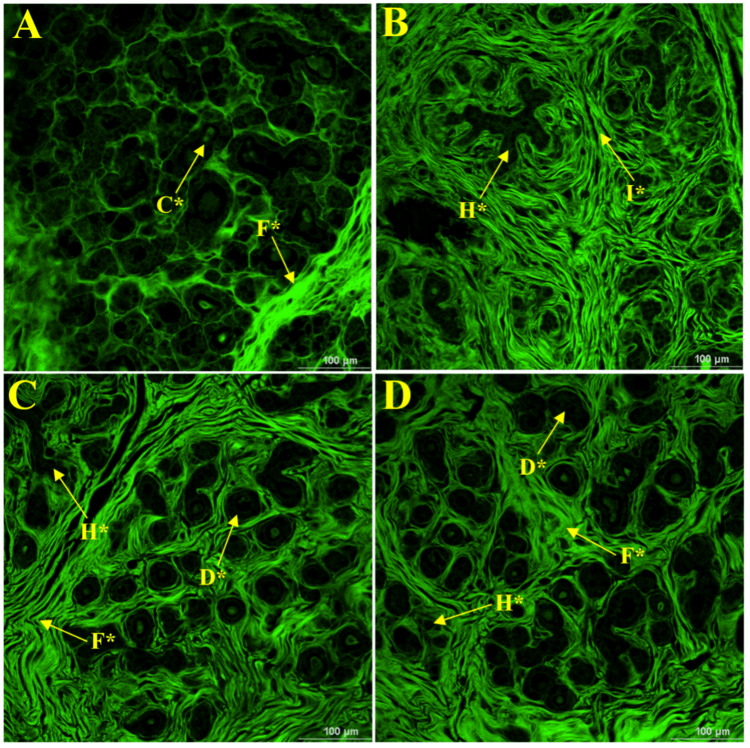
BW decreased significantly with increasing dosages in the female moderate dose (FMD) group. Blood counts indicated potential microcytic anemia and inflammation in the treatment groups, especially in the female high-dose (FHD) group. E155 dose-dependently impaired renal function and increased blood creatinine and uric acid levels. Elevated serum glutamic pyruvic transaminase (SGPT) and serum glutamic-oxaloacetic transaminase levels indicate abnormal liver function. FHD animals had more tumors and larger sizes. Higher alpha-fetoprotein (AFP) and cancer antigen levels were detected even at low doses. Histopathological analysis revealed that E155 causes mammary gland fibroadenomas, ductal carcinoma in situ, and hyperplasia. It also causes circular layer granulomas, fibrosis, and crypt abscesses in the intestines of FMD and FHD.
The current study suggests that prolonged exposure to E155 may result in a higher incidence of mammary tumors, indicating an elevated risk for the onset of breast cancer.
含有一个(单偶氮)或几个分子内NQN键的偶氮染料被用于食品、制药和纺织工业。食品偶氮染料巧克力棕HT(E155)长期食用会对肝脏和肾脏功能产生不利影响。本研究旨在评估E155在乳腺肿瘤和乳腺癌发生发展中的致癌潜力。
总共20只雌性Long-Evans大鼠(8至9周龄)被随机分为五组,每组四只大鼠。对照组(雌性对照组)给予常规饮食,而阳性对照组(雌性阳性对照组)给予7,12-二甲基苯并(a)蒽。其余三组分别给予200、400或600毫克/千克体重(BW)/天的E155,持续40周。监测肿瘤发生、体重以及生化、血液学和组织学数据。
雌性中剂量(FMD)组体重随着剂量增加而显著下降。血细胞计数表明治疗组存在潜在的小细胞性贫血和炎症,尤其是雌性高剂量(FHD)组。E155剂量依赖性地损害肾功能,增加血肌酐和尿酸水平。血清谷丙转氨酶(SGPT)和血清谷草转氨酶水平升高表明肝功能异常。FHD组动物的肿瘤更多且更大。即使在低剂量下也检测到较高的甲胎蛋白(AFP)和癌抗原水平。组织病理学分析显示,E155可导致乳腺纤维腺瘤、原位导管癌和增生。它还会在FMD和FHD组的肠道中引起环形层肉芽肿、纤维化和隐窝脓肿。
当前研究表明,长期接触E155可能导致乳腺肿瘤发病率升高,这表明患乳腺癌的风险增加。