Park Ji-In, Na Hyo-Seok, Lee Keum-O, Ryu Jung-Hee, Shin Hyun-Jung
Department of Anesthesiology and Pain Medicine, Seoul National University Bundang Hospital, Seongnam, Korea.
Department of Anesthesiology and Pain Medicine, Seoul National University College of Medicine, Seoul, Korea.
Korean J Anesthesiol. 2025 Feb;78(1):48-60. doi: 10.4097/kja.24444. Epub 2024 Dec 12.
Remimazolam is a novel short-acting benzodiazepine that has recently been used for general anesthesia. This study compared the safety and efficacy of remimazolam-based total intravenous anesthesia (TIVA) and volatile agent-based anesthesia in adults undergoing general anesthesia.
We searched electronic databases including PubMed, Embase, CENTRAL, and Scopus for relevant studies. The primary outcome was the proportion of patients who experienced hypotension during surgery. Secondary outcomes included incidence of bradycardia, extubation time, duration in the post-anesthesia care unit hospital stay, and incidence of postoperative nausea and/or vomiting (PONV). We estimated the relative risk (RR) and mean difference with 95% CIs using a random-effects model.
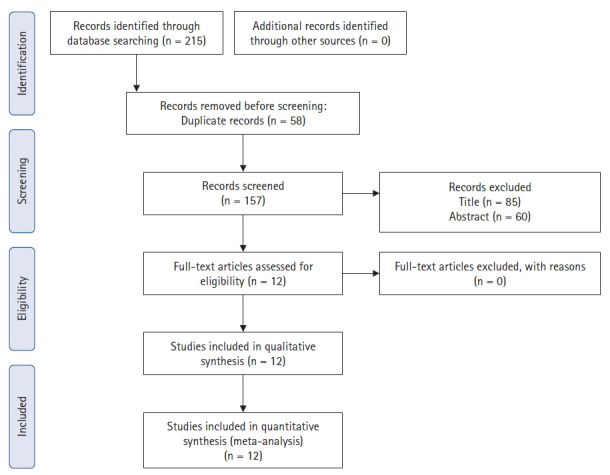
A total of 969 patients from 12 randomized controlled trials were included. The incidence of hypotension was 14% and 34% in the remimazolam and volatile agent groups, respectively. Remimazolam significantly lowered the incidence of hypotension (RR: 0.43, 95% CI [0.29-0.63], P = 0.0000, I2 = 26%). The remimazolam group had a PONV incidence of 13%, compared to 28% in the volatile agent group, indicating a significant difference (RR: 0.51, 95% CI [0.37-0.72], P = 0.0001, I2 = 15%). No significant differences were observed in the other outcomes.
Remimazolam-based TIVA demonstrated favorable hemodynamic effects, with a lower incidence of hypotension and similar bradycardia rates, compared to volatile agent-based anesthesia. Furthermore, the reduction in PONV supports the use of remimazolam-based TIVA as a valuable method for general anesthesia.
瑞马唑仑是一种新型短效苯二氮䓬类药物,最近已用于全身麻醉。本研究比较了瑞马唑仑全凭静脉麻醉(TIVA)和挥发性麻醉剂麻醉在接受全身麻醉的成人中的安全性和有效性。
我们检索了包括PubMed、Embase、CENTRAL和Scopus在内的电子数据库以查找相关研究。主要结局是手术期间发生低血压的患者比例。次要结局包括心动过缓发生率、拔管时间、麻醉后监护病房住院时间以及术后恶心和/或呕吐(PONV)发生率。我们使用随机效应模型估计相对风险(RR)和95%置信区间的均值差。
共纳入了来自12项随机对照试验的969例患者。瑞马唑仑组和挥发性麻醉剂组的低血压发生率分别为14%和34%。瑞马唑仑显著降低了低血压发生率(RR:0.43,95%置信区间[0.29 - 0.63],P = 0.0000,I² = 26%)。瑞马唑仑组的PONV发生率为13%,而挥发性麻醉剂组为28%,差异有统计学意义(RR:0.51,95%置信区间[0.37 - 0.72],P = 0.0001,I² = 15%)。在其他结局方面未观察到显著差异。
与挥发性麻醉剂麻醉相比,基于瑞马唑仑的TIVA显示出良好的血流动力学效应,低血压发生率较低且心动过缓发生率相似。此外,PONV的减少支持将基于瑞马唑仑的TIVA作为一种有价值的全身麻醉方法使用。