Dai Shuhong, Li Haiying, Li Liang, Song Zhanshuai, Zhang Xiaowei, Wang Pengyun, Wang Haiming
Department of Cardiology, Zibo Central Hospital, Zibo, Shandong 255036, P.R. China.
Department of Personnel Office, Zibo Central Hospital, Zibo, Shandong 255036, P.R. China.
Oncol Lett. 2024 Nov 28;29(2):82. doi: 10.3892/ol.2024.14828. eCollection 2025 Feb.
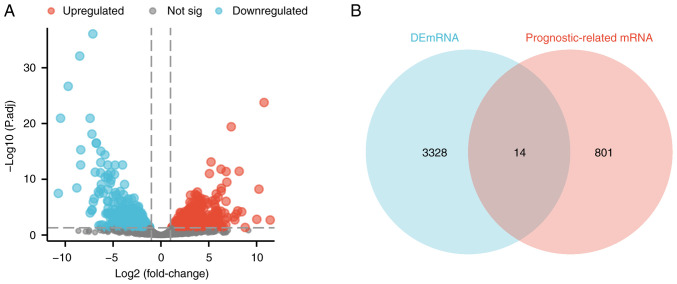
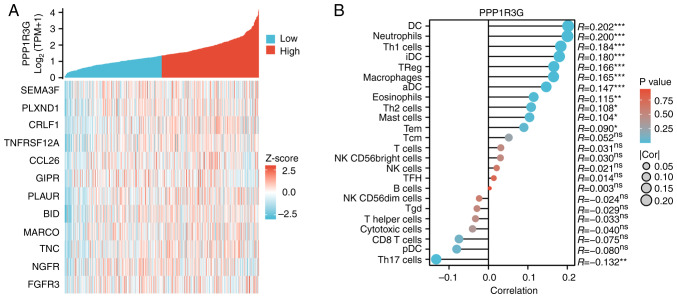
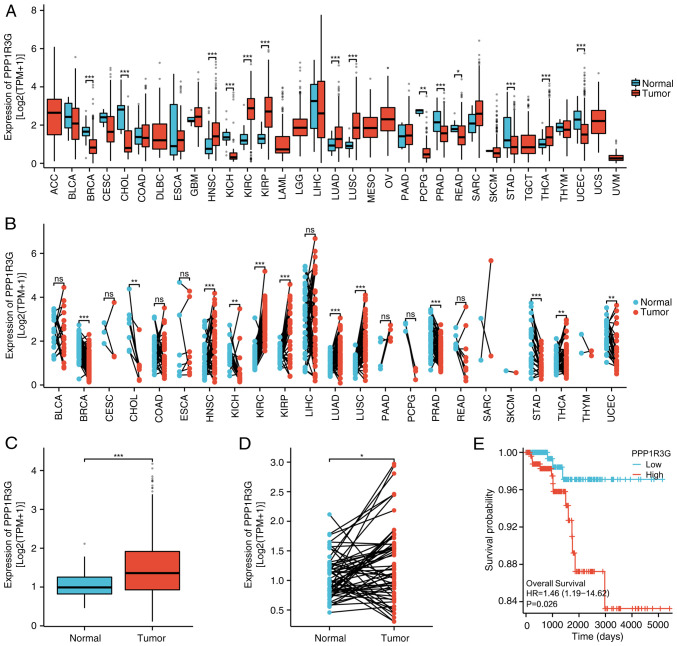
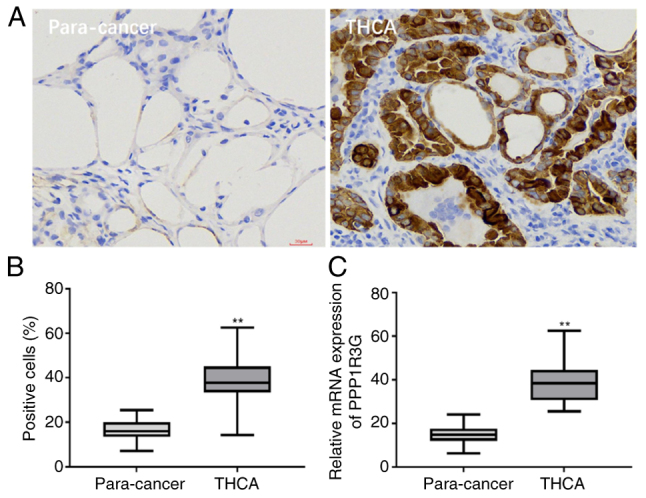
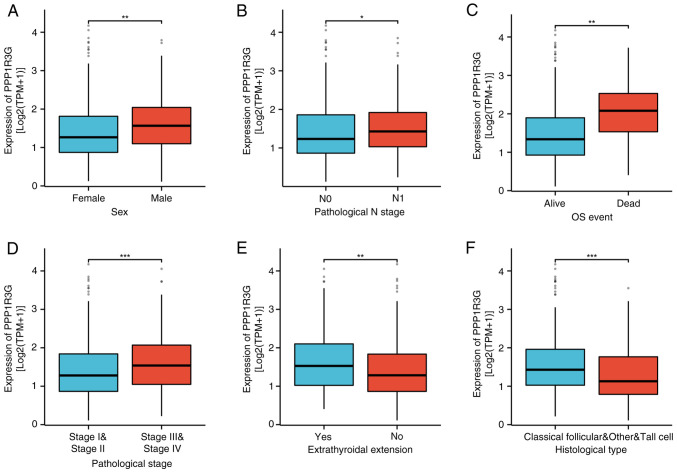
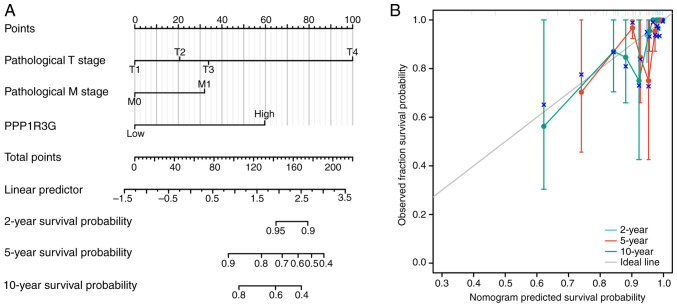
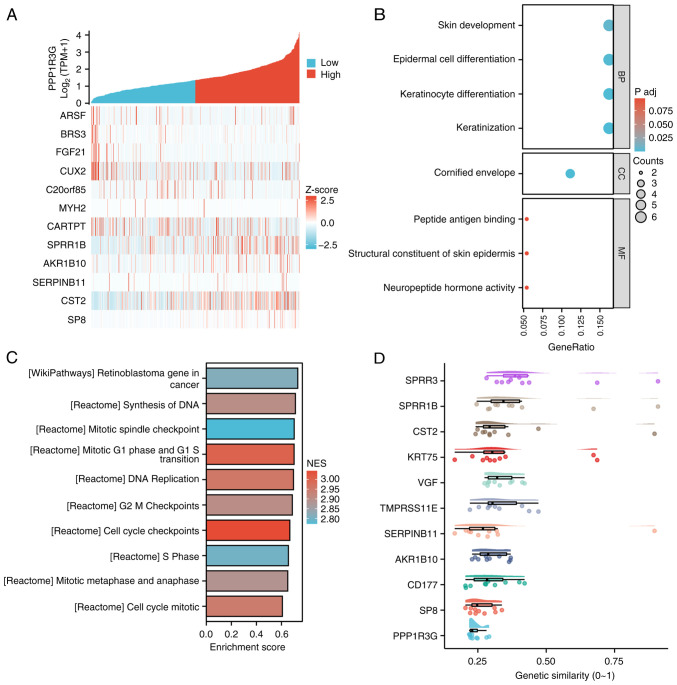
The prognosis of the poorly differentiated subtype of thyroid carcinoma (THCA) is less favorable due to its aggressive nature, which also increases the likelihood of metastasis to distant organs. The present study aimed to assess the potential application of protein phosphatase 1 regulatory subunit 3G (PPP1R3G) as a molecular biomarker for early identification and prognosis prediction in THCA. The Cancer Genome Atlas (TCGA) database was used to identify genes associated with prognosis and differentially expressed genes in THCA. Additionally, TCGA data were used to analyze the differential expression of the PPP1R3G gene in THCA tissues compared with that in normal tissues. Immunohistochemistry was used for further confirmation of these findings. A prognostic significance analysis of the PPP1R3G gene was performed in patients diagnosed with THCA using Cox regression models. Both univariate and multivariate approaches were used, incorporating clinical information obtained from the patients. Moreover, to gain insights into the molecular mechanisms underlying the regulatory role of the PPP1R3G gene in THCA, a functional enrichment analysis performed. An assessment of the levels of immune cell infiltration in patients with THCA was also performed and their correlation with the expression level of PPP1R3G gene was assessed. The mRNA and protein levels of PPP1R3G were revealed to be higher in THCA tissues compared with that of noncancerous thyroid tissues. Moreover, there were significant associations between the expression of PPP1R3G in THCA and factors such as sex, histological type, pathological node stage, pathological stage, extrathyroidal extension and overall survival (OS). Univariate and multivariate Cox regression analyses revealed that the independent prognostic value of PPP1R3G could be used to predict the OS of patients with THCA. The outcomes obtained from functional enrichment analysis indicated a potential involvement of PPP1R3G in regulation of biological processes such as keratinization, and differentiation of keratinocytes and epidermal cells. Additionally, an association was demonstrated between the expression levels of PPP1R3G gene and several immune cells present within the tumor microenvironment of the thyroid. In conclusion, PPP1R3G has the potential to serve as a prognostic indicator for patients diagnosed with THCA, and may also be considered a promising target for therapeutic interventions in THCA.
甲状腺癌(THCA)低分化亚型的预后较差,因其具有侵袭性,这也增加了远处器官转移的可能性。本研究旨在评估蛋白磷酸酶1调节亚基3G(PPP1R3G)作为THCA早期识别和预后预测分子生物标志物的潜在应用。利用癌症基因组图谱(TCGA)数据库鉴定与THCA预后相关的基因和差异表达基因。此外,使用TCGA数据分析THCA组织中PPP1R3G基因与正常组织相比的差异表达。采用免疫组织化学进一步证实这些发现。使用Cox回归模型对诊断为THCA的患者进行PPP1R3G基因的预后意义分析。采用单变量和多变量方法,并纳入从患者获得的临床信息。此外,为了深入了解PPP1R3G基因在THCA中调节作用的分子机制,进行了功能富集分析。还对THCA患者的免疫细胞浸润水平进行了评估,并评估了其与PPP1R3G基因表达水平的相关性。结果显示,与非癌性甲状腺组织相比,THCA组织中PPP1R3G的mRNA和蛋白水平更高。此外,THCA中PPP1R3G的表达与性别、组织学类型、病理淋巴结分期、病理分期、甲状腺外侵犯和总生存期(OS)等因素之间存在显著关联。单变量和多变量Cox回归分析显示,PPP1R3G的独立预后价值可用于预测THCA患者的OS。功能富集分析结果表明,PPP1R3G可能参与角质化、角质形成细胞和表皮细胞分化等生物过程的调节。此外,还证明了PPP1R3G基因表达水平与甲状腺肿瘤微环境中存在的几种免疫细胞之间存在关联。总之,PPP1R3G有可能作为诊断为THCA患者的预后指标,也可能被认为是THCA治疗干预的一个有前景的靶点。