Chavez C Leonardo Jimenez, Scheldrup Gavin P, Madory Lauren E, Denning Christopher J E, Lee Edward C, Nguyen Dylan T, Castro Marian, Garcia Andrew, Torres-Gonzales Jose, Herbert Jessica N, Kotlyar Daniel, Riazat Neda, Pakter William, Le William, Van Doren Eliyanna, Ter Galstian Marianna, Szumlinski Karen K
Department of Psychological and Brain Sciences, University of California Santa Barbara, Santa Barbara, California, USA.
Department of Molecular, Cellular and Developmental Biology, University of California Santa Barbara, Santa Barbara, California, USA.
Addict Biol. 2024 Dec;29(12):e70006. doi: 10.1111/adb.70006.
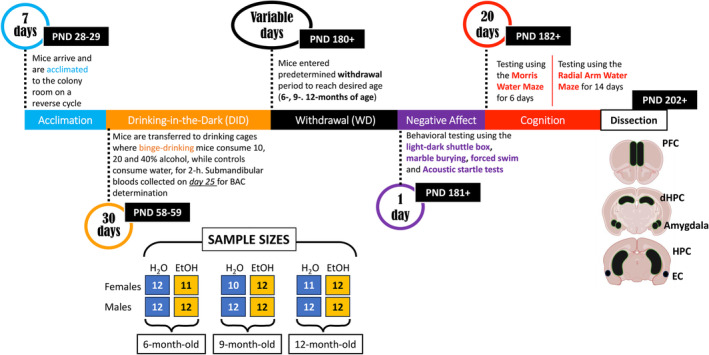
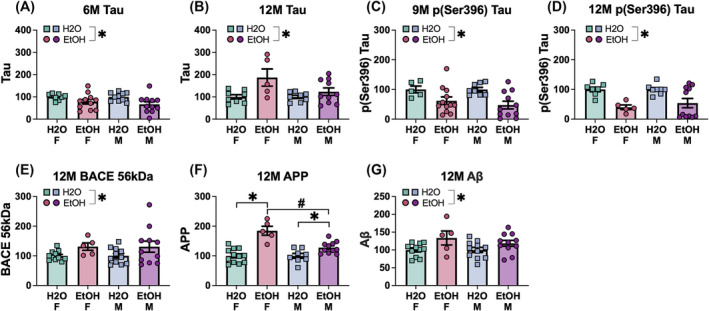
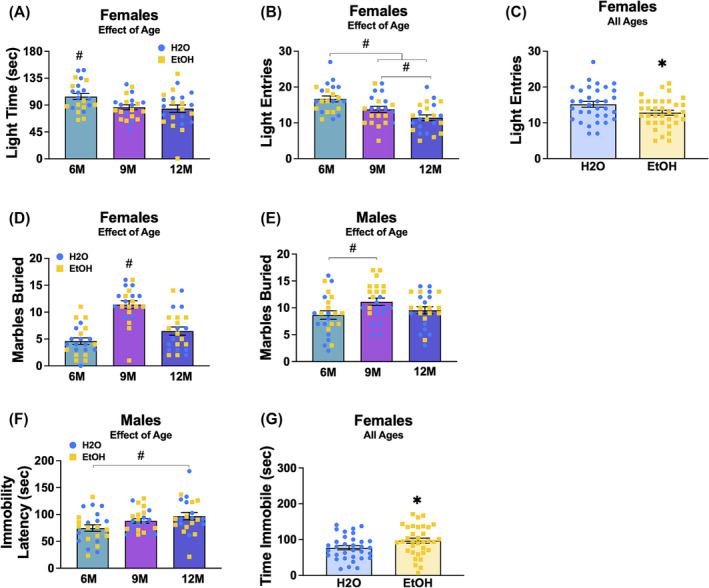
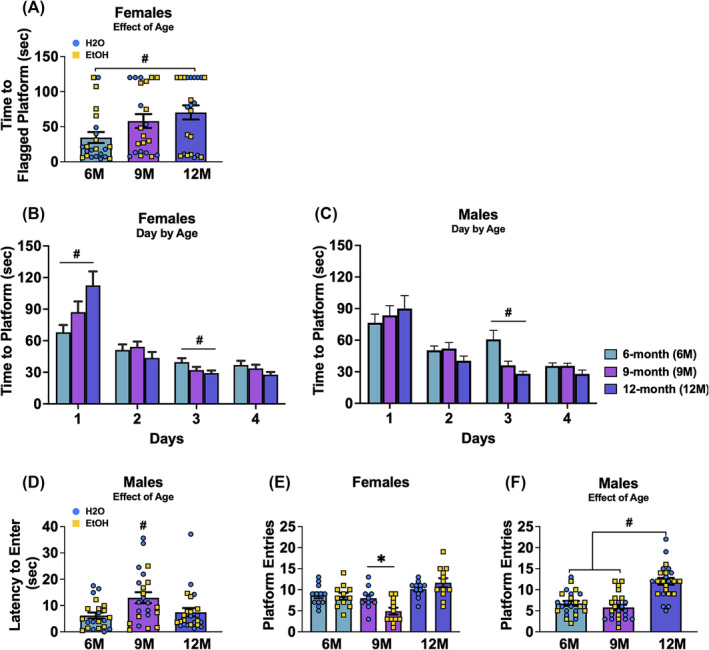
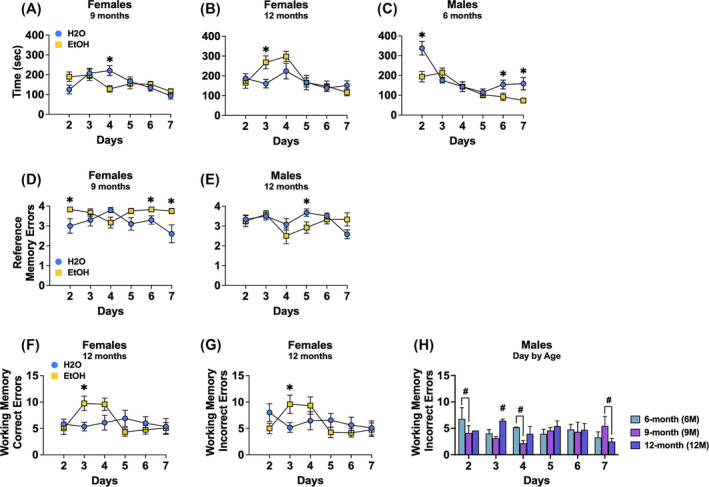
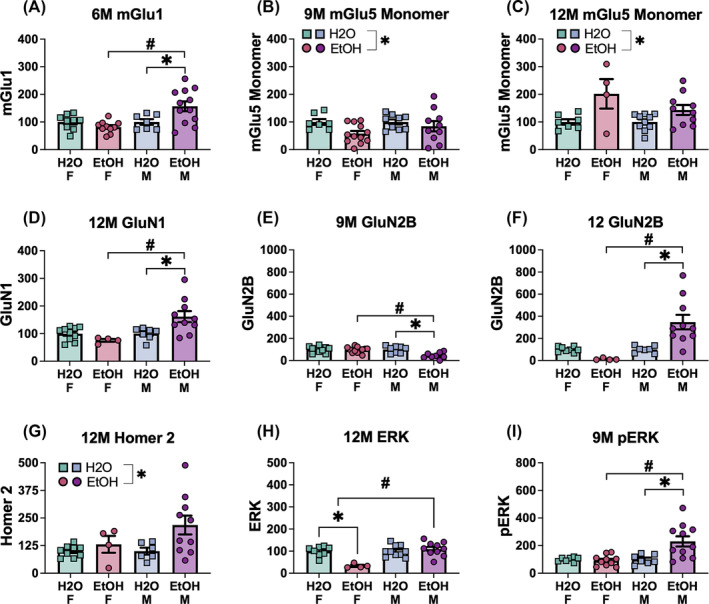
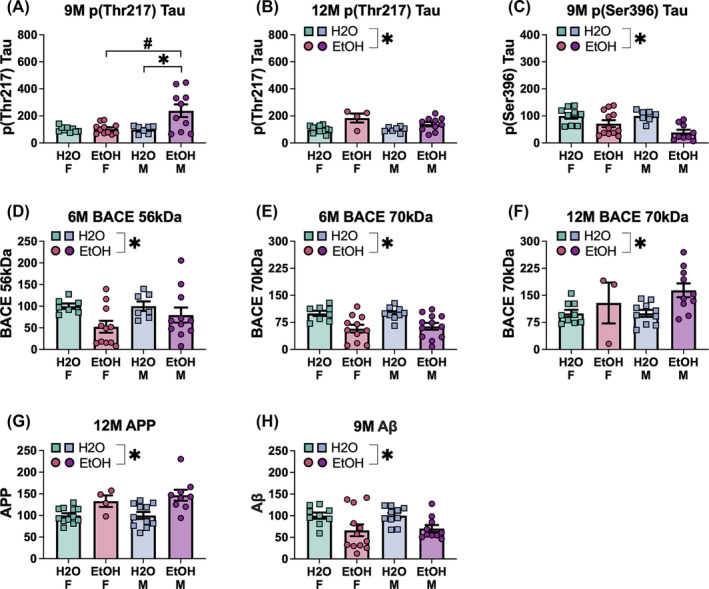
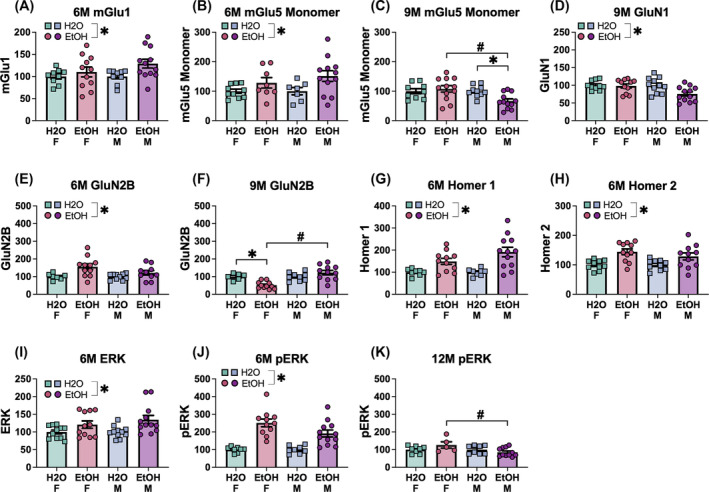
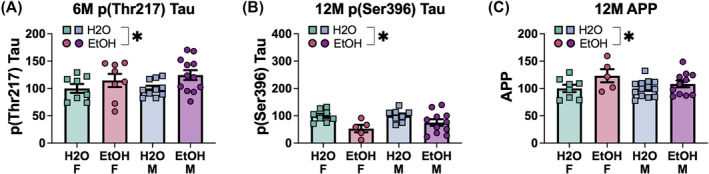
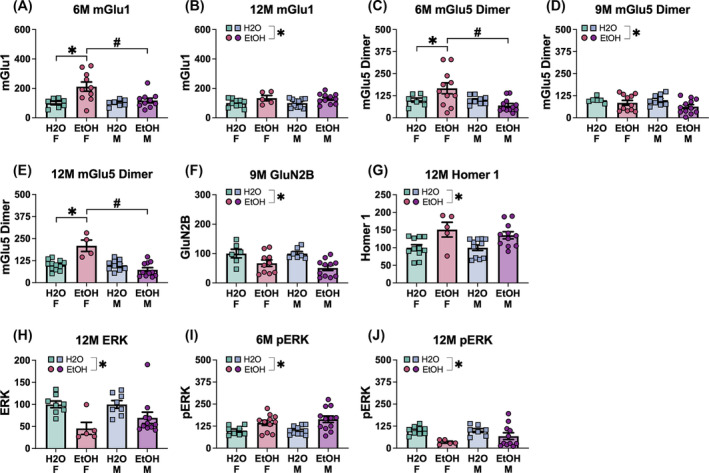
The early initiation of binge-drinking and biological sex are critical risk factors for the development of affective disturbances and cognitive decline, as well as neurodegenerative diseases including Alzheimer's disease. Further, a history of excessive alcohol consumption alters normal age-related changes in the pattern of protein expression in the brain, which may relate to an acceleration of cognitive decline. Here, we aimed to disentangle the interrelation between a history of binge-drinking during adolescence, biological sex and normal aging on the manifestation of negative affect, cognitive decline and associated biochemical pathology. To this end, adolescent male and female C57BL/6J mice (PND 28-29) underwent 30 days of alcohol binge-drinking using a modified drinking-in-the-dark (DID) paradigm. Then, mice were assayed for negative affect, sensorimotor gating and cognition at three developmental stages during adulthood-mature adulthood (6 months), pre-middle age (9 months) and middle age (12 months). Behavioural testing was then followed by immunoblotting to index the protein expression of glutamate receptors, neuropathological markers [Tau, p (Thr217)-Tau, p (Ser396)-Tau, BACE, APP, Aβ], as well as ERK activation within the entorhinal cortex, prefrontal cortex and amygdala. Across this age span, we detected only a few age-related changes in our measures of negative affect or spatial learning/memory in the Morris water maze and all of these changes were sex-specific. Prior adolescent binge-drinking impaired behaviour only during reversal learning in 9-month-old females and during radial arm maze testing in 12-month-old females. In contrast to behaviour, we detected a large number of protein changes related to prior binge-drinking history, several of which manifested as early as 6 months of age, with the prefrontal cortex particularly affected at this earlier age. While 6-month-old mice exhibited relatively few alcohol-related protein changes within the entorhinal cortex and amygdala, the number of alcohol-related protein changes within the entorhinal cortex increased with age, while the 12-month-old mice exhibited the largest number of protein changes within the amygdala. Approximately a third of the alcohol-related protein changes were sex-selective. Taken together, the results of our longitudinal study using a murine model of binge-drinking indicate that a prior history of heavy alcohol consumption, beginning in adolescence, is sufficient to induce what we presume to be latent changes in protein indices of cellular activity, glutamate transmission and neuropathology within key brain regions governing cognition, executive function and emotion that appear to precede the onset of robust behavioural signs of dysregulated affect and cognitive impairment.
暴饮的早期开始和生物性别是情感障碍、认知衰退以及包括阿尔茨海默病在内的神经退行性疾病发展的关键风险因素。此外,过量饮酒史会改变大脑中蛋白质表达模式的正常年龄相关变化,这可能与认知衰退的加速有关。在此,我们旨在厘清青春期暴饮史、生物性别和正常衰老之间的相互关系对负面情绪、认知衰退及相关生化病理表现的影响。为此,青春期雄性和雌性C57BL/6J小鼠(出生后第28 - 29天)采用改良的黑暗饮酒(DID)范式进行了30天的酒精暴饮。然后,在成年期的三个发育阶段——成年成熟期(6个月)、中年前期(9个月)和中年期(12个月),对小鼠进行负面情绪、感觉运动门控和认知能力的检测。行为测试之后进行免疫印迹,以检测内嗅皮质、前额叶皮质和杏仁核中谷氨酸受体、神经病理标记物【Tau、p(Thr217)-Tau、p(Ser396)-Tau、β-分泌酶(BACE)、淀粉样前体蛋白(APP)、淀粉样β蛋白(Aβ)】的蛋白表达,以及细胞外信号调节激酶(ERK)的激活情况。在这个年龄跨度内,我们在莫里斯水迷宫中对负面情绪或空间学习/记忆的测量中仅检测到少数与年龄相关的变化,并且所有这些变化都是性别特异性的。先前的青春期暴饮仅在9个月大的雌性小鼠的逆向学习过程中以及12个月大的雌性小鼠的放射状臂迷宫测试中损害行为。与行为不同,我们检测到大量与先前暴饮史相关的蛋白质变化,其中一些早在6个月大时就已出现,前额叶皮质在这个较早年龄受到的影响尤为明显。虽然6个月大的小鼠在内嗅皮质和杏仁核中表现出相对较少的与酒精相关的蛋白质变化,但内嗅皮质中与酒精相关的蛋白质变化数量随年龄增加,而12个月大的小鼠在杏仁核中表现出最多的蛋白质变化。大约三分之一的与酒精相关的蛋白质变化是性别选择性的。综上所述,我们使用暴饮小鼠模型进行的纵向研究结果表明,从青春期开始的大量饮酒史足以诱导我们推测在关键脑区中细胞活动、谷氨酸传递和神经病理的蛋白质指标发生潜在变化,这些变化似乎先于情感失调和认知障碍的明显行为迹象出现,这些关键脑区负责认知、执行功能和情绪。