Jimenez Chavez C Leonardo, Van Doren Eliyana, Scheldrup Gavin, Rivera Emely, Torres-Gonzalez Jose, Herbert Jessica N, Denning Christopher J E, Khorsandi Sarah, Garcia Andrew, Castro Marian, Szumlinski Karen K
Department of Psychological and Brain Sciences, University of California, Santa Barbara, Santa Barbara, CA, United States.
Department of Molecular, Cellular and Developmental Biology, University of California, Santa Barbara, Santa Barbara, CA, United States.
Front Behav Neurosci. 2023 Aug 3;17:1192076. doi: 10.3389/fnbeh.2023.1192076. eCollection 2023.
Alcohol abuse is a risk factor for affective and cognitive disorders, with evidence indicating that adolescent-onset excessive drinking can result in long-term deficiencies in emotional regulation and cognition, with females more susceptible to the negative emotional and cognitive consequences of excessive alcohol consumption. However, our prior examination of the interactions between sex and the age of drinking-onset indicated minimal signs of anxiety-like behavior during alcohol withdrawal, which may have related to the concurrent anxiety testing of male and female subjects.
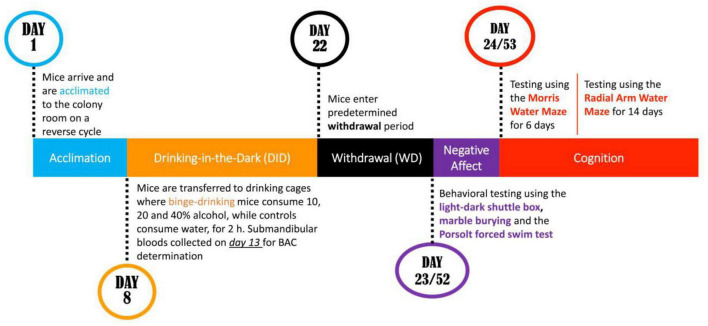
The present study addressed this potential confound by assaying for alcohol withdrawal-induced negative affect separately in males and females and expanded our investigation to include measures of spatial and working memory.
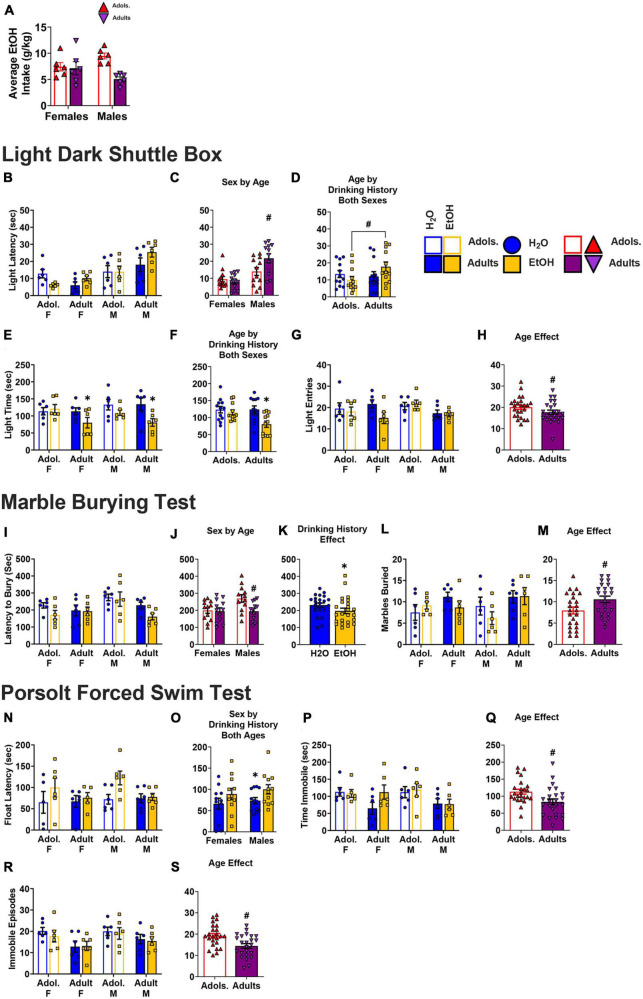
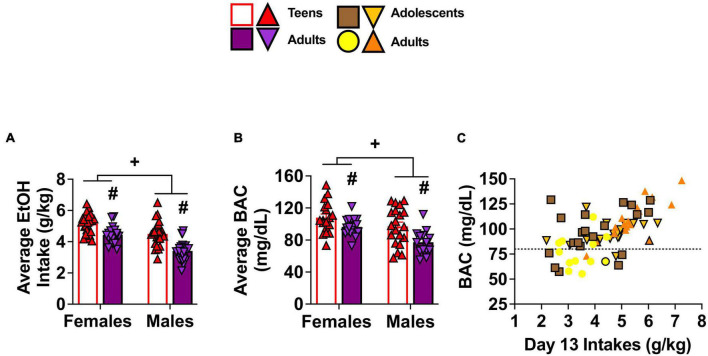
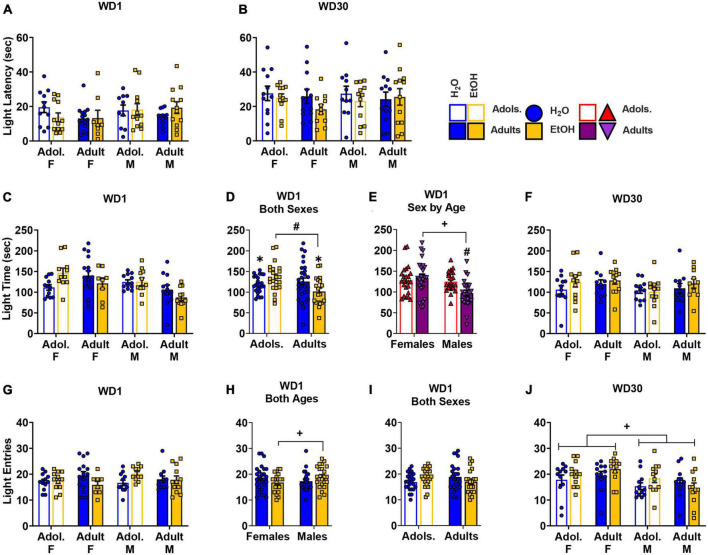
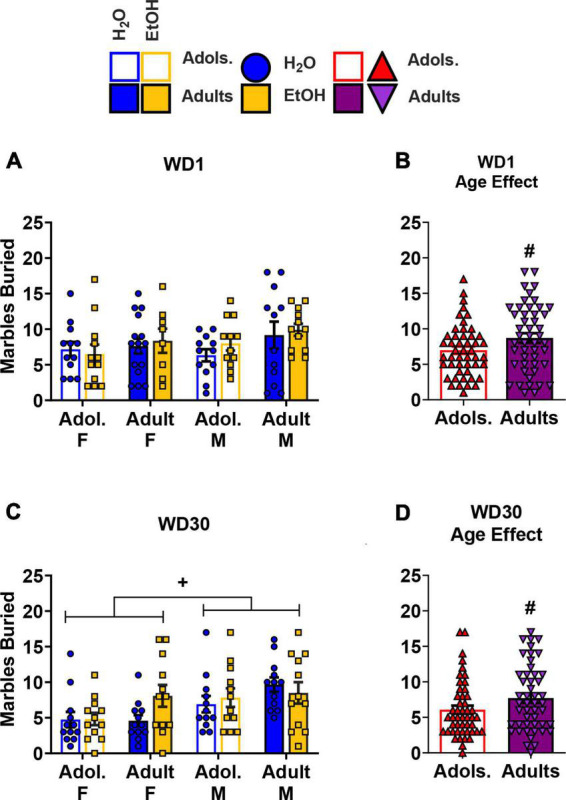
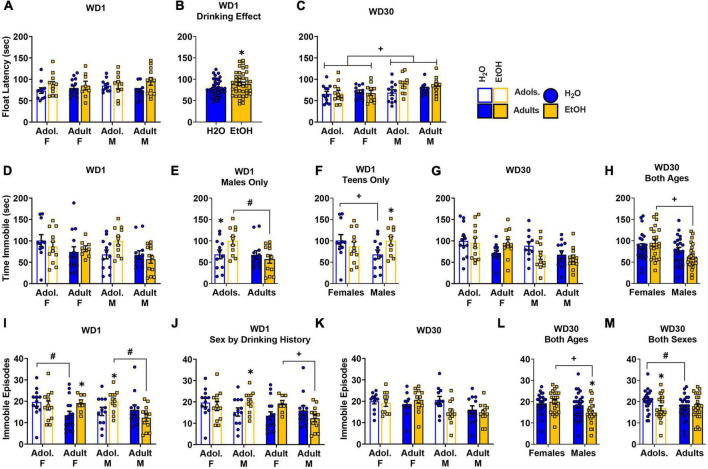
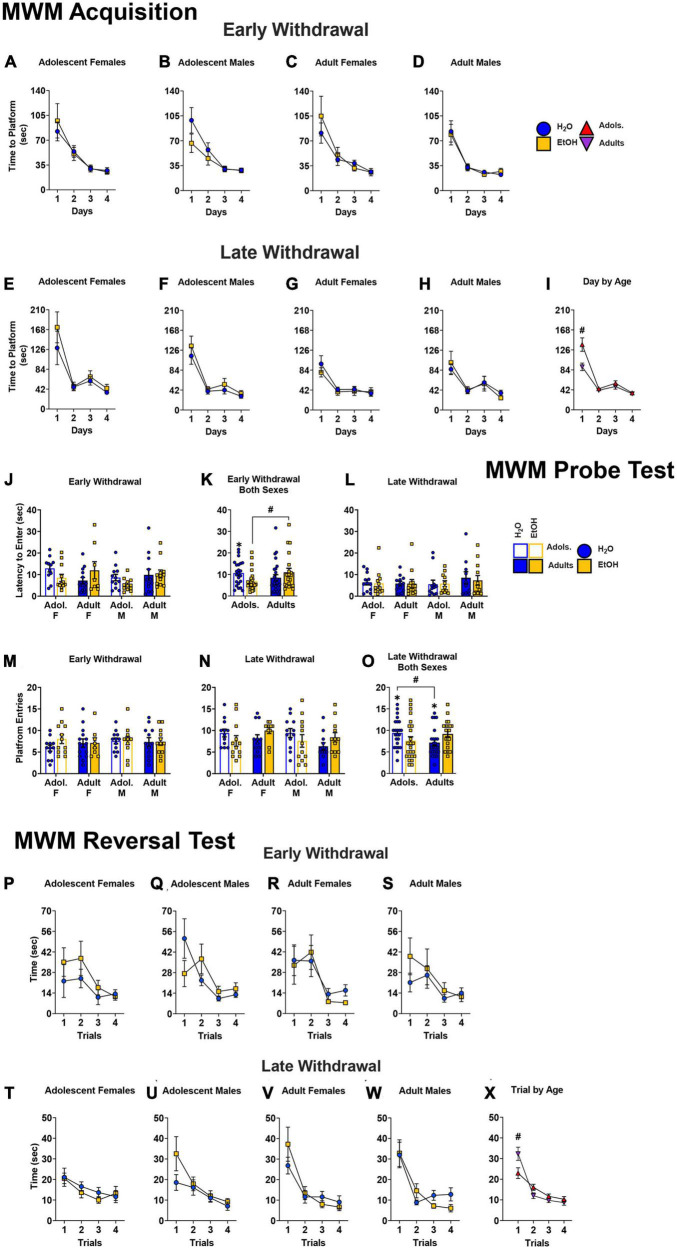
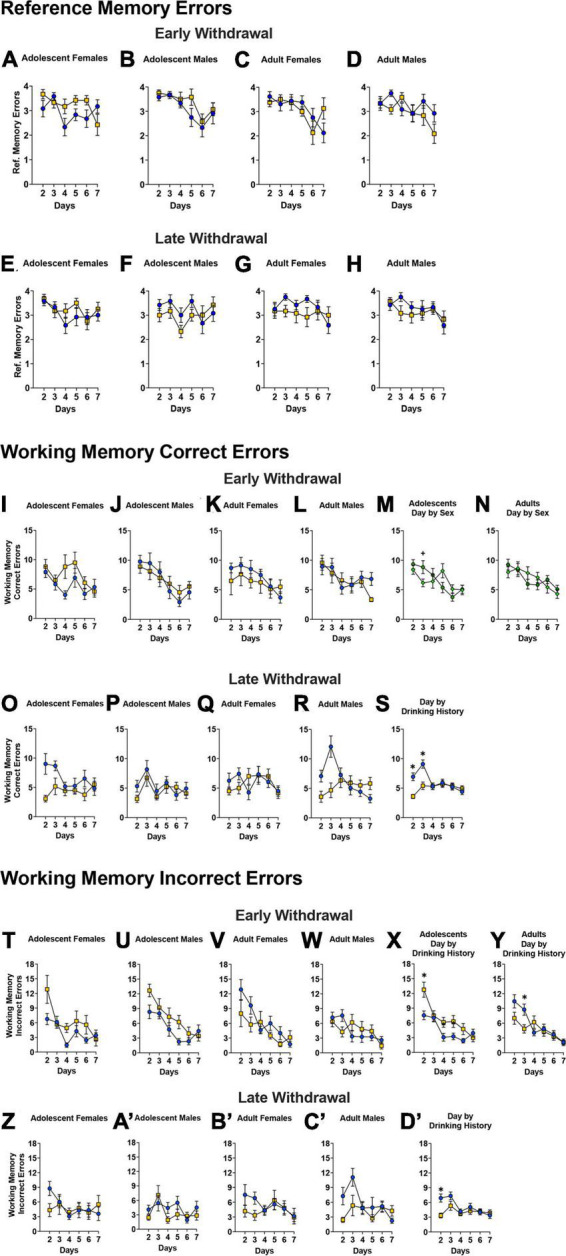
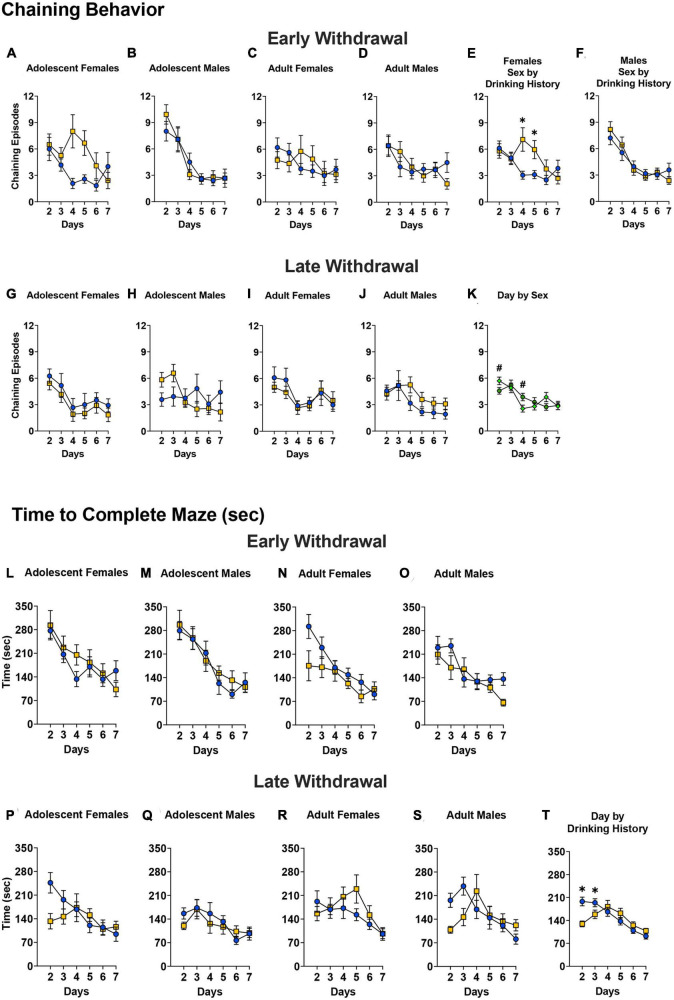
Following 14 days of drinking under modified Drinking-in-the-Dark procedures (10, 20, and 40% alcohol v/v; 2 h/day), adolescent and adult binge-drinking mice of both sexes exhibited, respectively, fewer and more signs of negative affect in the light-dark shuttle-box and forced swim tests than their water-drinking counterparts. Adolescent-onset binge-drinking mice also exhibited signs of impaired working memory early during radial arm maze training during early alcohol withdrawal. When tested in late (30 days) withdrawal, only adult female binge-drinking mice buried more marbles than their water-drinking counterparts. However, adolescent-onset binge-drinking mice exhibited poorer spatial memory recall in a Morris water maze.
These findings indicate that a subchronic (14-day) binge-drinking history induces mild, age- and sex-selective, changes in negative affect and cognition of potential relevance to understanding individual variability in the etiology and treatment of alcohol abuse and alcohol use disorder.
酒精滥用是情感和认知障碍的一个风险因素,有证据表明青春期开始的过度饮酒会导致情绪调节和认知方面的长期缺陷,女性更容易受到过度饮酒带来的负面情绪和认知后果的影响。然而,我们之前对性别与饮酒开始年龄之间相互作用的研究表明,在酒精戒断期间焦虑样行为的迹象微乎其微,这可能与同时对男性和女性受试者进行的焦虑测试有关。
本研究通过分别检测雄性和雌性小鼠酒精戒断诱导的负面影响来解决这一潜在混杂因素,并将我们的研究扩展到包括空间和工作记忆的测量。
在改良的黑暗中饮酒程序(10%、20%和40%酒精体积分数;每天2小时)下饮酒14天后,青春期和成年期的两性暴饮小鼠在明暗穿梭箱和强迫游泳测试中分别比饮水对照小鼠表现出更少和更多的负面影响迹象。青春期开始的暴饮小鼠在酒精戒断早期的放射状臂迷宫训练期间也表现出工作记忆受损的迹象。在戒断后期(30天)进行测试时,只有成年雌性暴饮小鼠比饮水对照小鼠埋藏更多的弹珠。然而,青春期开始的暴饮小鼠在莫里斯水迷宫中的空间记忆回忆较差。
这些发现表明,亚慢性(14天)暴饮史会导致轻微的、年龄和性别选择性的负面影响和认知变化,这可能与理解酒精滥用和酒精使用障碍的病因及治疗中的个体差异有关。