Tamanna Sadia S, Boden Joanne S, Kaiser Kimberly M, Wannicke Nicola, Höring Jonas, Sánchez-Baracaldo Patricia, Deponte Marcel, Frankenberg-Dinkel Nicole, Gehringer Michelle M
Department of Microbiology, University of Kaiserslautern-Landau RPTU, Kaiserslautern, Germany.
Department of Molecular Botany, University of Kaiserslautern-Landau RPTU, Kaiserslautern, Germany.
Geobiology. 2024 Nov-Dec;22(6):e70005. doi: 10.1111/gbi.70005.
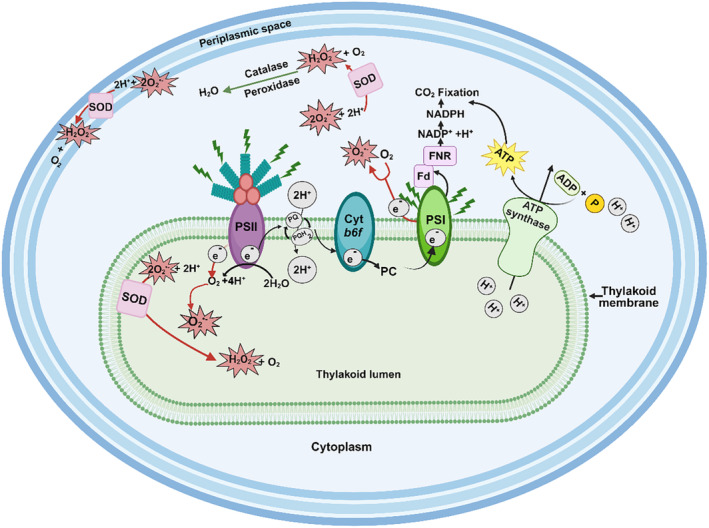
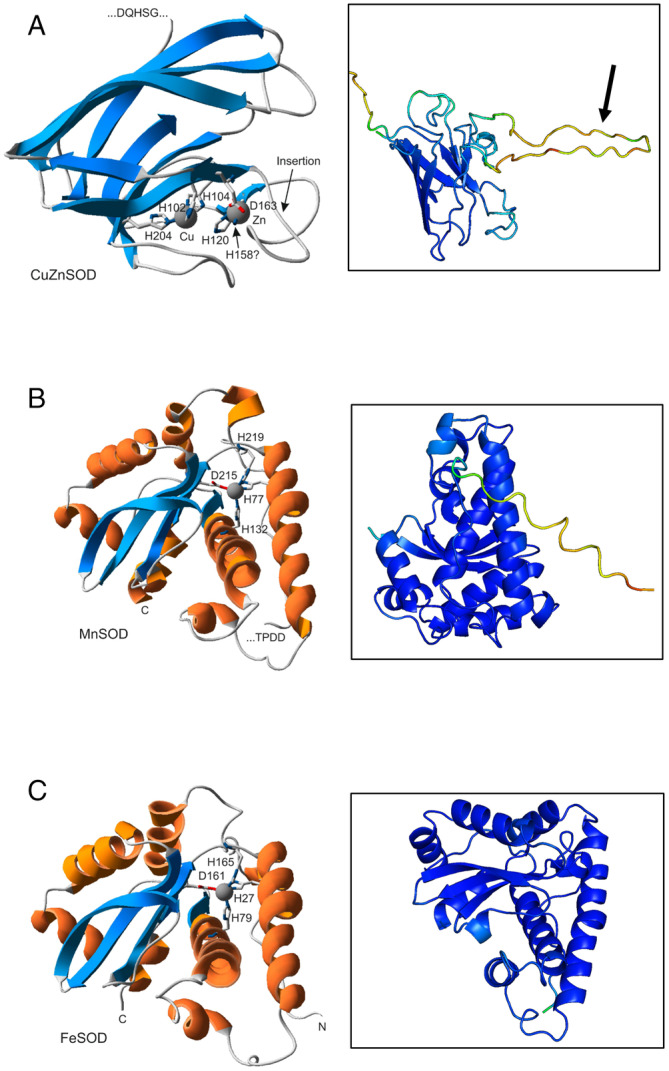
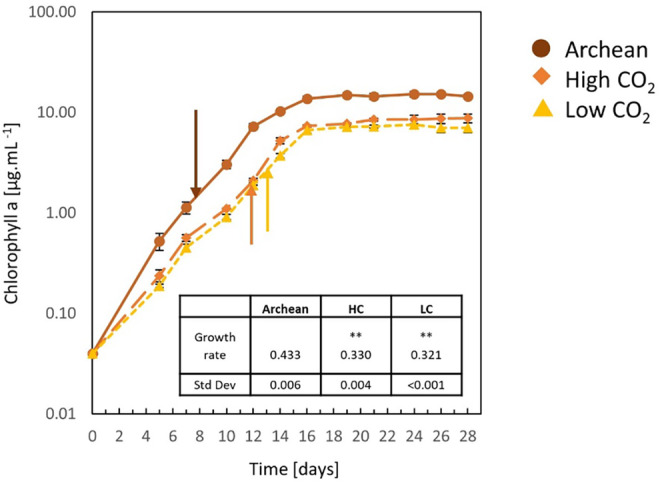
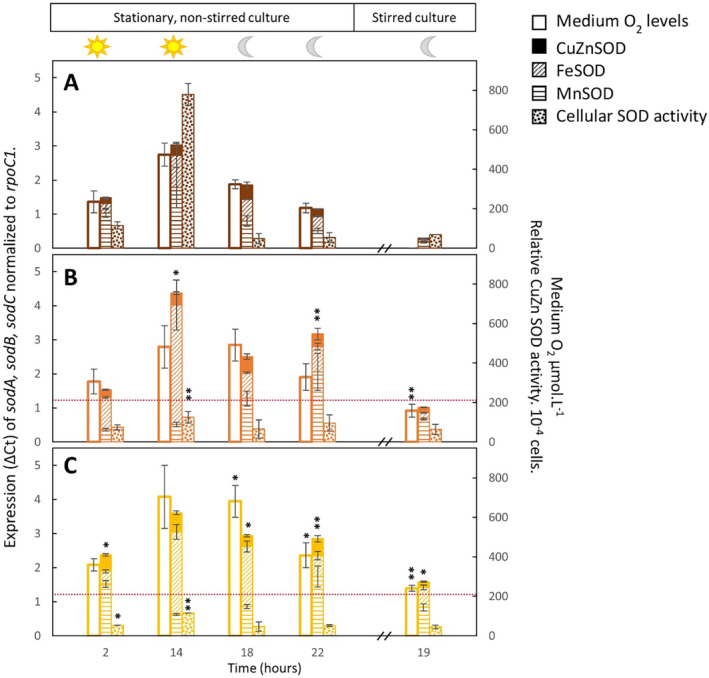
The evolution of oxygenic photosynthesis during the Archean (4-2.5 Ga) required the presence of complementary reducing pathways to maintain the cellular redox balance. While the timing of the evolution of superoxide dismutases (SODs), enzymes that convert superoxide to hydrogen peroxide and O, within bacteria and archaea is not resolved, the first SODs appearing in cyanobacteria contained copper and zinc in the reaction center (CuZnSOD). Here, we analyse growth characteristics, SOD gene expression (qRT-PCR) and cellular enzyme activity in the deep branching strain, Pseudanabaena sp. PCC7367, previously demonstrated to release significantly more O under anoxic conditions. The observed significantly higher growth rates (p < 0.001) and protein and glycogen contents (p < 0.05) in anoxically cultured Pseudanabaena PCC7367 compared to control cultures grown under present-day oxygen-rich conditions prompted the following question: Is the growth of Pseudanabaena sp. PCC7367 correlated to atmospheric pO and cellular SOD activity? Expression of sodB (encoding FeSOD) and sodC (encoding CuZnSOD) strongly correlated with medium O levels (p < 0.001). Expression of sodA (encoding MnSOD) correlated significantly to SOD activity during the day (p = 0.019) when medium O concentrations were the highest. The cellular SOD enzyme activity of anoxically grown cultures was significantly higher (p < 0.001) 2 h before the onset of the dark phase compared to O-rich growth conditions. The expression of SOD encoding genes was significantly reduced (p < 0.05) under anoxic conditions in stirred cultures, as were medium O levels (p ≤ 0.001), compared to oxic-grown cultures, whereas total cellular SOD activity remained comparable. Our data suggest that increasing pO negatively impacts the viability of early cyanobacteria, possibly by increasing photorespiration. Additionally, the increased expression of superoxide-inactivating genes during the dark phase suggests the increased replacement rates of SODs under modern-day conditions compared to those on early Earth.
太古宙(40亿至25亿年前)期间,产氧光合作用的演化需要存在互补的还原途径来维持细胞的氧化还原平衡。虽然细菌和古菌中超氧化物歧化酶(SOD,一种将超氧化物转化为过氧化氢和氧气的酶)的演化时间尚未确定,但最早出现在蓝细菌中的SOD在反应中心含有铜和锌(CuZnSOD)。在此,我们分析了深分支菌株假鱼腥藻PCC7367的生长特性、SOD基因表达(qRT-PCR)和细胞酶活性,该菌株先前已证明在缺氧条件下释放的氧气显著更多。与在当今富氧条件下生长的对照培养物相比,在缺氧培养的假鱼腥藻PCC7367中观察到显著更高的生长速率(p < 0.001)以及蛋白质和糖原含量(p < 0.05),这引发了以下问题:假鱼腥藻PCC7367的生长与大气中的pO₂和细胞SOD活性相关吗?sodB(编码FeSOD)和sodC(编码CuZnSOD)的表达与培养基中的O₂水平密切相关(p < 0.001)。sodA(编码MnSOD)的表达在白天培养基O₂浓度最高时与SOD活性显著相关(p = 0.019)。与富氧生长条件相比,缺氧生长培养物的细胞SOD酶活性在黑暗期开始前2小时显著更高(p < 0.001)。与有氧生长的培养物相比,在搅拌培养的缺氧条件下,SOD编码基因的表达显著降低(p < 0.05),培养基中的O₂水平也是如此(p ≤ 0.001),而细胞总SOD活性保持相当。我们的数据表明,pO₂的增加可能通过增加光呼吸对早期蓝细菌的生存能力产生负面影响。此外,黑暗期超氧化物失活基因表达的增加表明,与早期地球相比,现代条件下SOD的替换率有所提高。