Moyer Amanda, Edens Cuoghi
Department of Medicine, Division of Immunology and Rheumatology and Department of Pediatrics, Division of Allergy, Immunology, and Rheumatology, Stanford Medicine, Stanford, California.
Sections of Rheumatology and Pediatric Rheumatology, University of Chicago Medicine, Chicago, Illinois.
Semin Reprod Med. 2024 Sep;42(3):209-227. doi: 10.1055/s-0044-1793827. Epub 2024 Dec 12.
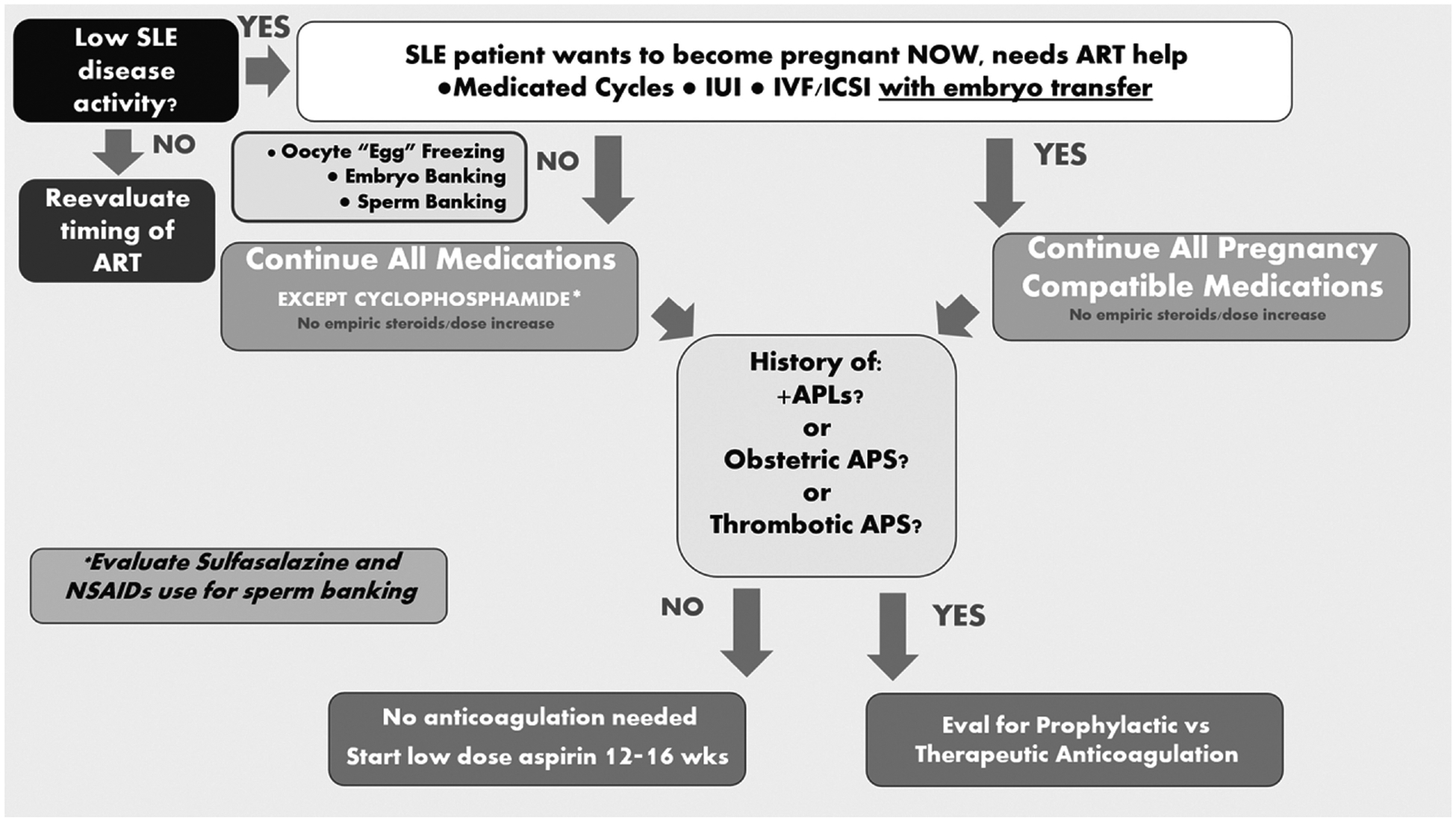
Many individuals with systemic lupus erythematosus (SLE) face significant challenges manifesting their family planning goals due to numerous factors, including disease-related complications, treatment-induced effects, immunological factors, self-imposed limitations, and the socioeconomic impacts of having a chronic disease. Instances of unexplained infertility are also prevalent. Encouragingly, advancements in treatment modalities, risk factor management, specialized training within the medical community, and enhanced patient/provider education have contributed to an increase in successful pregnancies among SLE patients, fostering a safer, more promising reproductive landscape. However, despite advances, individuals with SLE continue to struggle with the complexities of family building. This review explores infertility and pregnancy outcomes in SLE, fertility preservation, the role of assisted reproductive technology, and considerations for tailoring these approaches to SLE patients.
许多系统性红斑狼疮(SLE)患者由于多种因素,在实现计划生育目标方面面临重大挑战,这些因素包括疾病相关并发症、治疗引起的影响、免疫因素、自我施加的限制以及患慢性病的社会经济影响。不明原因的不孕情况也很普遍。令人鼓舞的是,治疗方式的进步、危险因素管理、医学界的专业培训以及患者/医护人员教育的加强,都促使SLE患者成功怀孕的几率有所增加,营造了一个更安全、更有希望的生殖前景。然而,尽管取得了进展,SLE患者在组建家庭的复杂性方面仍面临困难。本综述探讨了SLE患者的不孕及妊娠结局、生育力保存、辅助生殖技术的作用,以及针对SLE患者调整这些方法的注意事项。